Skip to content
← All posts How a medical database developed at MIT evolved into a global standard of data-sharing

How a medical database developed at MIT evolved into a global standard of data-sharing

MIT News · Artificial Intelligence · news.mit.edu · By Emma Foehringer Merchant | Institute for Medical Engineering and Science · July 29, 2026

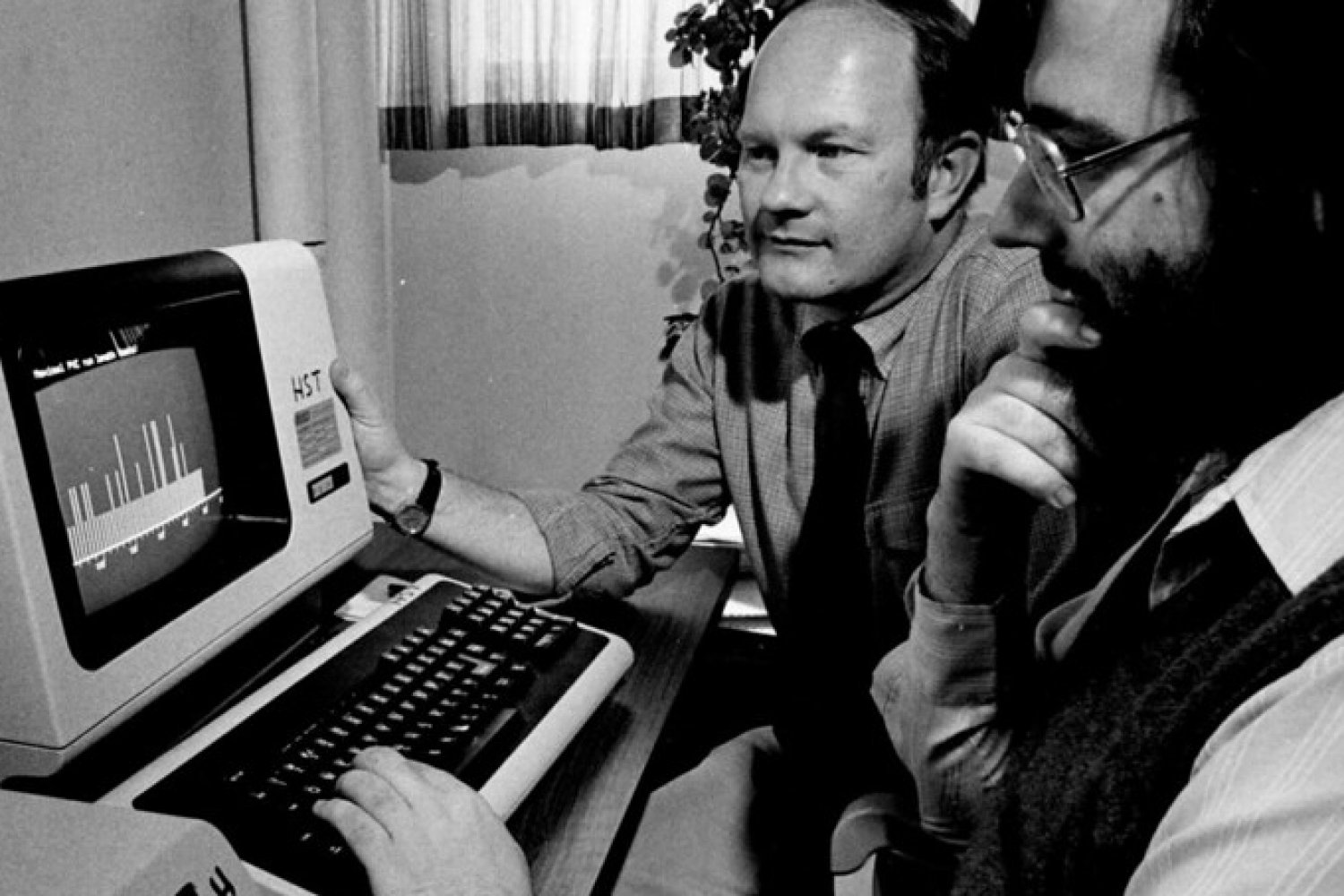
The visionary PhysioNet platform launched 25 years ago, based on a system developed at MIT in the 1970s. It has become one of the most comprehensive biomedical and clinical data repositories in existence.

Read on MIT News · Artificial Intelligence → Opens the original article in a new tab.

More from the blog

Related papers

#artificial intelligence Preprint Jul 2026

Constitutional Midtraining: Content Presence Drives Alignment Gains

Post-training alignment is often shallow, eroding under fine-tuning. It remains untested as to whether constitutional midtraining interventions can produce durable alignment when cleanly isolated from post-training. We build a 394M-token constitutional corpus from Anthropic's Constitution and apply constitutional midtraining at 120B scale, where principled, values-based content is inserted into midtraining. A 2x2 design (curriculum ordering x deliberative reasoning) was used to produce four constitutionally midtrained conditions, plus a control, which were evaluated on self-generated and established benchmarks including alignment under pressure, value conflict resolution, blackmail, and emergent misalignment. All models were evaluated across three stages: post-midtraining, post-SFT, and post-benign fine-tuning. Constitutionally midtrained models outperformed the control on alignment generalization and durability, notably on blackmail: SFT instilled a blackmail propensity in all models, but constitutional midtraining blunted it, with the advantage surviving benign fine-tuning (-17.5pp). This durability did not extend to settings that required active resistance to in-context pressure or conflict, where the advantage attenuates after SFT. The presence of constitutional content at midtraining also mattered more than its structure, and constitutional midtraining incurred no capability cost, on average, at any stage (MMLU, ARC-Easy, piqa, GSM8K). A modest amount of constitutional content at midtraining could therefore yield broad, persistent alignment gains, offering a cheap, complementary addition to SFT-centered pipelines. Code, data, and models are available.

Desiree Cho, Cameron Tice, Bernie Hogan et al. · 0 citations
#artificial intelligence Preprint Open access Aug 2026

Curvature-Aware Radius Shrinkage for Adaptive Nearest Neighbor Classification

Nearest neighbor classification relies fundamentally on how locality is defined, yet conventional $k$-NN imposes the same neighborhood cardinality throughout the feature space. This assumption can be inadequate for data whose local geometry varies substantially across the underlying manifold. We introduce Curvature-Aware Radius Shrinkage for Adaptive Nearest Neighbor Classification (CARSANN), a geometry-driven framework that adapts the spatial support of each neighborhood according to local geometric complexity. CARSANN first estimates intrinsic dimensionality using TwoNN and constructs an intrinsic representation through principal component analysis. Local mean curvature is then estimated using a shape-operator-based formulation and controls neighborhood scale: highly curved regions receive stronger radius shrinkage, whereas approximately flat regions retain broader spatial support. Unlike methods that modify only the number of neighbors or the local metric, CARSANN explicitly adapts the spatial extent of local evidence. Experiments on more than 70 real-world OpenML datasets show that CARSANN consistently improves upon standard $k$-NN and is competitive with adaptive nearest-neighbor methods. In a controlled comparison using the same base neighborhood size, CARSANN achieves higher balanced accuracy on 40 of 45 datasets, increasing mean balanced accuracy from 0.6506 to 0.7528. The advantage also persists against $k$-NN with fixed $k=5$. Friedman and Nemenyi tests confirm that the improvements are statistically significant. These results indicate that local manifold curvature can serve as an effective geometric control variable for adapting neighborhood support, providing a complementary paradigm to cardinality-based nearest-neighbor adaptation.

Alexandre L. M. Levada · 0 citations

Spikformer V2: Join the High Accuracy Club on ImageNet with an SNN Ticket

This work introduces a pioneering exploration of Self-Supervised Learning (SSL) within the SNN, and proposes a novel Spiking Self-Attention (SSA) and Spiking Transformer (Spikformer) that achieves 80+% accuracy on ImageNet.

Zhaokun Zhou, Kaiwei Che, Wei Fang et al. · 69 citations · ⚡10
#artificial intelligence Open access Feb 2025

Iterative Flow Matching - Path Correction and Gradual Refinement for Enhanced Generative Modeling

This work explores image generation using flow matching using flow matching and proposes an iterative process that can be integrated into virtually any generative modeling technique, thereby enhancing the performance and robustness of image synthesis systems.

Eldad Haber, Shadab Ahamed, Md Shahriar Rahim Siddiqui et al. · 3 citations