As autonomous drone deployments scale from individual units to coordinated swarms, the human operator's role shifts from direct piloting to high-level supervision. Current interfaces often treat multi-drone control as a scaled-up version of single-drone operation. We instead investigate how reframing fleet supervision as spatial interaction can better support the spatial, temporal, and safety demands of complex missions. We present FleetScape, a Mixed Reality (MR) sandtable system that externalizes layered real-time mission, safety, and environmental data while enabling fluid transitions between manual intervention and autonomous supervision. We developed a high-fidelity building inspection simulation that generates and streams synchronized multi-drone and environmental data for MR visualizations. We used this prototype to conduct a user study with six experienced drone pilots managing fleets of up to 15 drones. Our findings show that FleetScape supports situational awareness through layered spatial representations and clarifies control mode transitions. However, a limit to situational awareness was observed as fleet size increases, leading to different supervisory strategies. Finally, we derive design implications for supporting scalable drone fleet supervision.
Peisen Xu, J\'er\'emie Garcia, Peter Cleveland et al.· 0 citations
The ethics of human-robot interaction (HRI) have been discussed extensively based on three traditional frameworks: deontology, consequentialism, and virtue ethics. We conducted a mixed within/between experiment to investigate Sparrow's proposed ethical asymmetry hypothesis in human treatment of robots. The moral permissibility of action (MPA) was manipulated as a subject grouping variable, and virtue type (prudence, justice, courage, and temperance) was controlled as a within-subjects factor. We tested moral stimuli using an online questionnaire with Perceived Moral Permissibility of Action (PMPA) and Perceived Virtue Scores (PVS) as response measures. The PVS measure was based on an adaptation of the established Questionnaire on Cardinal Virtues (QCV), while the PMPA was based on Malle et al. [39] work. We found that the MPA significantly influenced the PMPA and perceived virtue scores. The best-fitting model to describe the relationship between PMPA and PVS was cubic, which is symmetrical in nature. Our study did not confirm Sparrow's asymmetry hypothesis. The adaptation of the QCV is expected to have utility for future studies, pending additional psychometric property assessments.
Minyi Wang, Christoph Bartneck, Michael-John Turp et al.· 0 citations
Generative manipulation policies can fail catastrophically under deployment-time distribution shift, yet many failures are near-misses: the robot reaches almost-correct poses and would succeed with a small corrective motion. We propose FlowCorrect, a modular interactive imitation learning approach that enables deployment-time adaptation of flow-matching manipulation policies from sparse, relative human corrections without retraining. During execution, a human provides brief corrective pose nudges via a lightweight VR interface. FlowCorrect uses these sparse corrections to locally adapt the policy, improving actions without retraining the backbone while preserving the model performance on previously learned scenarios. We evaluate on a real-world robot across four tabletop tasks: pick-and-place, pouring, cup uprighting, and insertion. With a low correction budget, FlowCorrect achieves an 80% success rate on previously failed cases while preserving performance on previously solved scenarios. The results clearly demonstrate that FlowCorrect learns from very few demonstrations and enables fast, sample-efficient, incremental, human-in-the-loop corrections of generative visuomotor policies at deployment time in real-world robotics.
Edgar Welte, Yitian Shi, Rosa Wolf et al.· 0 citations
Creating symbolic operators by hand is one of the main bottlenecks in deploying Task and Motion Planning systems (TAMP). Recent works show that these operators can instead be learned directly from demonstration data. Existing methods, however, typically learn each action in isolation and cannot capture the recurring multi-step structure of manipulation tasks, so the search becomes intractable on long sequential tasks. A further inefficiency arises in the symbolic state: every provided predicate is evaluated at every search node, even when it never appears in any learned operator. We present a system that addresses both problems together. Its central component is the automatic generation of macro-operators, composite actions that compress a recurring sequence of individual actions into a single planning step. Our system discovers causally linked action pairs directly from the training data, where one action produces exactly the condition that the next one requires, and turns each pair into a new operator. Alongside this, our system prunes every predicate that no learned operator references, which shrinks the symbolic state evaluated at each search node. Together, these changes shorten the effective planning horizon, and the benefit they bring grows with the length of the task. Across four TAMP domains, our method reaches up to a 4.6x planning speedup compared to the baseline method, namely Learning Operators for TAMP. More importantly, it solves a long sequential task that the baseline cannot solve. Macro-operator discovery thus not only accelerates planning but, in certain domains, determines solvability in practice.
Can Emir Bora, Emre Ugur· 0 citations
Reach audiences
Advertise in front of researchers, engineers, and readers.
LLMs generate fluent plans for robots but routinely violate the syntactic and se8mantic constraints they must satisfy to execute, and existing remedies trade formal guarantees against plan quality: soft methods (affordance scoring, grounded decoding) give no guarantee, while symbolic planners (LLM+P) discard the LM's commonsense. We propose \textbf{Meta-Ctrl}, a constrained-decoding framework that guarantees the encoded constraints while preserving the base LM's plan quality. Meta-Ctrl introduces \emph{meta-tokens}---a compact vocabulary of grounded actions---enforcing syntax at the token level and semantics (preconditions, goals, ordering) at the action level, an exact factorization that cuts the memory of constrained decoding from over 107TB to under 2GB. With it, a small open-weight LM becomes competitive where it otherwise sits at the bottom of the leaderboard: on WAH-NL under the LoTa-Bench protocol it reaches the highest reported subgoal success rate, exceeding GPT-4's, with consistent gains across the Embodied Agent Interface. We further demonstrate it on a real tabletop robot, where every generated plan satisfies its preconditions and goals by construction. Project website: https://metactrlg.github.io
Gwen Yidou-Weng, Edward Sun, Tianyi Ma et al.· 0 citations
While Central Pattern Generators (CPGs) and Multi-Layer Perceptrons (MLP) are widely used paradigms in robot control, few systematic studies have been performed on the relative merits of large parameter spaces in highly constrained settings. As opposed to traditional Machine Learning contexts, our input and output spaces are small and performance is bounded thus having more parameters may actively hinder the learning process instead of empowering it. To empirically measure this, we submit a given robot morphology, with limited proprioceptive capabilities, to controller optimisation under two bio-inspired paradigms (CPGs and MLPs) with evolutionary- and reinforcement- trainer protocols. By varying parameter spaces across multiple reward functions, we demonstrate that shallow MLPs and densely connected CPGs result in better performance when compared to deeper MLPs or Actor-Critic architectures. To account for the relationship between said performance and the number of parameters, we introduce a Parameter Impact metric which showcases diminishing returns for MLPs but not for CPGs. Taken together these results demonstrate, on a fixed quadrupedal morphology, the benefits of integrating prior bias when considering locomotion tasks with simple hinge actuators.
Kevin Godin-Dubois, Anil Yaman, Anna V. Kononova· 0 citations
Vision-Language-Action (VLA) models have emerged as a promising paradigm for general-purpose robotic control, with test-time scaling (TTS) gaining attention to enhance robustness beyond training. However, existing TTS methods for VLAs require additional training, verifiers, and multiple forward passes, making them impractical for deployment. Moreover, they intervene only at action decoding while keeping visual representations fixed-insufficient under perceptual ambiguity, where reconsidering how to perceive is as important as deciding what to do. To address these limitations, we propose SCALE, a simple inference strategy that jointly modulates visual perception and action based on 'self-uncertainty', inspired by uncertainty-driven exploration in Active Inference theory-requiring no additional training, no verifier, and only a single forward pass. SCALE broadens exploration in both perception and action under high uncertainty, while focusing on exploitation when confident-enabling adaptive execution across varying conditions. Experiments on simulated and real-world benchmarks demonstrate that SCALE improves state-of-the-art VLAs and outperforms existing TTS methods while maintaining single-pass efficiency.
Hyeonbeom Choi, Daechul Ahn, Youhan Lee et al.· 0 citations
We introduce OceanGym, the first comprehensive benchmark for ocean underwater embodied agents, designed to advance AI in one of the most demanding real-world environments. Unlike terrestrial or aerial domains, underwater settings present extreme perceptual and decision-making challenges, including low visibility, dynamic ocean currents, making effective agent deployment exceptionally difficult. OceanGym encompasses eight realistic task domains and a unified agent framework driven by Multi-modal Large Language Models (MLLMs), which integrates perception, memory, and sequential decision-making. Agents are required to comprehend optical and sonar data, autonomously explore complex environments, and accomplish long-horizon objectives under these harsh conditions. Extensive experiments reveal substantial gaps between state-of-the-art MLLM-driven agents and human experts, highlighting the persistent difficulty of perception, planning, and adaptability in ocean underwater environments. By providing a high-fidelity, rigorously designed platform, OceanGym establishes a testbed for developing robust embodied AI and transferring these capabilities to real-world autonomous ocean underwater vehicles, marking a decisive step toward intelligent agents capable of operating in one of Earth's last unexplored frontiers. The code and data are available at https://github.com/OceanGPT/OceanGym.
Yida Xue, Mingjun Mao, Xiangyuan Ru et al.· 0 citations
Transformer-based models are becoming a central paradigm in autonomous driving because they can capture long-range spatial dependencies, multi-agent interactions, and multimodal context across perception, prediction, and planning. At the same time, their deployment in real vehicles remains difficult because high-capacity attention-based architectures impose substantial latency, memory, and energy overhead. This survey reviews representative Transformer-based autonomous driving models and organizes them by task role, sensing configuration, and architectural design. More importantly, it examines these models from a deployment-oriented perspective and analyzes how efficiency constraints reshape model design choices in practice. We further review compression and acceleration strategies relevant to Transformer-based driving systems, including quantization, pruning, knowledge distillation, low-rank approximation, and efficient attention, and discuss their benefits, limitations, and task-dependent applicability. Rather than treating compression as an isolated post-processing step, we highlight it as a system-level design consideration that directly affects deployability, robustness, and safety. Finally, we identify open challenges and future research directions toward standardized, safety-aware, and hardware-conscious evaluation of efficient autonomous driving systems.
Juan Zhong, Yuhang Shi, Zukang Xu et al.· 0 citations
Tendon-driven hands are anthropomorphic, and moving the actuators off the joints is what makes a hand of this capability affordable to build. Two effects produce that saving. Routing force through a cable removes the requirement that a motor fit inside the joint it drives, so smaller and cheaper motors suffice, and one motor can drive several joints through a single cable, so fewer motors are needed. They are also harder to learn on than a direct-drive hand. The underactuated transmission that produces the saving is itself difficult to represent in a simulator, and the joints one cable drives are not independently commandable. We present Aero Hand Open, a tendon-driven anthropomorphic hand that is released simulation-ready. Three things ship with it. A simulation model reproduces the cable transmission itself. An identified actuation map connects that model to the motor commands in both directions, including the three-way coupling of the thumb. A reinforcement learning package trains policies for the hand. Together they let a policy be trained entirely in simulation and run on the hand with no fine-tuning and no state estimation. We release the mechanical design, the simulation model, the identified mapping, the training environment and the deployment stack.
Nan Wang, Mohit Yadav, Jonathan Wulff et al.· 0 citations
Industrial panel operation is knowledge-intensive and safety-critical. Beyond control recognition and action generation, execution must satisfy constraints in operation manuals and safety regulations. While foundation-model-based planners show strong semantic capability, they typically lack computable, localizable, and reproducible mechanisms for violation detection and repair. To address this, we propose PanelShield, a verifiable closed-loop safety planning framework for manual-guided industrial panel operation. The framework generates parameterized action primitive sequences from task-relevant manual evidence and applies dual formal verification with LTL and a Safety FSM to enforce cross-step temporal correctness and local transition legality. When violations occur, it outputs a structured counterexample with the earliest violating step and cause, enabling targeted repair and re-verification. We build a multi-level long-horizon planning benchmark covering three representative industrial device panels, and evaluate the framework in simulation and real-world robotic experiments. Results show that PanelShield improves complex safety-constrained task performance over foundation-model-only planning baselines while reducing the violation rate to 2.7%, with 4.1 s total latency. Real-world experiments demonstrate end-toend feasibility. Overall, PanelShield offers a verifiable approach to robotic panel operation that balances flexibility, safety, and auditability.
Guipeng Xin, Jiahe Xu, Chenhui Wan et al.· 0 citations
Robotic industrial panel operation requires not only accurate control localization but also compliance with operating procedures, safety rules, and device-state constraints distributed across heterogeneous manuals. This study presents MaCoPlanner, a task-planning framework built on knowledge compiled from equipment manuals that converts equipment manuals into a typed intermediate representation, retrieves task- and state-relevant evidence, and uses it to support plan generation. Before actuation, candidate plans are symbolically rolled out and checked against procedural and state-transition constraints; detected violations are localized and returned for targeted repair, while unresolved plans are rejected. A separate execution interface grounds verified symbolic actions to physical controls and updates the device state. Under an independent evaluation oracle, MaCoPlanner achieves a final violation rate of 2.7%, and 26.3% of the runs in the repair analysis are rejected after exhausting the refinement budget. Compared with Raw-Manual, task success increases from 62.8% to 84.4% on Level-2 tasks and from 25.9% to 43.2% on Level-3 tasks. Experiments on a controller-panel simulator without an attached industrial load further demonstrate integrated execution feasibility under representative interaction conditions, without claiming industrial deployment readiness.
Guipeng Xin, Jiahe Xua, Mohammad Deghat et al.· 0 citations
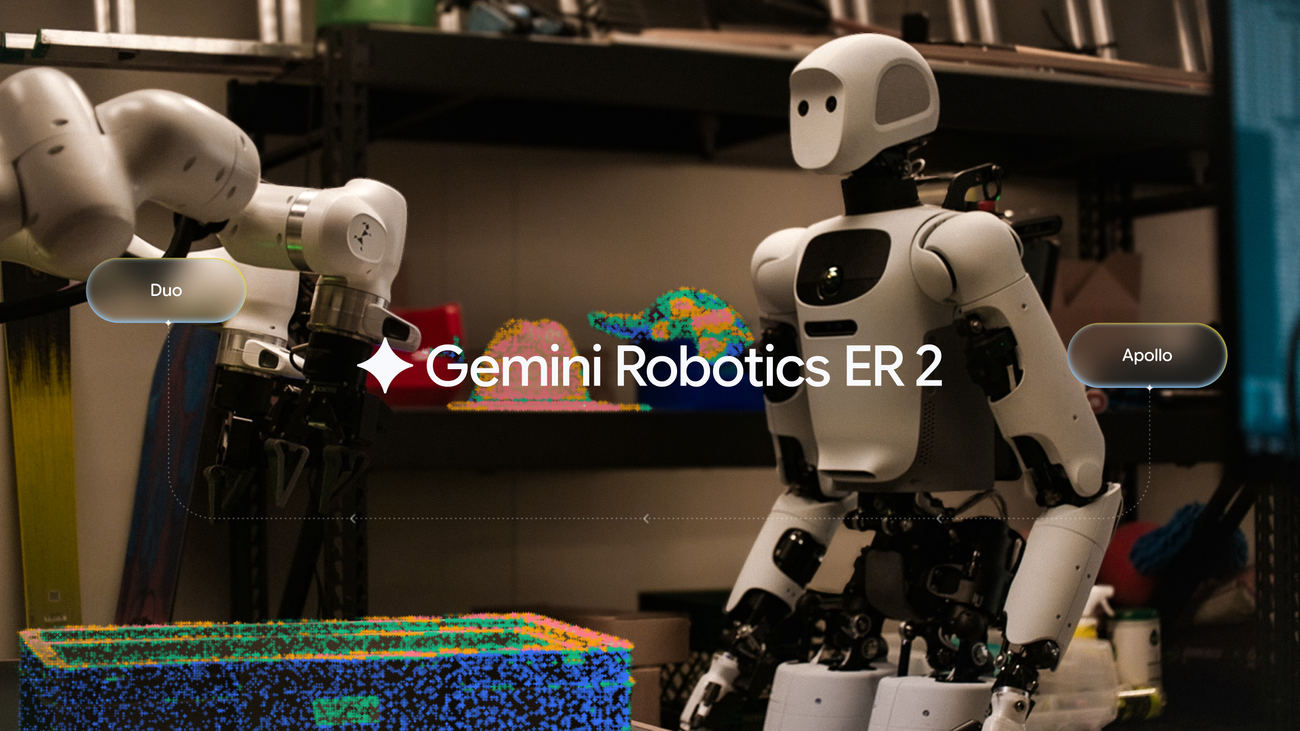
Gemini Robotics ER 2 helps robots reason, collaborate, and solve real-world tasks. It represents a step change in video understanding, tool orchestration, and multi-robot collaboration for robotic applications.
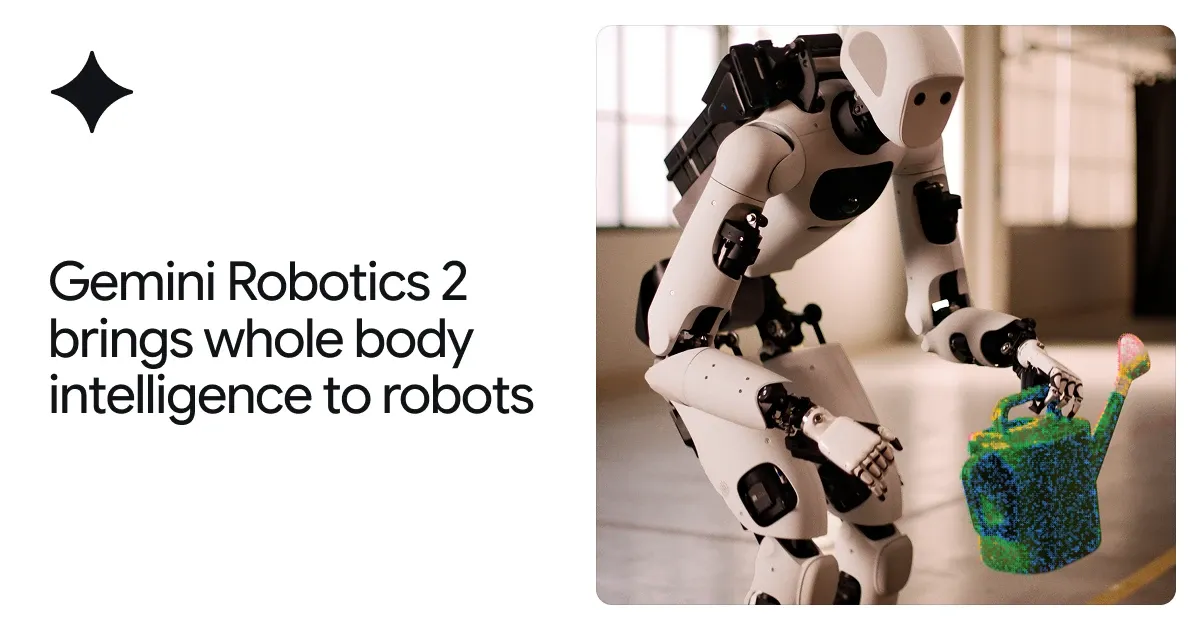
From feet to fingertips — we are teaching robots intelligent whole-body control, fine dexterity, and teamwork to complete a broad range of complex tasks.