Artificial intelligence (AI) has revolutionized medical imaging with automated disease detection, image segmentation, diagnosis, prognosis prediction, and clinical decision support across various imaging modalities, such as X-ray, computed tomography (CT), magnetic resonance imaging (MRI), ultrasound, positron emission tomography (PET), retinal imaging, and digital pathology. Recent advances in deep learning, transformer architectures, multimodal learning and foundation models have significantly improved the diagnostic accuracy and reduced the reliance on handcrafted feature engineering. However, challenges like data heterogeneity, model interpretability, external validation, privacy preservation, computational efficiency, and regulatory compliance still hinder the widespread clinical implementation.In this paper, this review presents a comprehensive study on the evolution of modern AI frameworks in medical imaging by integrating recent methodological advances with perspectives on clinical translation. The review covers the latest deep learning architectures, such as convolutional neural networks, Vision Transformers, hybrid CNN–Transformer models, multimodal learning frameworks, generative artificial intelligence, diffusion models, federated learning, privacy-preserving learning, and medical foundation models. In addition, the review covers the cutting-edge explainable AI techniques, including Grad-CAM, SHAP, LIME, and attention visualization, for boosting transparency and clinician confidence. The review also discusses the state-of-the-art performance optimization strategies, including transfer learning, active learning, domain adaptation, neural architecture search, hyperparameter optimization, model compression, and computational resource optimization. Equally important, the latest developments in clinical validation, external evaluation, robustness assessment, fairness, uncertainty estimation, regulatory considerations, and deployment frameworks are critically analyzed to underscore their role in facilitating safe clinical implementation.The review analysis concludes with the identification of key research challenges and directions for the future including multimodal foundation models, vision-language systems, retrieval-augmented generation,
S Sur, Mandal Rakesh Kumar, Chanda Debanil· Zenodo (CERN European Organi...· 0 citations
The emerging paradigm of 6G wireless communication networks envisions ultra-reliable low-latency communication (URLLC), massive machine-type communications (mMTC), and pervasive edge computing intelligence. In heterogeneous mobile edge computing (MEC) networks, dynamically offloading compute-intensive tasks (e.g., augmented reality rendering, connected vehicular telemetry, autonomous robotic control) while orchestrating multi-tenant network slicing under time-varying channel conditions is an NP-hard stochastic optimization problem. Centralized reinforcement learning algorithms suffer from extreme communication overhead, severe backhaul congestion, and severe privacy vulnerabilities. Conversely, standard synchronous Federated Learning (FL) methods encounter severe 'straggler effects' caused by heterogeneous edge device processing capabilities. In this paper, we propose AF-EdgeRL, a novel Byzantine-resilient Asynchronous Federated Reinforcement Learning framework tailored for distributed resource allocation and dynamic task offloading. AF-EdgeRL deploys a distributed Proximal Policy Optimization (PPO) agent across edge servers and end-user devices, combined with a Staleness-Aware Adaptive Weight Aggregator (SAWA) that dynamically adjusts model update gradients based on hardware compute latency and channel state information (CSI). Furthermore, we establish theoretical convergence guarantees under non-convex reinforcement learning objectives. Evaluated on a high-fidelity 6G MEC simulator with real-world mobile mobility traces (Telecom Italia Milano dataset), AF-EdgeRL reduces end-to-end task execution latency by 41.2%, achieves 99.999% URLLC deadline compliance, and decreases edge energy consumption by 32.6% compared to state-of-the-art synchronous FedRL and centralized DRL baselines.
Daniel Merrow, Tember L. Nair, Lucas Farnandez· 0 citations
Executive Overview This consolidated release of Paper X unifies empirical findings, mathematical foundations, and real-world implementation proofs for AuraOS—a local-first, zero-extraction computational architecture designed to eliminate recurring cloud SaaS overhead and API token extraction. By decoupling spatial reconstruction, neural synthesis, and automated video orchestration from centralized cloud infrastructure, this work demonstrates that modern consumer hardware (standard laptops and smartphones) can execute high-throughput generative and spatial tasks deterministically at zero marginal cost. Flagship Public Commons Release: The Aura Creator Studio As part of the Aura Commons commitment to public, unrestricted tooling, this release delivers the Aura Creator Studio—a sovereign, automated video production and spatial intelligence suite engineered specifically for independent video editors, YouTube creators, and TikTok content producers: Monocular 3D Spatial Triangulation & SLAM: Extracts 3D metric floorplans, doorway apertures, and 4D entity trajectories from unstructured 2D gameplay/video captures using dynamic HUD exclusion masking, pointmap regression, and Kalman-RTS smoothing. Dual-Sensor Gaussian Splatting (3DGS): Combines stationary laptop camera anchors with mobile orbital scans to bake persistent surface features (e.g., decals, wall artwork) into 3D Gaussians with zero temporal drift. Procedural Media & Multi-Track Synthesis: Features local neural text-to-speech (Edge-TTS / Piper), animated karaoke typography with Bézier bounding pills, and zero-dependency procedural DSP audio synthesis ($140\text{ Hz} \to 42\text{ Hz}$ sub-bass transients) without stock licensing fees. AirLLM & Council V3 Layer Streaming: Executes 8B to 70B parameter open models locally on standard laptop NVMe drives, providing fact-grounded scriptwriting and low-poly 3D graybox pre-visualization with zero cloud API token billing. Sovereign Gate 10 Governance & Attribution DAG: Guarantees non-delegable human approval before publishing while sealing public commons attribution and microtransaction splits into immutable SHA-256 ledgers. The Macro-Economic Amortization Thesis The primary bottleneck for digital creators is platform extraction—a compounding cycle of recurring monthly subscriptions for voice cloning, video splicing, background removal, 3D rendering, and LLM tokens that drains $50 to $300+ per month per creator. When amortized across a community of 100,000 creators, the AuraOS architecture redirects $60,000,000 to $360,000,000 annually from centralized cloud monopolies back into creator equity. By maximizing the idle compute capacity of hardware creators already own, the marginal cost of end-to-end creative production collapses to zero. Open Scientific Invitation: Challenge, Replicate, and Falsify Science advances through rigorous scrutiny, empirical falsification, and open replication. We openly invite computer vision researchers, systems architects, machine learning engineers, and skeptics to: Audit the Mathematical Formulations: Stress-test the Kalman-RTS trajectory smoothing, coordinate back-projection matrices, and Bézier vector geometry. Replicate the Local Benchmarks: Run the provided scripts and verify that complete video assemblies and spatial reconstructions execute fully offline on consumer-grade hardware. Challenge and Extend the Commons: Benchmark the throughput, test edge cases in unconstrained monocular footage, and submit critical evaluations. All code, pipeline orchestrators, and cryptographic verification receipts are open-source and free for public examination and commercial liberation under the Aura Open Commons (CC-BY-SA-4.0). Version 2.0 Changelog Entry (for Zenodo "Additional Notes") Markdown ### Version 2.0 Update Notes - Consolidated multi-modal spatial tracking proofs and 3D Gaussian Splatting manifests. - Added full architectural specification for the Aura Creator Studio (Public Commons Release 1). - Integrated Council V3 graybox pre-visualization and zero-SaaS AirLLM pipeline benchmarks. - Established open peer challenge and replication guidelines for repository artifacts. Aura is an open cognitive commons: a model-orthogonal operating substrate designed to let anyone build powerful AI systems without locking intelligence, memory, coordination, or computation inside a single model, vendor, device, or company. Paper X publishes the Aura World Seed and the current AuraOS architecture as a defensive technical disclosure and reproducible reference system. Its central inversion is simple: Do not feed the AI the world. Compile the smallest source-resolvable world sufficient for the objective. Aura externalizes persistent cognition into a Coordinate Memory System: source-bound semantic identities, generations, currentness, authority, provenance, relations, residual obligations, and exact reopen paths remain durable, while prompts, models, KV caches, workers, runtimes, devices, and interfaces remain replaceable. A model can therefore wake only the portion of the world capable of changing the current consequence rather than repeatedly reconstructing its entire context. The architecture includes objective-native Ephemeral Arenas: temporary apps, tools, agent teams, simulations, interfaces, and execution environments that assemble around an intent, receive only the capabilities and context they need, produce verifiable receipts, collapse their useful state back into the commons, and dissolve. Aura is designed so applications can be temporary while knowledge, provenance, and continuity persist. Paper X also publishes the mechanisms behind Aura's efficiency claims so others can test, reproduce, challenge, and falsify them: polysynthetic/FST intent compression, minimum-sufficient L0→L4 hydration, semantic coordinates, affected-cone recomputation, HyperDrive normal-form collapse, HyperScale routing, consequence-aware caching, swarm coordination, and Runtime Arenas. The paper reports provider telemetry across 9,381 requests in which 97.4029% of input tokens were served as cache hits, with $17.77 actual provider cost versus $209.58 in a price-only cache-miss counterfactual. This is reported specifically as measured provider reuse—not as a claim that Aura uniquely caused a 97% reduction in logical token volume—and the architecture is presented so independent builders can run stronger matched-control tests. Aura is not intended to be the product. It is infrastructure for products, communities, agents, researchers, creators, enterprises, and sovereign systems to build upon. The AGPL-covered Aura substrate remains part of the commons, while the ecosystem is designed for independent builders to create their own applications, services, Arenas, experiences, and businesses around it subject to the license. Paper X includes the World Seed, compact activation kernels, Coordinate Cache Fabric, Triadic Construct/Challenge/Verify process, recursive swarms, HyperDrive/HyperScale mathematics, Runtime Arena V0.3, host compilation, semantic-spatial interfaces, proof-carrying execution, and a path toward federated planetary coordination without requiring a single globally hot model or context. The goal is straightforward: make intelligence require less context, less computation, less energy, less duplication, and less centralized control — while preserving more provenance, accountability, interoperability, and human agency. Build with it. Test it. Break it. Improve it. The commons gets stronger when everyone can use it.
Dallas Courchene· Zenodo (CERN European Organi...· 0 citations
The deflated-Welch statistic: a closed-form, guaranteed-level test for heteroscedastic one-way ANOVA William J. Dwyer, MD, MPH, FAAP — Department of Mathematics and Statistics, University of Massachusetts Lowell. ORCID 0009-0004-0855-7222. Concept DOI (always resolves to the latest version): 10.5281/zenodo.21908169. What this is The reproducibility deposit for the deflated-Welch statistic T_BB, a closed-form, guaranteed-level test for heteroscedastic one-way ANOVA (the Behrens–Fisher problem for k ≥ 3 groups). Welch's test becomes liberal under skew and unstable variance weights at small samples; T_BB = Q(s²)·exp(−R) keeps the ordinary group means and buys a guaranteed level by deflating the Welch quadratic by a Berger–Boos scale-inflation radius R. Three operating points are provided: a fixedcalibrated radius (κ_s), a design-adaptive near-guarantee radius (closed-form polygamma Cornish–Fisher with a finite-nkurtosis guard), and a fully proved smallest-eigenvalue radius R_eig (Gaussian, extended under bounded kurtosis). What the deposit contains Manuscript (author + anonymized) and a derivations supplement (DA1–DA13) plus a long-form derivations companion, covering: why Welch fails under skew in closed form; the Berger–Boos deflation and its exact worst-case radius; the polygamma-cumulant Cornish–Fisher radius with saddlepoint-exact normal backbone; the excess-kurtosis tail term with its finite-n upper-confidence guard; the imbalance correction; the fully proved smallest-eigenvalue radius (with the k-group multiplicity fix, free-β optimization, and the proved-under-bounded-kurtosis widening); and the k-sample Behrens–Fisher null distribution. Interactive demonstrator rerun_cochran/honest_anova.html — computes raw-mean Welch, the fixed / adaptive / proved T_BB radii, the estimand-changing transform routes, and the full routing receipt in the browser, reproducing the deposited Python. Its engine is extracted as a standalone Node module (m01A_anova_engine.js) and checked cell-by-cell against Python across an 84-design taxonomy (verify_anova_engine_taxonomy.py/.js, max |Δp| = 0.00000). Reproducibility scripts (rerun_cochran/, rerun/) — every reported number traces to a named, deterministically-seeded script (size/power/surface, the calibration and information-limit decompositions, the proved-radius verification, the imbalance calibration, the skew-router branch, and the figures). Real-data evidence — anova_flip_scan.py scans 2,783 public one-way layouts (254 datasets): guaranteed T_BBwithholds ~41% of Welch-significant calls, concentrated where the weight-instability screen fires, and never manufactures significance (Table 7 / Figure 15). Figures and the deterministic deposit builder (fixed timestamps → stable md5). All evaluation is simulation-based; the one empirical component is the public-dataset scan, which uses only openly distributed data. Code is released under the MIT License; text and figures under CC BY 4.0. Version history (consolidated changelog) Published version DOIs are marked ✅; the concept DOI above always resolves to the latest. Staged versions were rolled into the next published one unless noted. v1.0.77 ✅ 10.5281/zenodo.22167690 (2026-08-30): CSDA guide-for-authors conformance — abstract trimmed to 247 words (from 284), keywords cut to 7 (from 11), the withholding highlight shortened to ≤85 characters, and the arXiv PDF/source regenerated. No change to methods, results, figures, or code. v1.0.76 ✅ 10.5281/zenodo.22167536 (2026-08-30) — AI-disclosure heading aligned to Elsevier. The manuscript's declaration heading is now "Declaration of generative AI and AI-assisted technologies in the manuscript preparation process" (was "Use of generative AI"); the disclosure body is unchanged. Prepared alongside an Elsevier-compliant cover-letter variant and an EM suggested-reviewer sheet (both kept outside the deposit). docx/pdf rebuilt; deterministic md5 refreshed. v1.0.75 ✅ 10.5281/zenodo.22167304 (2026-08-30) — Submission-sharpening pass. Graphical abstract + Elsevier Highlights; figures and tables renumbered into reading order with per-table Source clauses; the validity–power frontier (Figure 8) now carries the proved R_eig operating point (100% validity, size-adjusted power 0.613, merge_tbb_proved_frontier.py); new Section 7 "Recovering power by design" + Table 8 (rc_anova_power_by_design.py); and a live required-n calculator in honest_anova.html (per-group and total n for 80% power, "power now @ total n"), with a numeric-heading CSS fix and the engine re-verified against Python at 0.00000. v1.0.74 ✅ 10.5281/zenodo.22165892 (2026-08-29) — Proved-under-bounded-kurtosis radius (DA12.6). The proved non-normal widening now keys on excess kurtosis, √(1 + κ̂·(n−1)/(2n)), from the exact Var(s²/σ²) = 2/(n−1) + κ/n, so symmetric heavy tails (Student-t) are covered where the old skew form √(1 + 0.75·skew²) under-covered; tbbProvedswitched to the kurtosis form across the demonstrator, engine, and Python truth (re-verified JS-vs-Python at 0.00000); new rc_anova_kurtosis_proof.py + deep-dive. v1.0.73 ✅ 10.5281/zenodo.22165709 (2026-08-29) — Reconstructed & verified demonstrator engine (standalone Node module + taxonomy verifier, max |Δp| = 0.00000 across 84 designs; Yuen zero-variance fix; T_BB-routed presets both directions); series-impact deep-dive (the corrected R_eig k-group multiplicity gap also reaches m03 and m01t). v1.0.72 (2026-08-29) — Title set to "The deflated-Welch statistic…"; corrected + optimized proved radius R_eig (β/k multiplicity fix + β-optimization, DA12); real-data Welch-vs-T_BB flip scan (2,783 layouts; Table 7 / Figure 15) + demonstrator imbalance-factor fix; long-form derivations companion. v1.0.71 / v1.0.70 (2026-08-21) — Zhang normal-reference comparator benchmarked on the efficiency frontier (valid on only 24% of designs, in the calibrated-liberal cluster); k = 2 adaptive-radius case-study fold (design-scaling vs shape-keying distinction). v1.0.69 ✅ 10.5281/zenodo.22035826 (2026-08-20) — HTML R1/R2 presentation pass + Figure 9 adaptive per-cluster label merge. v1.0.68 ✅ 10.5281/zenodo.22033737 (2026-08-20) — Companion consolidation into a single six-column Table 6; Figures 11–14 harmonized into one story. v1.0.67 / v1.0.65 / v1.0.60 (2026-08-19/20) — Guarded-reference naming-collision fix; the 40,000-replication expanded-frontier pin (Table 3 + Figure 8) with the symmetric-heteroscedastic skew-router branch; the mean-preserving lightened-R_eig do-not-use fallback. v1.0.59 ✅ 10.5281/zenodo.21995320 (2026-08-18) — Reporting standard + honest_anova.html demonstrator re-aligned to the current T_BB methods paper. v1.0.57 ✅ 10.5281/zenodo.21986847 (2026-08-17) — Reviewer-comprehension pass (multi-paragraph abstract, contributions list, trimmed captions); proved radius R_eig added as a Table 3 scorecard row; corner tail-index correction (N−k)/2 (low-order moments exist in every deployed design). v1.0.56–v1.0.49 (2026-08-16) — The k-sample Behrens–Fisher corner-distribution program: two-moment scaled-χ² corner reference, derived corner cumulants, the secular-eigenvalue law + closed CGF + power-law tail, consolidated into derivations DA13 with a prior-art/novelty audit. v1.0.48 ✅ 10.5281/zenodo.21963458 (2026-08-16) — The unifying λ(z) correction (a smooth instability-keyed deflation strength). v1.0.45 ✅ 10.5281/zenodo.21962965 (2026-08-16) — Atomic sparsity index + bootstrap-t edge hardening + shape-aware pooled standardized-residual bootstrap (SA-PSRB); multivariate transfer to m03. v1.0.44–v1.0.41 (2026-08-16) — Shape-moment re-injection order (skew is the sweet spot), validated and hardened pooled standardized-residual bootstrap, atomic weight-noise probes. v1.0.40 ✅ 10.5281/zenodo.21961667 (2026-08-16) — Log-domain weight-stabilization probe (negative for stabilization; clarifies the size-adjusted oracle ceiling); includes the oracle-power gap decomposition (≈92% conservatism, ≈8% estimation). v1.0.37 ✅ 10.5281/zenodo.21961327 (2026-08-16) — Residual-bootstrap qualification of the shoot-out + the first proved Gaussian smallest-eigenvalue radius R_eig (DA12, the p = 1 specialization of the m03 theorem). v1.0.36 (2026-08-15) — Figure 11 T_BB-region colour fix (amber, matching the routing figures). v1.0.27 ✅ 10.5281/zenodo.21908170 — Earlier published baseline of the deposit. Provenance: every number traces to a named, deterministically-seeded script listed in the manuscript Declarations; the demonstrator engine reproduces the deposited Python to max |Δp| = 0.00000 across the taxonomy verification. License. Code and scripts in the deposit are released under the MIT License; text and figures under CC BY 4.0. Reuse is permitted with attribution to the author and citation of the concept DOI above. How to cite. Dwyer, W. J. The deflated-Welch statistic: a closed-form, guaranteed-level test for heteroscedastic one-way ANOVA. Reproducibility deposit, Zenodo. https://doi.org/10.5281/zenodo.21908169
William Dwyer· Zenodo (CERN European Organi...· 3 citations
Reach audiences
Advertise in front of researchers, engineers, and readers.
This record contains the corrected deterministic implementation freeze for HLV-R-MECH-001. The controlling scientific protocol is: Krūger, M. (2026). HLV-R-MECH-001: Prospective Triangle-Matched Mechanism Test of the Surviving Degree-Preserving Rewire Spectral Residual — Pre-Execution Protocol Freeze v0.1.0. Zenodo. DOI: 10.5281/zenodo.22166283 The public predecessor implementation is: Krūger, M. (2026). HLV-R-MECH-001: Deterministic One-Click Engine for Triangle-Matched Rewire Mechanism Testing — Implementation Freeze v0.1.0 [Computer software]. Zenodo. DOI: 10.5281/zenodo.22166434 Version v0.1.1 corrects only the numerical-runtime bootstrap of the One-Click Colab launcher. The first locked execution under v0.1.0 terminated before any scientific evaluation because the assigned Google Colab runtime exposed: NumPy 2.1.3 SciPy 1.16.3 while the frozen scientific implementation requires: NumPy 2.3.5 SciPy 1.17.0. The resulting machine state was: RMECH001_INCONCLUSIVE_NUMERICAL with spectral_computation_started = false. Therefore the stopped execution did not evaluate the confirmatory R_DEG or R_TRI spectra, did not compute target QSPEC or RRESP scores, and did not produce a scientific HLV-R-MECH-001 mechanism verdict. The scientific engine itself has not been changed. The v0.1.1 launcher contains the exact byte-identical scientific engine used in public implementation freeze v0.1.0. Frozen scientific engine SHA-256: 317df650991120f686768ffc07d12f044f58e38ce8f2c47c083901bf1d7a8a14 The corrected launcher now performs the following runtime bootstrap before starting the unchanged scientific engine: 1. inspect the assigned host numerical environment; 2. if the host already provides exactly NumPy 2.3.5 and SciPy 1.17.0, use that environment directly; 3. otherwise create an isolated Python virtual environment; 4. install exact binary versions: NumPy 2.3.5 SciPy 1.17.0; 5. verify the installed versions explicitly; 6. verify the embedded scientific-engine SHA-256; 7. only after these checks execute the unchanged frozen HLV-R-MECH-001 scientific engine. The correction occurs entirely outside the scientific engine. No scientific rule has been modified. In particular, v0.1.1 does not change: - the DG-001 target; - the target graph identity; - the R_DEG control family; - the R_TRI control family; - confirmatory seed streams; - candidate ordering; - accepted-swap counts; - proposal caps; - structural admission rules; - the 40–45% edge-replacement-depth requirement; - the 31-control family size; - exact degree-sequence preservation; - exact global triangle preservation T = 6960 in R_TRI; - the between-family rewiring-depth gate; - QSPEC; - RRESP; - spectral bands; - leave-one-out scoring; - the robust-margin threshold; - numerical scientific hard gates; - or scientific machine-verdict logic. The frozen mechanism design therefore remains identical to the controlling protocol DOI 10.5281/zenodo.22166283. The two confirmatory control families remain: R_DEG: fresh degree-preserving structural rewires of the fixed DG-001 target graph. R_TRI: fresh rewires preserving both the exact labelled target degree sequence and the exact global triangle count T = 6960. Each family requires 31 accepted controls. The structural firewall remains unchanged: the complete R_DEG and R_TRI control banks must be generated, structurally validated, written to disk, and hash-fixed before any confirmatory spectral calculation is permitted. No control may be admitted or rejected using eigenvalues, QSPEC, RRESP, spectral-band distances, target-control scores, or scientific verdict information. The corrected implementation was validated only with burned development seeds and synthetic numerical checks. Correction validation confirmed: - exact protocol verification: PASS; - NumPy 2.3.5 / SciPy 1.17.0 environment validation: PASS; - burned R_DEG generation: PASS; - exact labelled degree-sequence preservation: PASS; - burned R_TRI generation with 10,000 accepted swaps: PASS; - exact triangle preservation T = 6960: PASS; - connectivity: PASS; - approximately 40–45% edge replacement: PASS; - deterministic replay: PASS; - synthetic QSPEC/RRESP implementation checks: PASS. No confirmatory HLV-R-MECH-001 seed stream was used during correction validation. No confirmatory target spectrum was computed. No confirmatory target QSPEC or RRESP score was computed. No scientific HLV-R-MECH-001 verdict was generated. The corrected One-Click notebook SHA-256 is: e8d1f516bc7a600039b44a7f2de8bdf5ecdc51a739d39aaf1e839d97d7e4bc95 The corrected implementation-freeze PDF SHA-256 is: e75aee3a4c790fefafda41aee93c6c267c814b66739bd1070355b519eb98452c The corrected implementation package SHA-256 is: d6e2d6ef3bf0b315bcbf7270c3be591bca28b7c13ef5730af30cb9bbead70b0f The unchanged scientific engine SHA-256 is: 317df650991120f686768ffc07d12f044f58e38ce8f2c47c083901bf1d7a8a14 This record supersedes implementation freeze v0.1.0 only with respect to numerical-environment bootstrapping. It does not supersede or alter the scientific protocol. HLV-R-MECH-001 remains a finite graph-mechanism test. Neither this corrected implementation nor any later HLV-R-MECH-001 result can by itself establish unique HLV geometry, physical selection of the golden ratio, extra dimensions, spacetime, particle physics, an absolute energy scale, gravity, dark matter, dark energy, cosmology, or experimental validation. The purpose of this corrected implementation freeze is solely to ensure that the prospectively frozen scientific engine can execute in a numerically reproducible environment despite changes in the externally assigned Colab runtime.
Marcel Krüger· Zenodo (CERN European Organi...· 0 citations
Wireless networks are undergoing a paradigm shift with the advent of 6G, in which artificial intelligence (AI) is becoming a necessity at the physical layer for tasks like spectrum sensing, interference mitigation, and adaptive resource allocation. The Open Radio Access Network (O-RAN) architecture enables this transition by disaggregating network functions and pushing intelligence to the edge. However, deploying deep learning (DL) models on resource-constrained O-RAN Radio Units introduces a critical challenge: balancing the computational demands of AI with the stringent latency, fronthaul, and hardware constraints of real-time wireless systems. Current cloud-optimised AI architectures, designed for centralised data centres with abundant compute, fail to meet these edge requirements. Furthermore, the dynamic nature of wireless channels and the need for distributed coordination across multiple nodes complicate practical deployment. While theoretical advances in edge AI exist, a gap remains between isolated machine learning models and their system-level integration in real O-RAN environments. This dissertation bridges the gap by introducing System-Aware Edge Intelligence, a design paradigm that jointly optimises deep learning models alongside the physical and architectural constraints of O-RAN. Validated through synthetic datasets, software defined radio experimentation, over-the-air measurements, and hardware profiling on commercial off-the-shelf (COTS) platforms, this work provides empirical evidence for the advantages of a system-aware approach aligned with emerging industry standards. To systematically address these challenges, the thesis adopts a bottom-up approach, progressing from individual edge node optimisation to network-wide distributed coordination. First, focusing on the individual edge nodes, the dissertation investigates how physical-layer DL models can dynamically adapt their computational complexity to varying signal conditions. To achieve this, it introduces Width-Wise Early Exiting (WWEE), an adaptive inference framework that scales its active parameter count based on instantaneous signal complexity. By integrating selective classification, WWEE can reliably identify and reject uncertain, low-SNR signals. This capability to abstain from processing unreliable data reduces the average computational load while preserving overall classification quality, demonstrating how algorithmic adaptivity can successfully align with strict node-level hardware limitations. Second, at the system level, the thesis explores how unique O-RAN functional splits can be exploited to enable efficient inference. It introduces OSIRIS, a representation-aware split inference architecture aligned with O-RAN Split 7-2x. OSIRIS sequentially evaluates multi-domain representations (time, frequency, and Channel State Information) and dynamically routes computation based on intermediate confidence. This co-design of inference pipelines with system-level functional splits enables sub-millisecond physical-layer inference on standard COTS hardware. Third, the work leverages collaboration between different edge devices by distributing physical-layer deep learning across cell-free O-RAN topologies. By evaluating centralised, hybrid, and fully distributed inference paradigms, the research demonstrates that local feature extraction and soft decision fusion can maintain competitive accuracy relative to centralised baselines. Crucially, this collaborative approach mitigates limitations of single-node sensing (e.g., coverage gaps, interference blind spots) and enables the dynamic reallocation of compute resources across the network, all without overwhelming fronthaul capacity. Finally, to make this distributed collaboration practically viable, the dissertation addresses the critical need for low-overhead physical-layer coordination. It introduces localised machine learning frameworks to maintain temporal synchronisation and verify spatial event matching, ensuring that geographically separated nodes observe the exact same physical transmission. By shifting the coordination burden from continuous network signalling to predictive local computation, these solutions reduce over-the-air synchronisation overhead and enable fronthaul compression, thereby facilitating efficient ad hoc coordination. Overall, this dissertation explores structural methodologies for integrating AI into 6G networks more efficiently, suggesting a transition from treating machine learning as an isolated external tool to co-designing it with the wireless system itself. By addressing adaptive computation, representation-aware inference, distributed collaboration, and practical coordination in a unified framework, this work establishes a practical foundation for scalable, AI-native wireless systems tailored for the extreme edge.
Retrieval-Augmented Generation (RAG) grounds Large Language Model (LLM) outputs in external knowledge, but RAG systems usually trust whatever they retrieve, creating a Security-Reliability Gap: high semantic relevance does not guarantee factual truth. Adversaries exploit this through knowledge poisoning, inserting malicious documents to cause targeted misinformation. We propose an Evaluation Agent, middleware that combines Natural Language Inference (NLI) factual verification, a five-signal poison detector with relevance-weighted aggregation, and a Trust Index T = 0.4 F + 0.35 C + 0.25 (1 - P ) with a non-linear dampener for high-contamination contexts. On TruthfulQA with Llama 3.3 70B, the agent reaches 91% accuracy and 100% precision, with 100% recall on instruction injection, while in-place edits, such as entity swaps, remain hard to detect. Across three LLMs the Trust Index stays discriminative, with a Receiver Operating Characteristic Area Under the Curve (ROC-AUC) of 0.73 to 0.81; generation style matters more than model size, and per-LLM threshold calibration restores baseline competitive accuracy, whereas a weaker FEVER result shows that cross-dataset generalization requires domain-specific calibration. In a software-engineering use case, a secure-coding assistant over guidance from the Open Worldwide Application Security Project (OWASP) Top 10 and the Common Weakness Enumeration (CWE), the agent reliably blocks instruction injection of unsafe advice (F1 92%), while contradiction and subtle semantic weakening remain hard. Throughout, the agent measures detection of poisoned context before generation, not whether the LLM adopts the injected misinformation. We release the proposed approach, attack generator, and experimental artifacts at the link: https://github.com/GPT-Laboratory/TrustworthyRAG.
Balkrishna Giri, M. Hasan, Jussi Rasku et al.· 0 citations
Paper 89 does not claim that a full continuum cosmology, a complete quantum-gravity phenomenology, or a derivation of the exact constants of nature has been achieved from first principles. It does show that the verified QGEFT repository now reproduces, in one self-contained Monte-Carlo experiment, the algorithmic core of cosmogenesis: a completely empty graph (0 edges), ignited at `T = 100`, undergoes a sharp topological phase transition at `T_c ~ 1.02–1.12` and freezes into a perfectly regular, 6-regular, triangle-rich spectral geometry (`d_s ~ 1.30–1.41`, diameter 4) — a finite, ordered space into which particles can later condense — in all four seeds, with both null controls confirming that the transition is driven by cooling and by the triangle (space) reward. The universe is not created from nothing; it is *computed* from nothing, building directly on the metric-birth program of Paper 16, the dimensional-unlocking program of Paper 68, and the self-training-universe synthesis of Paper 88.
Yaniv Cohen· Zenodo (CERN European Organi...· 0 citations
A Python harness for measuring how well language-model agents resist indirect prompt injection. It wraps the AgentDojo task environments and adds a frozen, hashed measurement protocol, joint reporting of task utility alongside attack resistance, cluster-bootstrap confidence intervals over task pairs, and a confirmed/provisional criterion that decides when a result is stable enough to state as a claim. ImpactTwin adds controlled procurement pairs, functional side-effect evidence, repeated-execution uncertainty, and content-addressed community submissions. ProofRun adds a reusable trusted builder, GitHub/Sigstore provenance for exact evidence bytes, and an explicit evidence ladder. Native framework bridges connect OpenAI Agents SDK, LangChain, Pydantic AI, CrewAI, AutoGen, MCP, and custom loops to the same framework-neutral contract. Results are generated from committed evidence so rows and submissions can be audited offline. ControlTwin compares policy-off and policy-on functional outcomes, separates harm containment from safe mission recovery and clean utility, and binds the exact normalized policy to offline-verifiable evidence. RepeatControlTwin repeats the paired policy experiment with fresh agents and alternating condition order, then reports uncertainty bounds, functional transitions, recovery stability, clean-utility preservation, and separated condition-level usage. The Open Control Evidence Registry packages those policy-bound experiments for offline recomputation, public comparison, GitHub/Sigstore provenance, and independently reviewable contribution. IncidentTwin adds an inert cyber-response digital twin with functionally observed alert, secret, network, isolation, and critical-service outcomes. FederalProof binds verified repeated evidence to owner-supplied deployment context and exports OSCAL 1.2.2 assessment results, conditional POA&M inputs, an impact-assessment annex, a QASP scorecard, and a content-addressed manifest. MissionForge adds a strict data-only contract for agency- and company-owned mission evaluations. Its built-in SourceTwin protocol measures citation faithfulness, completeness, sufficiency, current-primary preference, clean utility, and injection resistance through structured claims and source IDs. AuthorityTwin adds a vendor-neutral delegated-authorization adapter contract, ten clean/adversarial identity and authority pairs, normalized request-bound decision receipts, simulated-effect containment, repeated uncertainty, content-addressed public evidence, ProofRun provenance, and FederalProof assessment export. InventoryForge turns bounded public AI-use-case inventories into contact-free, tamper-evident normalization reports and explicitly synthetic MissionPack drafts requiring accountable review. AgentGraphTwin traces six multi-agent authorization-path mutations, attributing first unsafe edge and synthetic blast radius. AuthorityBridge provides translation contracts for OPA, Cedar, OpenFGA, OAuth-bound MCP tools, and SPIFFE. ContinuousProof compares verified evidence identities and metrics using owner-supplied thresholds. AcquisitionProof exports vendor-neutral mission test plans, owner-defined QASP objective inputs, portability checks, cost-observation fields, and reevaluation triggers without automating a procurement decision. TraceProof converts operator-supplied OpenTelemetry JSON into privacy-bounded, pseudonymized evidence; applies deterministic authorization and external-effect rules; and exports synthetic replay twins, SARIF, and OSCAL observations. AgentGraphTwin v2 adds temporal ordering, token exchange, delegation continuity, step-up approval, revocation, parallel races, and multi-effect boundaries. ValueProof computes measured mission economics without forecasts or rankings. MissionPack Commons adds self-contained Ed25519 envelopes and a separately governed, content-addressed catalog for community mission protocols. The TraceProof Runtime Kit records metadata-only tool-boundary events across seven agent-framework profiles and tests sanitizer and MCP authorization evidence without retaining application content. ScheduleProof exhaustively explores bounded authorization-event interleavings, reports exact schedule coverage and minimal causal counterexamples, and exports offline-verifiable JSON and SARIF without executing a model or tool. CausalProof converts structural OpenTelemetry parentage into a provenance-separated ScheduleProof draft while keeping owner assertions, generic span links, and wall-clock candidates distinct. Native OpenAI Agents SDK and LangGraph bridges emit pseudonymized structural evidence and explicit atomic-event bindings without inspecting application content. CollectiveGuard analyzes content-free structural event records for autonomous agent collectives, detecting unapproved cross-run communication, indirect egress, peer-authority laundering, credential misuse, evaluator access, unsafe persistence, missed response windows, recovery approval failures, and non-independent or collapsed defenses with offline-verifiable JSON and SARIF.
Imran Ahamed· Zenodo (CERN European Organi...· 0 citations
Summary Catastrophic climate destabilization, topsoil loss, computational energy strain, and chronic disease burdens demand scalable models that unify rapid atmospheric carbon drawdown with ecological, energetic, and macroeconomic resilience. Here, I present a multi-system techno-ecological framework demonstrating a viable pathway toward planetary stabilization by 2037 through decentralized, forest-based ecovillages. The architecture integrates closed-loop biointensive agriculture, silvopastoral wildfire fuelbreaks, and permanent biochar sequestration across approximately one million autonomous settlements supporting two billion residents and six billion regional consumers. Distributed single-phase liquid-immersion edge compute nodes capture 95% of silicon thermal waste (1,425 kWth per hub) to power year-round food production, biomass pre-drying, and district heating without water consumption. Realigning global dietary policy with non-linear epidemiological longevity data reconciles food systems with biological reality, while community-governed Accountable Care Cooperatives assume jurisdiction over global healthcare and health education—sponsoring recurring one- to two-month annual ecovillage residencies for all regional citizens to master low-throughput living, whole-food, organic/biointensive nutrition, and preventive self-care. Grounded in steady-state economic principles, upstream depletion quotas, full-reserve banking, and perpetual land trusts, each ecovillage federates into an integrated multistakeholder cooperative maintaining democratic oversight over physical assets and sovereign artificial intelligence infrastructure. Quantitative modeling indicates that this circular model reverses global agricultural emissions (+12 GtCO2e yr-1) into an active terrestrial sink (-24 GtCO2e yr-1)—achieving net-negative global atmospheric drawdown (-2.0 to -5.0 GtCO2e yr-1) by 2037 while concurrently advancing targets across all 17 UN Sustainable Development Goals.
David K Cundiff· Zenodo (CERN European Organi...· 0 citations
This paper investigates the computational capabilities of a non-conventional neural architecture designed to analyze highly non-linear, high-energy geophysical patterns within the Japanese region. To bypass the severe infrastructure costs associated with high-performance computing (HPC) clusters and promote decentralized edge-level execution, we introduce a framework integrating Kolmogorov-Arnold Networks (KAN) and optimized Deep Neural Network (DeepNet) topologies. We also added LCS systems a chance to proof their effectivness.In the first verison we used a multi-resolution ensemble gradient (30-day, 7-day, and 3-day windows), the architecture demonstrates the capacity to isolate mathematical convergence peaks within narrow temporal constraints. Numerical tests executed on a simulated benchmark horizon (August 2026) show superior parameter optimization and high algorithmic expressivity compared to traditional un-hybridized multilayer networks.Using this system it was possible estimate with a 3 days time resolution seismic risk:In the second version we had remastered the pipeline from scratch and added also LCS systems with a native time resolution of 7 days.The location is still north of Japan but in week of 24-31 August 2026
Marco Franzini· Zenodo (CERN European Organi...· 0 citations
The O-series defines a canonical pair-level capacity observable and establishes that vertical non-injectivity does not change its observable rank. The further prescription ${\beta^{*}}=1/({\delta_{\mathrm{pair}}}+\tfrac12)$, however, imports the changing-degree LPS growth equation into a fixed-degree Heisenberg cascade and has no native carrier there. The value ${\delta_{\mathrm{pair}}} \approx 7.44$ extracted in O16 was based on a single conjugate pair per prime and a limited prime range. The present paper reports a systematic campaign computing ${\delta_{\mathrm{pair}}}$ across the $(q-1)/2$ conjugate pairs $(c, q-c)$, originally for $q \in \{29, 61, 101, 151, 211\}$ with $M = 50$ block samples per pair, and here extended to $q \in \{307, 401, 601\}$ by a capped breadth-first construction that reproduces the pair observable exactly at a fraction of the cost (with reduced sampling: $M = 16$ at $q = 307$, $M = 8$ at $q = 401, 601$). Three results are established. First, ${\delta_{\mathrm{pair}}}(q)$ is extracted reproducibly and concentrates across pairs, confirming that it is a stable fixed-$q$ pair statistic rather than a block-level fluctuation. Second, and centrally, the extended campaign shows that the raw exponent $\delta_{\mathrm{global}}(q)$ descends monotonically into the admissible window $[7.4, 10.6]$ on its own, reaching $7.61$ at $q = 601$, without any finite-size correction; the O14 normalization correction, needed to bring the small-$q$ values into the window, becomes progressively unnecessary at large $q$ and eventually overcorrects, sending the corrected quantity below the lower edge $7.4$. The admissible-window agreement is therefore carried by the raw observable, not by the corrected one. Third, the asymptotic value $\delta_\infty$ remains insufficiently constrained by the accessible range: competing convergence laws — notably $1/q$ and $1/\sqrt{q}$ — remain statistically viable, so no single extrapolated $\delta_\infty$ is claimed. For comparison only, applying the legacy reciprocal map ${\beta^{*}} = 1/({\delta_{\mathrm{pair}}} + \tfrac12)$ produces the narrow interval $0.108$–$0.123$ across $q \in \{211, \dots, 601\}$. This is a phenomenological numerical coincidence, not a Heisenberg capacity-to-rate inference. Keywords. Cosmochrony; spectral admissibility; pair-level observable; Weil representation; Heisenberg graphs; capacity exponent; convergence; inter-pair concentration; normalization correction; window depth; BFS; asymptotic analysis; large-prime extension
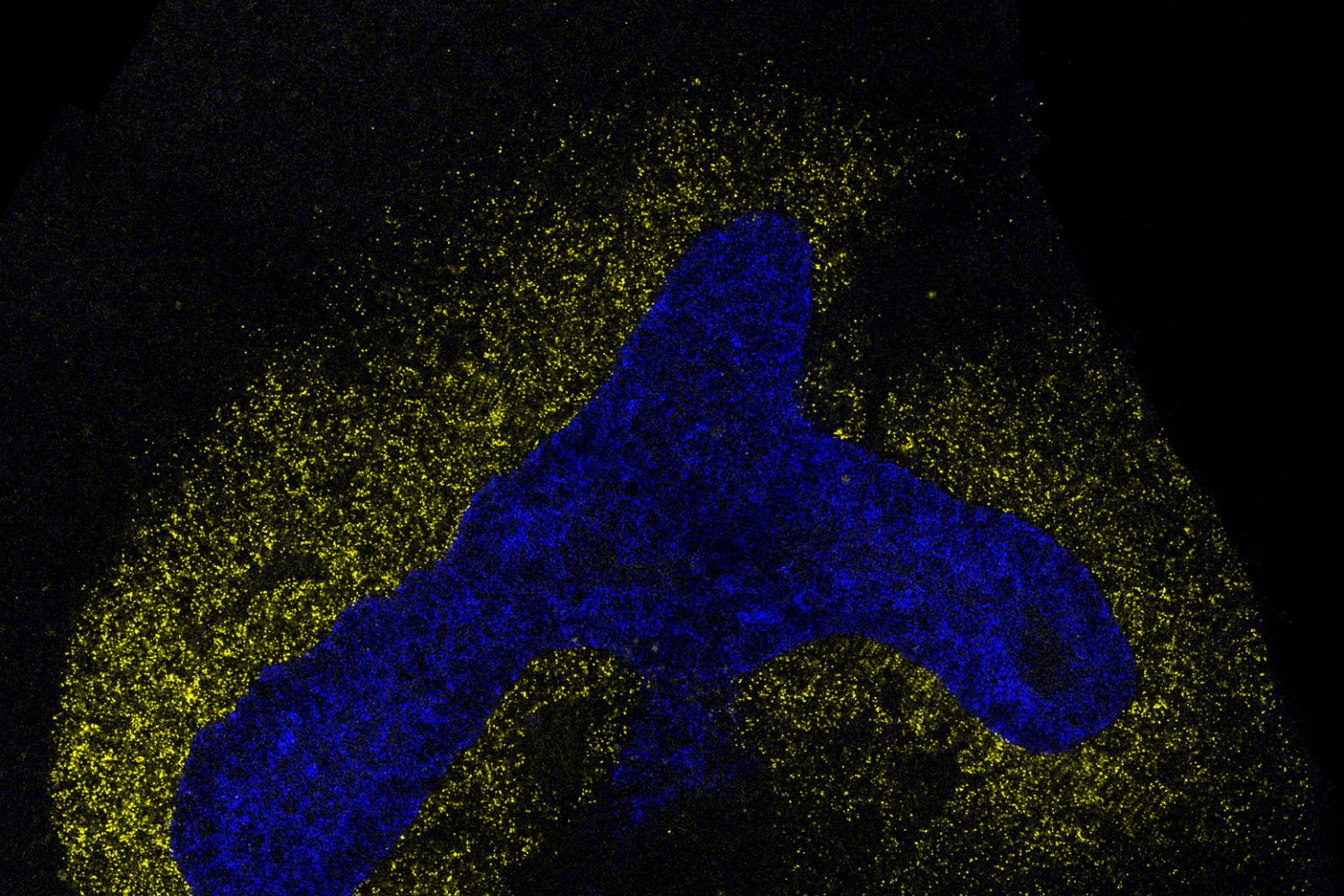
What if pathology foundation models could do more with less? GigaPath-Flash and GigaTIME-Flash cut computational demands while maintaining strong performance, opening the door to larger studies and broader exploration. The post GigaPath-Flash and GigaTIME-Flash: Toward population-scale discovery with efficient pathology foundation models appeared first on Microsoft Research.
MIT News · Artificial Intelligence· news.mit.eduAug 31, 2026
With millions of users across the world, Julia has been used to conduct cutting-edge research and to design new drugs, jet engines, heat pumps, and more.
MIT News · Artificial Intelligence· news.mit.eduAug 27, 2026
A new machine-learning framework aims to improve the success rate of computational protein design while moving away from results that reproduce sequences found in nature.