The ethics-driven data governance framework for health-based AI (EDG-AI4H): an integrated approach for empowering explainable AI in health insurance risk prediction in Iran
Rezvan Rahimi
· Dialogues in Health · 0 citations
Category
2,752 papers
GeoAI has advanced the analysis and prediction of urban systems by integrating GIS with artificial intelligence, yet its contribution to urban planning and governance remains limited. Many applications function as black-box predictive tools, making results difficult to interpret, justify, audit, and use in formal plann...
This work presents a theoretical architecture for continually adapting AI systems organized around three distinct timescales: (1) fast transformer key-value context for immediate interaction, (2) medium-term persistent recurrent memory with decaying importance and consolidation, and (3) slow, controlled parameter adapt...
Food fraud and adulteration continue to threaten food safety, consumer confidence and international trade. The challenges of investigating food-forensics reliably are compounded by increasingly complex supply chains, changing deceptive practices and difficulties in interpreting high-dimensional analytical data. The rev...
Reach audiences
Advertise in front of researchers, engineers, and readers.
On August 8 (UTC+8), 2025, OpenAI rolled out GPT-5 to the public, and simultaneously removed access to all “legacy models” including GPT-4o. This action led to a global movement to “bring back GPT-4o”. The protest against “cold and detached” GPT-5 revealed users’ acute sensitivity to anthropomorphic AI responses: users...
"The El-Rakhawi Sovereign Health Protocol" by Dr. Mohamed Kamal Arafa Elrakhawi establishes a foundational framework for digital health sovereignty. It asserts medical data is a sovereign extension of the human body, not a corporate asset. The Protocol mandates four pillars: absolute patient ownership via cryptographic...
Critical Infrastructure Resilience Command Center — v0.1.0 Initial public release of a research-prototype command center that unifies Zero Trust posture, post-quantum cryptography (PQC) migration readiness, and AI-driven predictive maintenance into a single resilience-scoring platform for synthetic critical-energy digi...
二本の移動平均のクロスについて「この組み合わせは約N本の波を捉えている」と言われることがある。そのNを決めているのが相場なのか、二本の期間の選び方なのかを、ティックデータで測った。 四銘柄(USDJPY・EURUSD・GBPUSD・XAUUSD)の2019年から2024年までの1時間足で、連続するクロスの間隔の中央値を、三つの族について測った。比を4.0に固...
This record contains five problem sheets from the lecture Artificial Intelligence in the Life Sciences, held in the winter term 2025/26 at the Faculty of Biology and Biotechnology, Ruhr University Bochum. The exercises take students from classical machine learning to modern deep learning and explainable AI, and many of...
Abstract When Iceland's three largest banks failed in October 2008, the immediate problem was brutally concrete: a banking system that dwarfed the domestic economy had collapsed, and someone had to absorb the losses. Balance‐sheet structure explains why the banks failed. It says less about why repeated warnings carried...
This study examines barriers to adopting artificial intelligence (AI) in human resource management (HRM)—hereafter AI-enabled human resources (AI-HR)—across Zanzibar’s public and private sectors and asks whether the standard predictors of an integrated Technology–Organization–Environment and Technology Acceptance Mod...
We’re on a journey to advance and democratize artificial intelligence through open source and open science.
Professor Ali Jadbabaie describes how AI, digital transformation, climate change, and complex geopolitics are forcing engineers and policymakers to rethink how infrastructure is designed, built, and managed.
Prabha Jha used her experience with MIT Open Learning’s program for senior executives to develop AI solutions for her employer, Verizon, and to write a book.
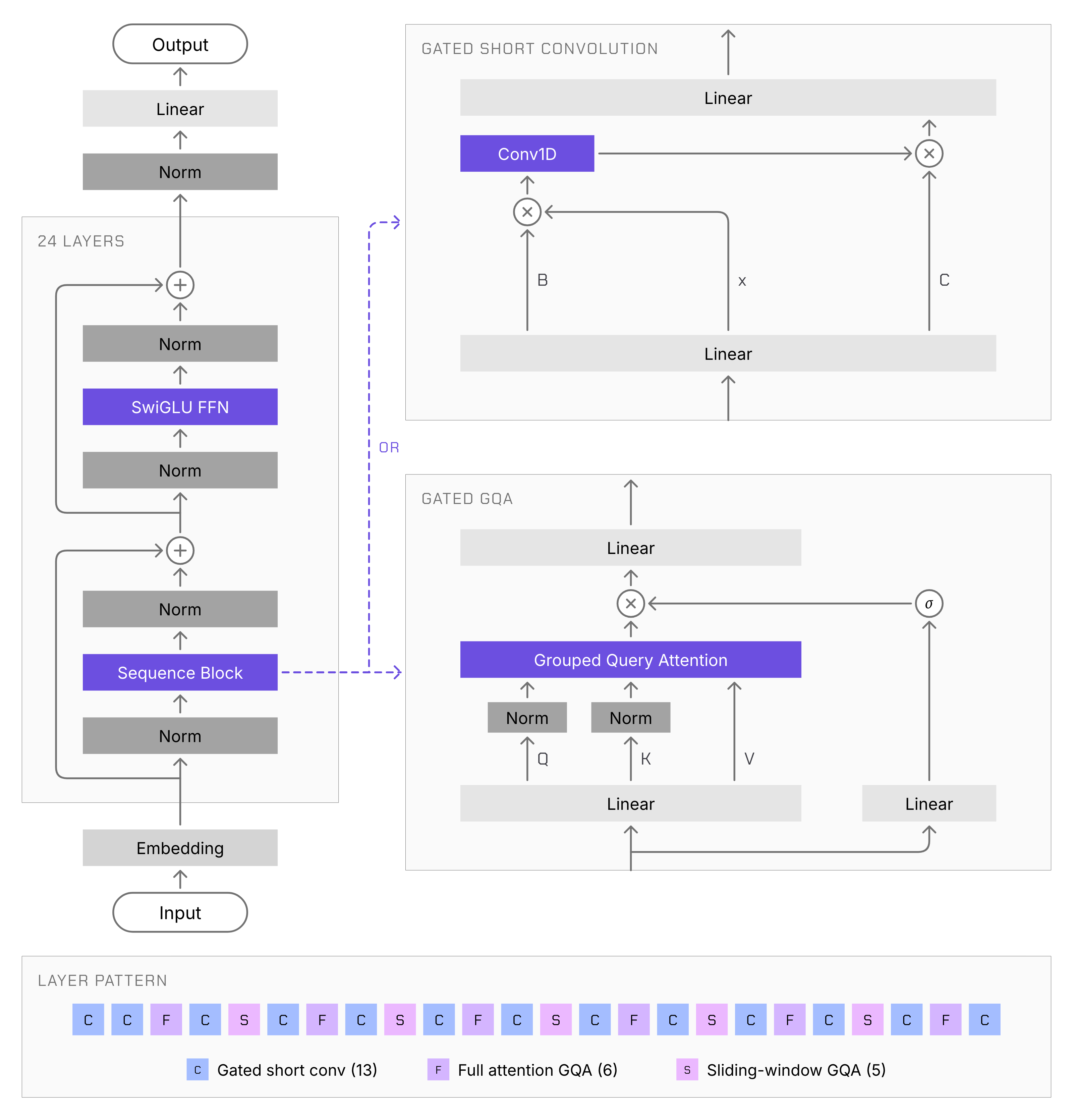
A Blog post by Liquid AI on Hugging Face
In Compton Lecture, the distinguished legal scholar warns of potential “loss of the Enlightenment” while suggesting ways innovations can meet our civic and cultural needs.
Generative AI
We use cookies to run the site and, with your consent, for analytics and to show ads. See our Cookie Policy.