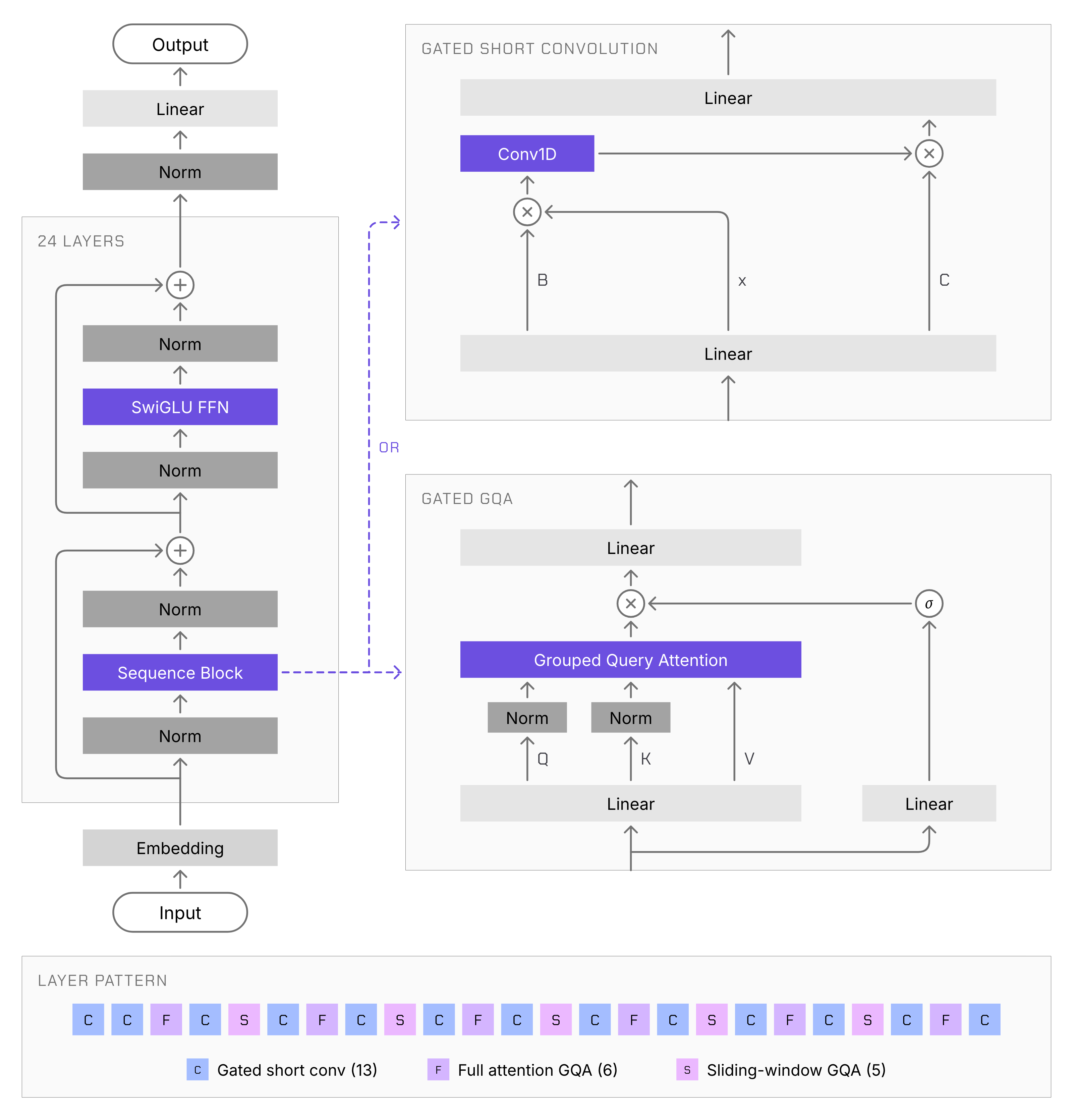
This work presents a theoretical architecture for continually adapting AI systems organized around three distinct timescales: (1) fast transformer key-value context for immediate interaction, (2) medium-term persistent recurrent memory with decaying importance and consolidation, and (3) slow, controlled parameter adapt...
Chaman Prakash Kanth· Zenodo (CERN European Organi...· 0 citations
Background: Machine-learning models for cardiovascular disease (CVD) are often evaluated with random participant splits, which may overstate performance when countries differ in prevalence, risk-factor distributions, healthcare access, and survey implementation. We benchmarked statistical and machine-learning classifie...
Wingston Felix Ng'ambi· Zenodo (CERN European Organi...· 0 citations
We introduce Ammonix, a foundation architecture for local, specialized, explainable AI agents in high-stakes operational domains such as clinical diagnosis, industrial and power-grid control rooms, and mission control. In these domains the responsible human operator must remain in charge, and needs an always-available...
Lea Grieder, Matthew Todorov, Adele Glauser et al.· Zenodo (CERN European Organi...· 0 citations
This research preprint consolidates the Kotlyar Stability Postulate, quantum ground-state proposal, and Global Stable Radial Class framework into a conditional postulate on the Riemann Hypothesis. Version 1.3 develops Lemma 1—the radial-flux calculation—and Lemma 2—the proposed global-stability selection principle—whil...
David Kotlyar· Zenodo (CERN European Organi...· 0 citations
Reach audiences
Advertise in front of researchers, engineers, and readers.
Intelligence depends on how a system makes information usable, retains it and changes through experience. This perspective connects five established dependencies across biological and artificial systems: the conditional value of information, access through available operations, persistence relative to future demands, c...
Brendan Barlow· Zenodo (CERN European Organi...· 0 citations
“Shift left” moved security activities toward the earliest artifact of the software development lifecycle (SDLC): source code. Autonomous coding agents invalidate the premise that code is that earliest artifact. An agent equipped with a shell, a package manager, credentials, and tool connectors performs security-releva...
Animesh Shaw· Zenodo (CERN European Organi...· 0 citations
AML je besplatna referentna, obrazovna i istraživačka onlajn alatka: pruža objašnjene prevode reči i drugih leksičkih jedinica, van rečeničnog konteksta ili unutar njega. Primarni par jezika je englesko-srpski / srpsko-engleski, kao i bilo koji drugi par jezika kojim je ovladao odabrani AI-četbot. Zadatak ‘Prevedi’ utv...
Tvrtko Prćić· Zenodo (CERN European Organi...· 0 citations
AOSL je besplatna referentna, obrazovna i istraživačka onlajn alatka: onomazi(ološki) — predlagač reči, a semazi(ološki) — tumač reči. AOSL može da obavlja devet leksičkih zadataka u oba smera (1-5 onomazi, 6-9 semazi): (1) tačno pronalaženje reči, (2) približno pronalaženje reči, (3) istraživanje sinonima / hiposinoni...
Tvrtko Prćić· Zenodo (CERN European Organi...· 0 citations
This research preprint consolidates the Kotlyar Stability Postulate, quantum ground-state proposal, and Global Stable Radial Class framework into a conditional postulate on the Riemann Hypothesis. Version 1.3 develops Lemma 1—the radial-flux calculation—and Lemma 2—the proposed global-stability selection principle—whil...
David Kotlyar· Zenodo (CERN European Organi...· 0 citations
Fullseye is a numpy-native library of typed classical image-processing and geometric-vision operators (2-D and 3-D), with an evolutionary pipeline-design mode evaluated under held-out gates, a Physical-AI perception stack (stereo → depth → point cloud → 6-DoF pose), and an HDevelop-style IDE (Fullseye Studio). Every op...
Kazufumi Furuse· Zenodo (CERN European Organi...· 0 citations
Professor Ali Jadbabaie describes how AI, digital transformation, climate change, and complex geopolitics are forcing engineers and policymakers to rethink how infrastructure is designed, built, and managed.
MIT News · Artificial Intelligence· news.mit.eduOct 27, 2026
Prabha Jha used her experience with MIT Open Learning’s program for senior executives to develop AI solutions for her employer, Verizon, and to write a book.
In Compton Lecture, the distinguished legal scholar warns of potential “loss of the Enlightenment” while suggesting ways innovations can meet our civic and cultural needs.