This work contributes longitudinal evidence on sustaining 4DWW in agile software development and proposes two conceptual artifacts: a lifecycle model of the 4DWW and a 4DWW survival matrix, explaining how external pressures and management rationale rollback risk.
This review critically evaluates the role of AI throughout the cancer theranostic workflow, with a focus on its potential to address the key clinical and technical challenges that continue to limit the routine implementation of personalized radiopharmaceutical therapy.
Z. Mansouri, Y. Salimi, A. Akhavanallaf et al.· Molecular Imaging and Biolog...· 0 citations
The developed XAI framework, together with the pathogen-specific predictive models, the pathogen-selective fragment lists, and their mapping onto the chemical structures, is able to provide a highly valuable and practical guide to the rational design of new antimicrobial agents.
Abdulmujeeb T. Onawole, M. Blaskovich, Johannes Zuegg· ACS Infectious Diseases· 0 citations
Artificial intelligence has intensified ethical, legal, and social inquiry, but generative systems expose a domain-specific limit in the conventional ELSI framework. This article argues that when AI operates as a cultural producer or perceptual mediator, aesthetics constitutes an analytically distinct dimension. AI-gen...
Byungkil Choi· Zenodo (CERN European Organi...· 0 citations
Reach audiences
Advertise in front of researchers, engineers, and readers.
This Zenodo record is a permanently preserved version of a PREreview. You can view the complete PREreview at https://prereview.org/reviews/22734670. What the paper claims This is an evidence map of 11,628 PubMed-indexed records on generative language models in healthcare, January 2023 to June 2026, built to answer one...
Evgeny V. Arsentyev· Zenodo (CERN European Organi...· 0 citations
With its high design freedom, wide material compatibility, and versatile processes, 3D printing technology has emerged as a revolutionary approach to the fabrication of flexible electronic devices, and has been shown to have tremendous applications in smart wearables, healthcare monitoring systems and soft robots. But...
This repository contains the extraction dataset, the explanation-evaluation reclassification, and the association analysis supporting the systematic mapping study of explainable artificial intelligence (XAI) in medicine (383 studies from Q1/Q2-indexed journals, 2020–2025).
Bello Sadeeq· Zenodo (CERN European Organi...· 0 citations
Communication education increasingly requires students to work across two linked capabilities: critically evaluating professional communication materials and using generative AI (GenAI) with judgment, transparency, and ethical care. This article presents a “Broken and Repair” case-study assessment, developed in a postg...
Triparna Gandhi, Tom Whitford· Communication Teacher· 0 citations
Artificial intelligence (AI) models, particularly deep learning and machine learning approaches, are increasingly developed for endodontic tasks, including detection of periapical pathosis, identification of vertical root fractures, characterisation of root canal morphology, and prediction of treatment outcomes. Most h...
Seyed AmirHossein Ourang, Ali Nosrat, Heliya Ziaei et al.· Open Science Framework· 0 citations
Artificial intelligence (AI) is increasingly used to support recruitment, skills analysis, learning, performance management and workforce planning. Yet many workforce decisions still depend heavily on static qualifications, curriculum vitae data, self-reported experience and periodic assessments. These sources remain v...
Rita Ebele Maduanusi· International Journal of Eng...· 0 citations
A road is thought to carry more the faster it runs. This paper shows that two states carry the same flow at speeds differing by 2.6180──and the maximum flow occurs at half the free-flow speed. No new theorem or law is claimed. Scope of this paper (scope note): No new theorem or law is claimed──the fundamental diagram o...
Yuuki Yamagishi· Zenodo (CERN European Organi...· 0 citations
Abstract Despite policy support, inappropriate use of emergency contraception in Ethiopia contributes to high rates of unintended pregnancy and maternal mortality. Traditional statistical analyses have struggled to identify complex predictors. This study used machine learning and Explainable AI to improve the predictio...
Muluken Belachew Mengistie, Abraham Keffale Mengistu, Wubete Lule Ayalew et al.· Scientific Reports· 0 citations
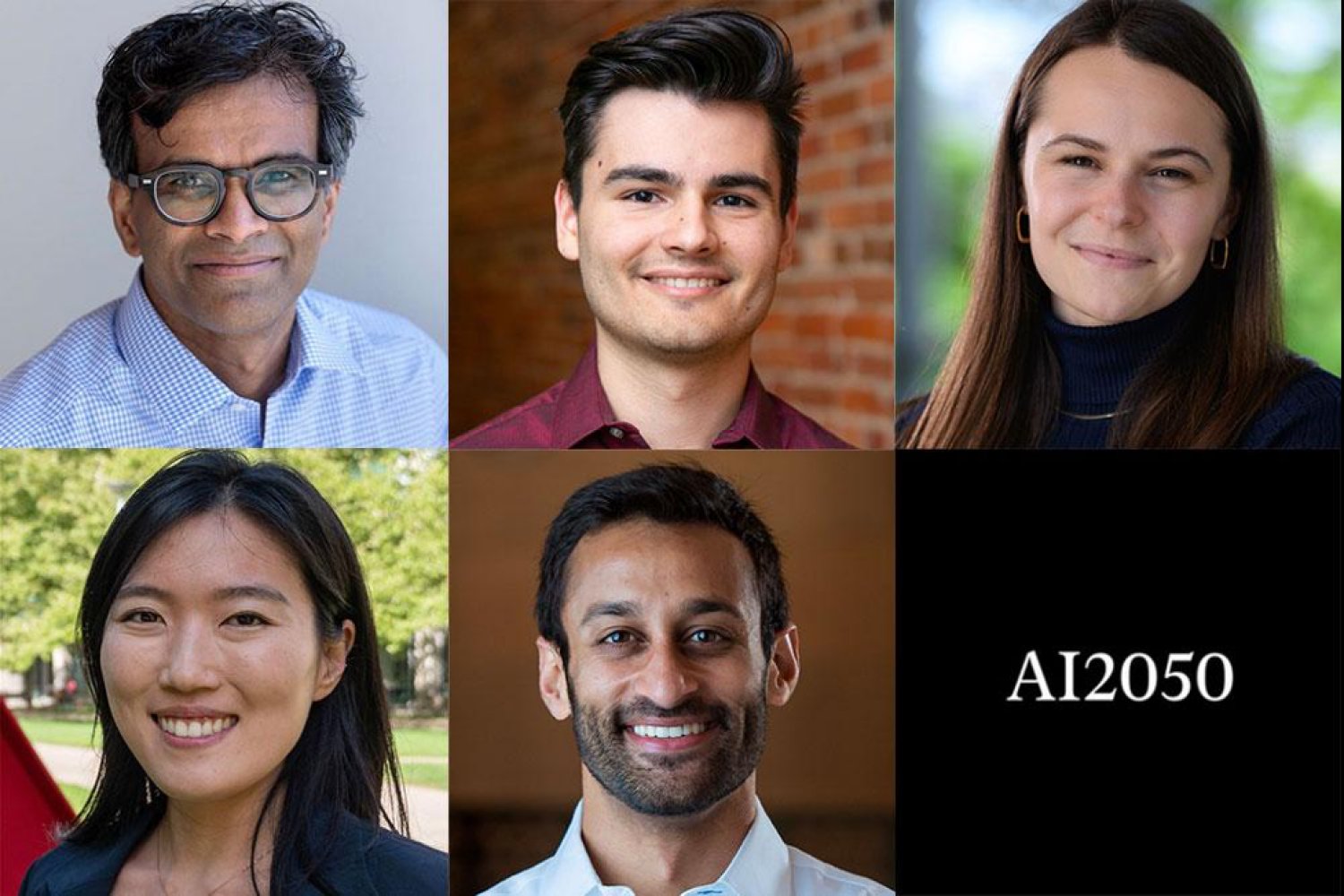
MIT professors Adam Berinsky and Chara Podimata discuss a new project to track how AI chatbots are responding to questions about the 2026 U.S. midterm elections.
Microsoft Research Blog· microsoft.comOct 30, 2026
Evaluating Microsoft Copilot at enterprise scale requires test data that captures the full complexity of real organizations, yet real enterprise data contains sensitive information that cannot be used for evaluation under any circumstances. The post From synthetic enterprise data evaluations to real Microsoft Copilot AI confidence appeared first on Microsoft Research.
Critical flaws, compromised release channels and agentic AI threats landed within days of each other in mid-October 2026. Why “Black October” may say more about how well we now find weaknesses than about the attacks themselves. The post Black October? The Week AI Changed the Cybersecurity Conversation appeared first on GPT-Lab.
Microsoft Research Blog· microsoft.comOct 29, 2026
Host Sowbhagya Suresh shares some of the latest news and cutting-edge research from across Microsoft—from understanding the challenges facing coding agents to uncovering how people use AI at work and improving extended-range weather forecasting. The post Microsoft Research Focus – Edition #97 appeared first on Microsoft Research.