Chemical safety in the Republic of Korea is governed by five acts falling under the purview of the Ministry of Climate, Energy, and Environment (MCEE): the Act on Registration and Evaluation of Chemicals (K-REACH Act), the Chemicals Control Act (CCA), the Environmental Health Act, the Environmental Damage Relief Act, a...
Ho-Hyun Kim, Lim Ho-Ju, Hunjoo Lee· Korean Journal of Environmen...· 0 citations
The construction of health indicators (HIs) for failure prognostics is crucial for monitoring and predicting the health state of multi-component systems. Recently, data-driven methods for HI construction and prognostics have gained increasing attention, both relying heavily on high-quality run-to-failure (RTF) data for...
Duc An Nguyen, Nguyen, Khanh, T P, Kamal Medjaher· Proceedings of the Instituti...· 0 citations
This survey explores the use of Machine Learning (ML) in the field of Computer Algebra (CA), both to optimise existing CA algorithms, and to perform symbolic computation directly. Traditional symbolic methods, while mathematically rigorous, often are computationally expensive thus limiting their use in real-world appli...
Uzma Shafiq, Matthew England, Nayyar Zaidi· Pure (Coventry University)· 0 citations
Abstract Effective Pavement Management System (PMS) planning depends on the ability to anticipate both the severity and physical extent of multiple distress types under real-world data constraints. This work introduces an interpretable dual-stage Deep Learning (DL) framework that sequentially classifies distress severi...
Mohammad Sedighian-Fard, Amir Golroo, Mahdi Javanmardi et al.· Scientific Reports· 0 citations
Reach audiences
Advertise in front of researchers, engineers, and readers.
Coexisting safely with unpredictable Artificial Intelligence (AI) remains a foundational challenge for contemporary AI ethics. This paper proposes “stable otherness” as a relational framework that re-centers alignment on sociotechnical structures. Rather than treating AI as an autonomous conscious agent, we define AI a...
Fumio Miyata· Zenodo (CERN European Organi...· 0 citations
This independently citable appendix contains specification and deployment detail for the AEGIS v1 interoperability profile: the complete design-principle catalog, architecture and adapter tables, extension configurations, split-view case analysis, byte-level field semantics, security assumptions, and verification inter...
Alex Chengyu Li· Zenodo (CERN European Organi...· 4 citations
The problems of this paper are the problems of this paper, and some future directions for constructing a reliable cardiac disease prediction system with clinical applications are proposed.
Yi-Min Zhou· Applied and Computational En...· 0 citations
Can an artificial intelligence system select the right action before it can articulate a valid reason for that action? Addressing this question at the intersection of reasoning, interpretability, agent safety, and latent computation, we develop a non-anthropomorphic definition of machine intuition as pre-explanatory co...
Sahir Maharaj· Zenodo (CERN European Organi...· 0 citations
This article presents a narrative review of Explainability and Interpretability of Black-Box Models in the context of Artificial Intelligence. The literature on this topic has expanded substantially over recent decades, yet it remains fragmented across subfields, methods, and national research traditions. Drawing on an...
Zen Revista, 10 IA· Zenodo (CERN European Organi...· 0 citations
Can an artificial intelligence system select the right action before it can articulate a valid reason for that action? Addressing this question at the intersection of reasoning, interpretability, agent safety, and latent computation, we develop a non-anthropomorphic definition of machine intuition as pre-explanatory co...
Sahir Maharaj· Zenodo (CERN European Organi...· 0 citations
AI agents can generate code at a scale that’s hard for humans to review line-by-line. PDD Kit helps ensure the code is doing what the developer intended by creating formal specifications and testing against them. It converts developer intent into a Verus specification, proves AI-generated code meets it for every input, and uses tests where proofs aren't practical. Developers review intent, not every line. The post Formally verifying agent-written full-stack web apps with PDD Kit appeared first o…
Research Manager Mike Walker reflects on a career spanning hacker culture, cybersecurity, and AI, sharing lessons about trust, teamwork, leadership, and why solving difficult problems requires curiosity, judgment, agility—and an understanding of the rules. The post Learn the rules: The hacker mindset appeared first on Microsoft Research.
Is your company’s AI sovereign? A practical guide for CIOs on AI vendor lock-in, EU Data Act switching, cloud sovereignty, and testing your exit plan before you need it. The post Sovereignty Is the Option to Leave appeared first on GPT-Lab.
MIT News · Artificial Intelligence· news.mit.eduNov 2, 2026
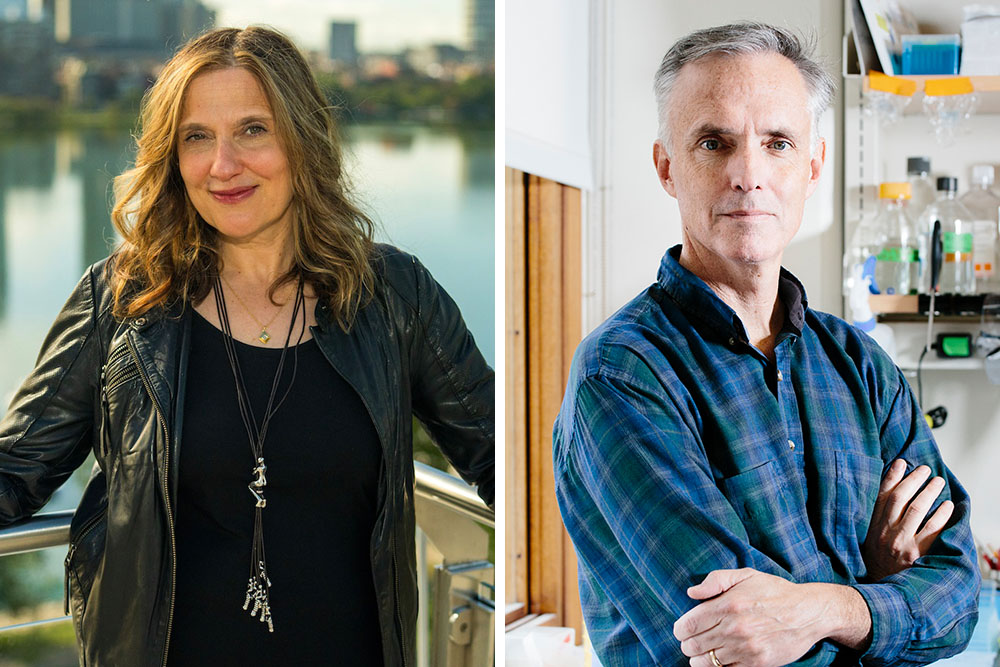
The MIT professors collaborated to identify the first AI-discovered antibiotic, a scientific breakthrough that is widely recognized as a milestone in AI-driven drug discovery.
We use cookies to run the site and, with your consent, for analytics and to show ads.
See our Cookie Policy.