The rapid integration of generative artificial intelligence (GenAI) tools into higher education raises important questions regarding their impact on student learning. Based on established technology acceptance frameworks, this study develops and empirically tests an integrative model that explains students’ attitudes t...
Golan Carmi· Frontiers in Artificial Inte...· 0 citations
Abstract Background Attention-deficit/hyperactivity disorder (ADHD) affects over 366 million adults and 139 million children worldwide, yet diagnosis remains fundamentally subjective, relying on clinical interviews, behavioral observations, and rating scales that yield inconsistent results across practitioners and sett...
B. Ibe, Amir Aly, Shaymaa Al-juboori et al.· JMIR Research Protocols· 0 citations
Common machine translation evaluation metrics, such as the Bilingual Evaluation Understudy (BLEU) and Crosslingual Optimized Metric for Evaluation of Translation (COMET) are reliable measures of propositional fidelity and surface fluency but systematically ignore the embodied texture of reading, leaving unexplained why...
Zeli Liu· Frontiers in Psychology· 0 citations
Reach audiences
Advertise in front of researchers, engineers, and readers.
This study examined the effect of Artificial Intelligence (AI) tools on teaching effectiveness of geometry in tertiary institutions in Benue State, Nigeria. A cross-sectional survey design was adopted. The study involved 235 respondents comprising 60 mathematics lecturers and 175 undergraduate students selected from st...
B. T. Ako· WORLD JOURNAL OF INNOVATION...· 0 citations
The rapid expansion of electric scooters (e-scooters) in urban transportation networks has transformed personal mobility across U.S. cities, yet rising crash rates have raised critical safety concerns. This study investigates the factors contributing to e-scooter crash severity through a novel integration of Cluster Co...
Md Monzurul Islam, Sharif Ahmed Rafat, Tausif Islam Chowdhury et al.· Scientific Reports· 0 citations
BACKGROUND
As artificial intelligence (AI) rapidly integrates into nursing practice, education, and research, it presents a profound ethical paradox: significant opportunities for operational efficiency alongside deep-seated challenges to the profession's core values.
PURPOSE
This scoping review synthesizes existing...
J. Marquard, Suzanne Fink, Winnie Yip et al.· Nursing Outlook· 0 citations
Accurate prediction of carbon dioxide (CO₂) emissions is essential for effective carbon management and evidence-based climate policy. However, emission dynamics are inherently nonlinear and arise from complex interactions among technological, financial, energy, economic and demographic factors. This study develops an i...
Rabia Akram, Hafiz Muhammad Naveed, Muhammad Usman Anwer et al.· Carbon Balance and Managemen...· 0 citations
Deep learning systems have achieved remarkable success in medical image analysis; however, most explainable artificial intelligence (XAI) methods remain descriptive, providing post-hoc explanations without actively validating diagnostic decisions. While concept-based and retrieval-based approaches improve interpretabil...
Campus training and placement (T&P) activities in many engineering institutions are still coordinated through spreadsheets, e-mail and notice boards, which makes eligibility checks, shortlisting and placement reporting slow and error-prone and gives students little guidance on which opportunities suit them. This paper...
Amit Hirole, Om Talokar, Sejal Chandekar et al.· International Journal of Cre...· 0 citations
Children who are developmentally lagging require quick and tailored supports- this is why focusing on potential development is important. AI has advanced by integrating multiple forms of speech, behaviour, physiology, and vision, and emerging AI systems for speech triage and multi-modal systems are demonstrating promis...
Shyamala B, P Shridhara Acharya, Ananth Prabhu G· International Journal of Dru...· 0 citations
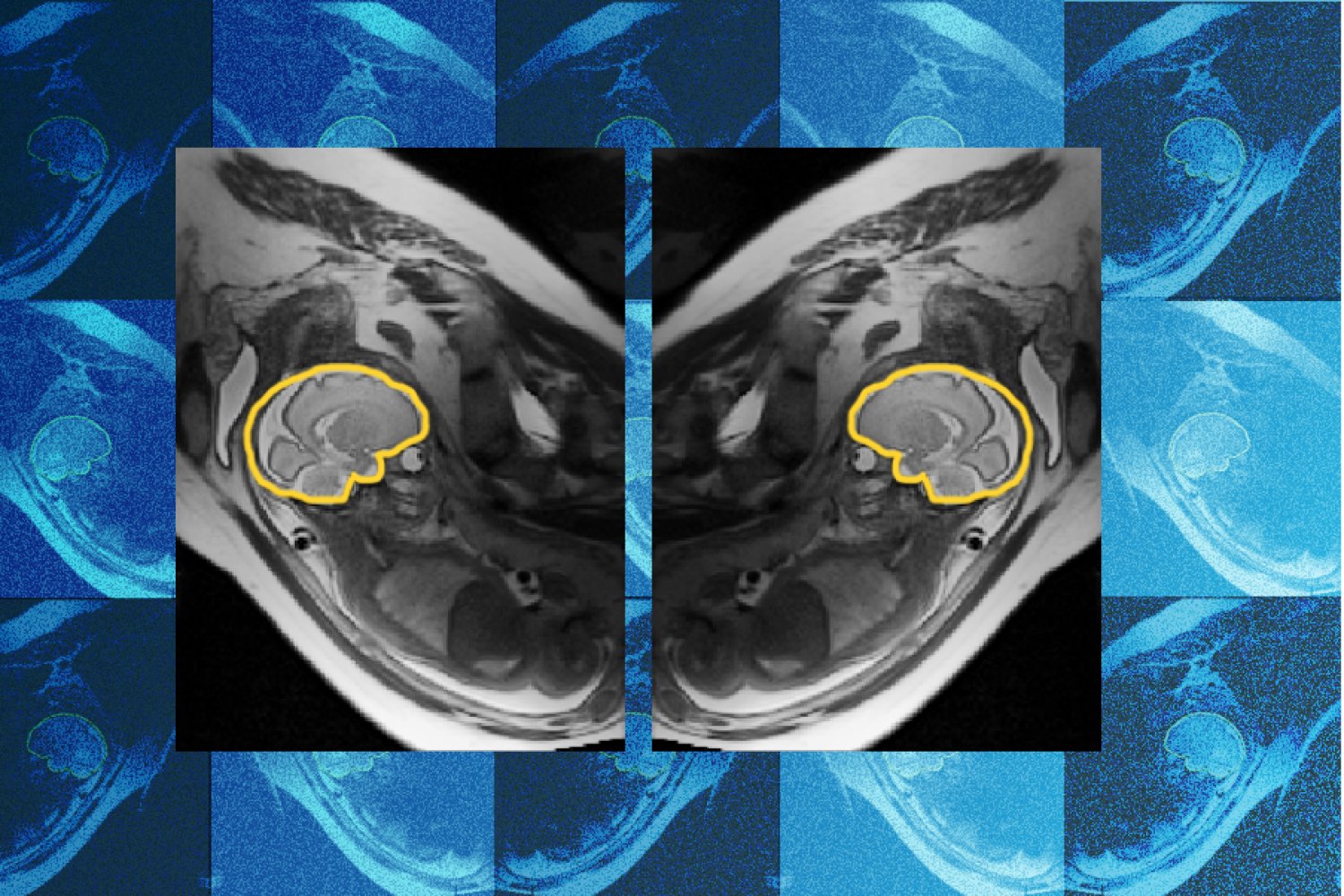
A model developed by researchers at MIT and Boston Children's Hospital adjusts scans on the fly to track fetal movement, potentially sparing families repeat hospital visits.
MIT News · Artificial Intelligence· news.mit.eduOct 18, 2026
A new computational approach reveals how cells communicate to assemble into tissues. This could accelerate stem cell engineering, improve disease models, and inform therapies.
We use cookies to run the site and, with your consent, for analytics and to show ads.
See our Cookie Policy.