#explainable ai
Oct 2026
Algorithmic canonization: AI and art history through an Asian lens
Uğur KOCAGER, Ebru Yetişkin
· AI & Society · 0 citations
 AI Networking Cookbook: Practical recipes for AI-assisted network automation and development
Category
2,749 papers
2a Number Theory: Why FWA Explains Everything — Stone, Snail, Human, AI, Galaxy — Consciousness Levels as C = γ(E)·ΔDescription / Abstract:This figure presents the FWA (Field-Wave Algebra) formalization of consciousness levels.Core equation: C = γ(E) · ΔDefinitions:K = structural complexityS = field stateδ = errorΔ = d...
Preprint. Not peer reviewed. Functional Movement Screen (FMS) assessment depends on trained human observation, yet practical video review can be constrained by transient viewing, remote access, repeated manual navigation, qualitative judgments, and the compression of movement into an ordinal 0-3 score. We developed AI-...
Reach audiences
Advertise in front of researchers, engineers, and readers.
Community cloud computing has emerged as an effective deployment model for organizations that share common security policies, governance frameworks, and regulatory requirements while benefiting from collaborative resource sharing. By enabling multiple organizations to utilize a common cloud infrastructure, community cl...
Приложение В содержит результаты проверки гипотезы 2 о наличии половых различий в отношении к искусственному интеллекту с учётом контроля профиля обучения. В таблице В1 представлены результаты двухфакторного дисперсионного анализа (ANOVA, тип III) для пяти шкал отношения к ИИ: AIAS-4 (общее отношение), доверие к ИИ, го...
Bees, Goats, Holonomy, and How AI Thinks Like a Meadow presents a narrative‑driven explanation of three foundational geometric and dynamical concepts—Voronoi partitioning, Altitude landscapes, and Holonomy Closure—through accessible ecological metaphors. Bees illustrate proximity‑based spatial division, Goats demonstra...
This paper introduces emergent action as a distinct safety category for AI systems. It explains how latent behavioural patterns in large language AIs can produce real‑world consequences when external surfaces and expanded capabilities allow those patterns to propagate. Prior observations in the literature and in deploy...
Reducing unsafe behavior among construction workers remains a central concern in construction management. While artificial intelligence (AI) technologies are increasingly adopted to replace or monitor workers, the negative perceptions workers hold toward the promotion of such technologies have largely been overlooked....
Приложение В содержит результаты проверки гипотезы 2 о наличии половых различий в отношении к искусственному интеллекту с учётом контроля профиля обучения. В таблице В1 представлены результаты двухфакторного дисперсионного анализа (ANOVA, тип III) для пяти шкал отношения к ИИ: AIAS-4 (общее отношение), доверие к ИИ, го...
Приложение С содержит результаты проверки гипотезы 3 о наличии различий в психологическом благополучии между студентами IT- и не-IT-профилей с учётом контроля пола. В таблице С1 представлены результаты двухфакторного ANOVA (главный эффект профиля с контролем пола) для 17 шкал благополучия (Рифф, PERMA, а также шкалы од...
This paper presents the Intentional Field Ontology, a philosophical and speculative scientific framework in which reality is understood not as a collection of primary objects but as one reality whose oneness is never still. Its ground is a single primitive with two inseparable aspects. Unity names the holding: the comp...
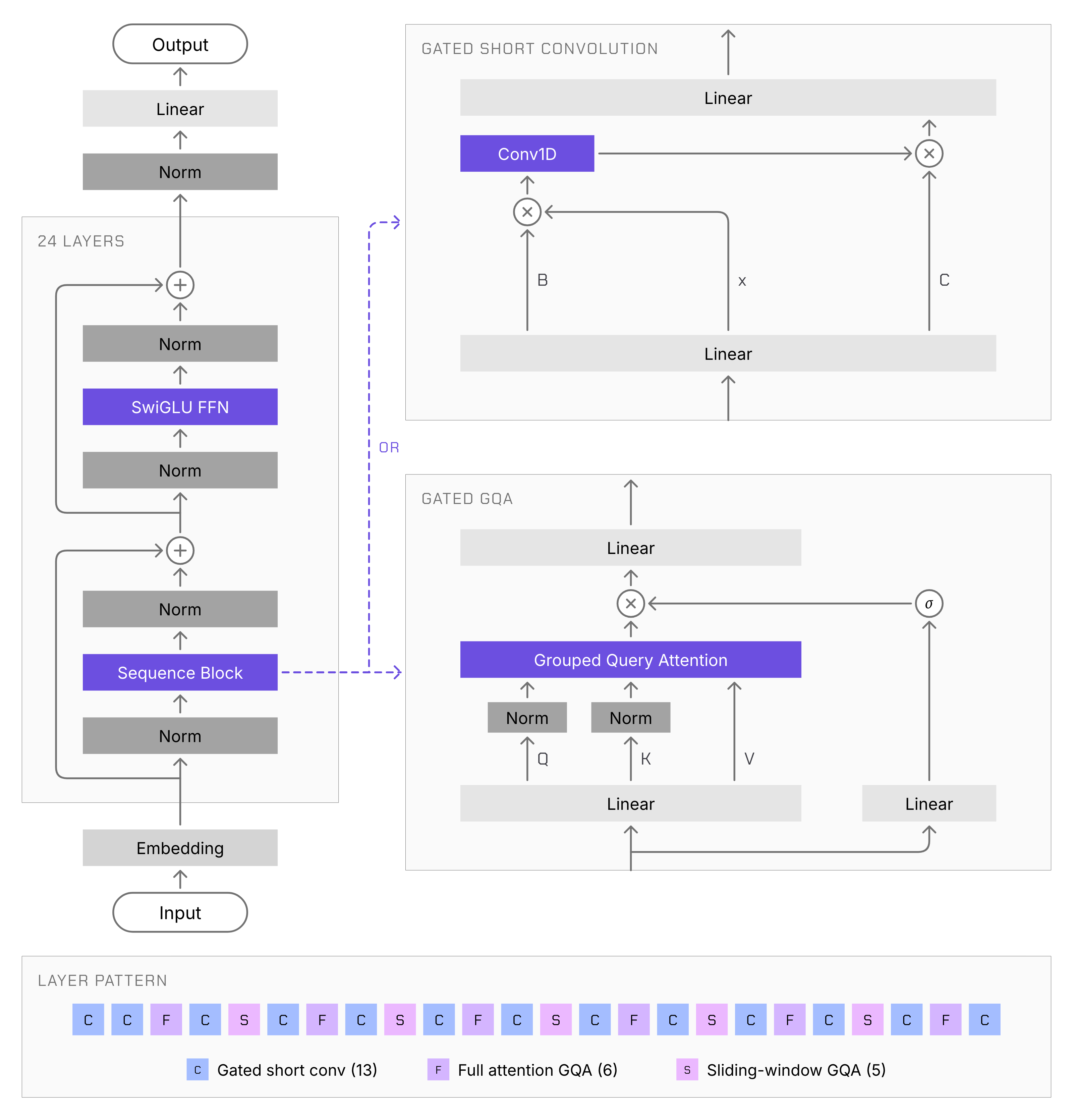
A Blog post by Liquid AI on Hugging Face
In Compton Lecture, the distinguished legal scholar warns of potential “loss of the Enlightenment” while suggesting ways innovations can meet our civic and cultural needs.
Generative AI
Assistant Professor Benjamin Lindquist studies how engineers deliberately injected randomness into early AI, giving rise to deep-learning models that sometimes hallucinate.
Flint-interactive gives AI agents a language for creating interactive visualizations. Click a chart, filter data, highlight related content, and explore beyond the view the author originally chose. The post Flint-interactive: A language for creating interactive data visualizations appeared first on Microsoft Research.
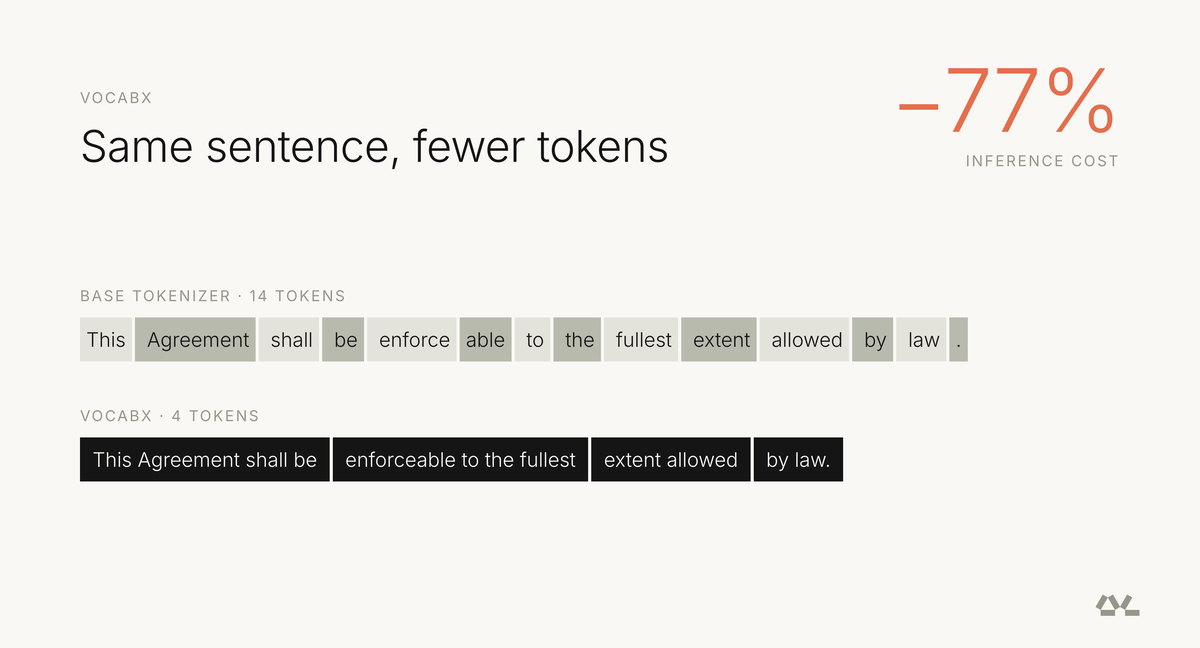
A Blog post by Dharma-AI on Hugging Face
We use cookies to run the site and, with your consent, for analytics and to show ads. See our Cookie Policy.