The first comprehensive benchmarking framework specifically designed to accommodate inter-dataset heterogeneity is presented, finding that well-designed small datasets can match or even surpass the performance of larger benchmarks, suggesting that different metrics are applicable to different datasets/testing scenarios.
Yingjuan Cheng, Qing Ye, Linlong Jiang et al.· Journal of Cheminformatics· 0 citations
A novel committor learning framework grounded in the AlphaFold 3 paradigm is proposed that elucidates how ligand substituents regulate the ratio between distinct binding pathways, offering new perspectives for structure-based drug design.
Jintu Zhang, Zichang Jin, Huifeng Zhao et al.· 0 citations
Current structure-based drug design generative models often struggle to faithfully recapitulate genuine ligand-protein binding interactions. Instead, under the coupling of implicit learning architectures and biased training data, they tend to learn spurious statistical correlations. To address this, we propose EIP-Diff (Explicit Interaction-Prompted Diffusion), an architecture featuring a novel explicit interaction-prompt embedding mechanism that is better suited for real-world target-specific drug design. This architecture replaces biased implicit learning with explicit, residue-level biological guidance, thereby promoting more fine-grained geometric fidelity and more precise interaction-aware conditioning. To fully realize the capabilities of EIP-Diff and provide a reliable basis for performance evaluation, we further constructed CrystalData set, which provides higher-fidelity and less-biased structural supervision than existing data sets. This explicit architecture markedly improves distribution consistency: even when trained on the crossdocked data set, EIP-Diff achieves the highest alignment with authentic pharmacological distributions among evaluated models. Training on CrystalData set further enhances this alignment and improves 3D geometric accuracy, while retaining strong controllability, high chemical space coverage, and near-perfect uniqueness. In addition, target-based validation on KAT6A and YTHDC1 confirmed that EIP-Diff accurately recapitulates native-like binding modes. Furthermore, in a real-world drug design task against IDO1, we successfully designed a novel lead compound with nanomolar potency (IC50 = 0.31 nM). These results demonstrate that the EIP-Diff architecture can explicitly leverage experimentally derived structural data and biologically meaningful interaction information for target-specific molecular generation, thereby enabling its effective application to real-world structure-based drug design.
Huabin Du, Mingyang Wang, M. Luo et al.· Journal of the American Chem...· 0 citations
Post-training alignment is often shallow, eroding under fine-tuning. It remains untested as to whether constitutional midtraining interventions can produce durable alignment when cleanly isolated from post-training. We build a 394M-token constitutional corpus from Anthropic's Constitution and apply constitutional midtraining at 120B scale, where principled, values-based content is inserted into midtraining. A 2x2 design (curriculum ordering x deliberative reasoning) was used to produce four constitutionally midtrained conditions, plus a control, which were evaluated on self-generated and established benchmarks including alignment under pressure, value conflict resolution, blackmail, and emergent misalignment. All models were evaluated across three stages: post-midtraining, post-SFT, and post-benign fine-tuning. Constitutionally midtrained models outperformed the control on alignment generalization and durability, notably on blackmail: SFT instilled a blackmail propensity in all models, but constitutional midtraining blunted it, with the advantage surviving benign fine-tuning (-17.5pp). This durability did not extend to settings that required active resistance to in-context pressure or conflict, where the advantage attenuates after SFT. The presence of constitutional content at midtraining also mattered more than its structure, and constitutional midtraining incurred no capability cost, on average, at any stage (MMLU, ARC-Easy, piqa, GSM8K). A modest amount of constitutional content at midtraining could therefore yield broad, persistent alignment gains, offering a cheap, complementary addition to SFT-centered pipelines. Code, data, and models are available.
Desiree Cho, Cameron Tice, Bernie Hogan et al.· 0 citations
Reach audiences
Advertise in front of researchers, engineers, and readers.
This work investigates the potential of the waste hierarchy from the EU's Waste Framework Directive, which suggests five different measures for how to manage waste: prevention, reuse, recycling, recovery, and disposal, and calls to attention that prevention of unnecessary use of LLMs carry huge potential for lowering the climate impact of the models.
E. Husom, M. Nylund, Ophelia Prillard· 0 citations
Powered two-wheeler riders face critical safety challenges in low- and middle-income countries, yet limited studies exist on how cognitive stressors such as Time Pressure influence collision risk. We address this gap by introducing a comprehensive dataset consisting of over 129,000 labeled multivariate time-series samples, gathered across 153 simulator rides from 51 participants under No, Low, and High TP scenarios. Across each sequence, we capture 64 distinct attributes covering vehicle motion, rider control actions, spatial proximity, and rule compliance indicators. Using this dataset, we introduce MotoSafety, a new edge-AI framework built on the Learned Temporal Importance (LTI) concept. MotoSafety achieves 94.97% accuracy and 99.33% ROC AUC, outperforming ten baselines, including TimesNet and LLM4TS, and achieves 0.039 MSE and 0.094 MAE for forecasting (4.4x lower error than Time-LLM and iTransformer). With only 1.15M parameters and 0.135 ms latency, it is suitable for edge deployment on low-cost CPU hardware. Using ground truth TP as an inductive bias improves accuracy from 94.09% to 94.97%, while predicted TP achieves 94.82%. Using only 21 IMU+GPS features, it achieves 93.91% accuracy, indicating practical deployment. Beyond PTW safety, the architecture shows better transferability to human activity (97.66%) and clinical (99.65%) domains. This lightweight framework advances PTW collision risk assessment, supporting the Safe System Approach for Intelligent Transportation Systems.
Sumit S. Shevtekar, Chandresh K. Maurya, Gourab Sil et al.· 0 citations
This work introduces EgoCITE (Egocentric Context-augmented Indexing and Time-aware Evidence retrieval), a long-horizon agentic memory framework for egocentric QA that improves accuracy over agentic memory baselines by at least 4.4--14.2% while achieving 36$\times$ lower cost than long-context LLM agents.
This paper introduces the Epistemic Transfer Effect (ETE), which compares delayed unassisted performance across conditions, and Tool-Removal Cost (TRC), which measures the immediate drop in performance when the tool is taken away, and turns these ideas into a practical evaluation protocol that can be used in online experiments or field studies.
This paper argues that the dominant anthropomorphism frame operates from a position of institutional advantage rather than earned epistemic authority: collapsing the variety of academic perspectives into a single outbound position of user error, imposed without establishing the grounds required to justify it and without accounting for the harms it produces.
A near-, medium-, and long-term roadmap toward closed-loop, bidirectional restoration is outlined, and gaps in metric standardization, longitudinal evidence, and cross-community collaboration are identified as priorities for future research.
Investigating how experienced developers use agents in building software, including their motivations, strategies, task suitability, and sentiments finds that while experienced developers value agents as a productivity boost, they retain their agency in software design and implementation out of insistence on fundamental software quality attributes.
Mechanist is an agentic system that uses AI as a scientific instrument for the autonomous discovery of mechanisms underlying AI intelligence, and develops a mechanism theory of belief, revealing how models represent world knowledge, form beliefs, infer the beliefs of others, and how these mechanisms emerge during pretraining.
Mengru Wang, Junfeng Fang, Shuofei Qiao et al.· 0 citations
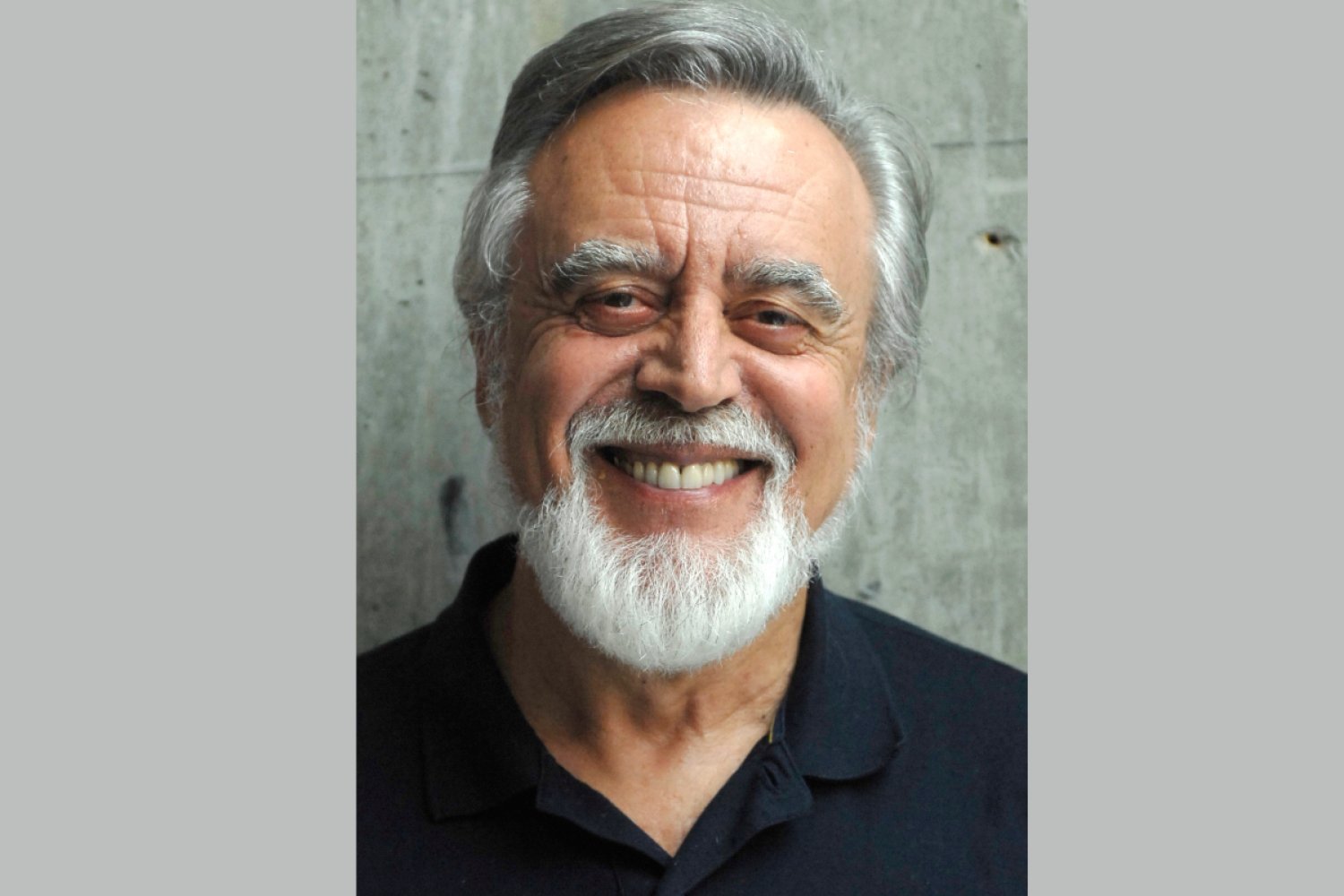
Known for his clear and elegant writing style, Bertsekas shaped fields from control and optimization to large-scale computation and artificial intelligence.
The professor of physics and inaugural director of the NSF AI Institute for Artificial Intelligence and Fundamental Interactions will lead LNS and continue his research in particle physics.