Recent program evolution systems use large language models (LLMs) to generate and iteratively improve populations of programs, producing striking advances in mathematics, algorithm design, and scientific computing. Yet these systems largely operate as fully automated black boxes. As populations grow, domain experts mus...
Feng Liang, Sizhe Cheng, Yikai Li et al.· 0 citations
Continuous colormaps are widely used to visualize scalar fields, and their quality is typically evaluated using measures such as discriminative power and uniformity. Existing measures primarily characterize the intrinsic perceptual properties of the colormap itself, largely independent of the underlying data distributi...
Xi Duan, Yiwei Lin, Shiqing Xin et al.· 0 citations
High-fidelity diagram creation requires the complex orchestration of semantic topology, visual styling, and spatial layout, posing a significant challenge for automated systems. Existing methods also suffer from a representation gap: pixel-based models often lack precise control, while code-based synthesis limits intui...
Tianfu Wang, Leilei Ding, Ziyang Tao et al.· 0 citations
Large language model writing interfaces often make users steer outputs by repeatedly articulating desired changes in natural language. Yet writers may recognize useful stylistic directions only after seeing alternatives, making revision recall-heavy. We present DimSteer, an authoring interface that samples prompt-local...
Ajit Mallavarapu, Zi-Wei Gu· 0 citations
Reach audiences
Advertise in front of researchers, engineers, and readers.
This study uses controlled simulations with known ground-truth parameters to evaluate how Distributional Latent Variable Models (DLVM) and Bayesian Distributional Active LEarning (DALE) perform in comparison to conventional Independent Maximum Likelihood Estimation (IMLE). DLVM integrates observations across multiple e...
Robert Kasumba, Zeyu Lu, Dom CP Marticorena et al.· 0 citations
Human-agent evaluations often compress interaction into a single performance score, even when human and automated policies adapt differently over time. We study this in a sequential cyber-defense game on an attack graph, where a human or reinforcement-learning defender protects cloud assets against a Deep Q-Network (DQ...
Zahra Aref, Sheng Wei, Narayan B. Mandayam· 0 citations
The result is a deployed application and study workflow that integrates activity review, study data collection, privacy control, local prediction, and a participant-facing interface for XAI evaluation.
Cheng-Yu Yu, Leonor Costa, Zoja Anžur et al.· 0 citations
Large language models (LLMs) are increasingly used as conversational partners for companionship, emotional disclosure, and interpersonal advice, but the social dynamics of these interactions can create harms that are not captured by current evaluations in real-world settings. We introduce the Social AI Design Code, a s...
Jun Rui Huang, Wang Bill Zhu, Ziyi Liu et al.· 0 citations
Large language models (LLMs) are widely used for open-ended tasks, but underspecified prompts can lead to low-quality answers and additional interaction. This paper studies whether structured prompt design improves response quality while reducing user effort. We compare three prompt conditions: a raw prompt, a checklis...
Digital platforms shape how people communicate, deliberate, and form opinions. Studying these dynamics has become harder because of restricted data access, ethical limits on real-world experiments, and the technical demands of existing research tools. VIRENA (Virtual Arena) is a platform for controlled experiments in r...
Emma Hoes, K. Jonathan Klueser, Fabrizio Gilardi· 0 citations
Programming assistants powered by large language models (LLMs) have become widely available, with conversational assistants such as ChatGPT particularly accessible to novice programmers. However, varied tool capabilities and inconsistent availability of extensions (e.g., web search, code execution, retrieval-augmented...
Gabrielle O'Brien, Antonio Pedro Santos Alves, Sebastian Baltes et al.· 0 citations
As AI systems gain agency in workplaces, workers increasingly interact with systems that do more than support tasks: they make decisions, allocate work, and shape how workers communicate with others. We interviewed 16 workers in healthcare, finance, and management about their daily interactions with workplace AI system...
Christine P. Lee, Min Kyung Lee, Bilge Mutlu· 0 citations
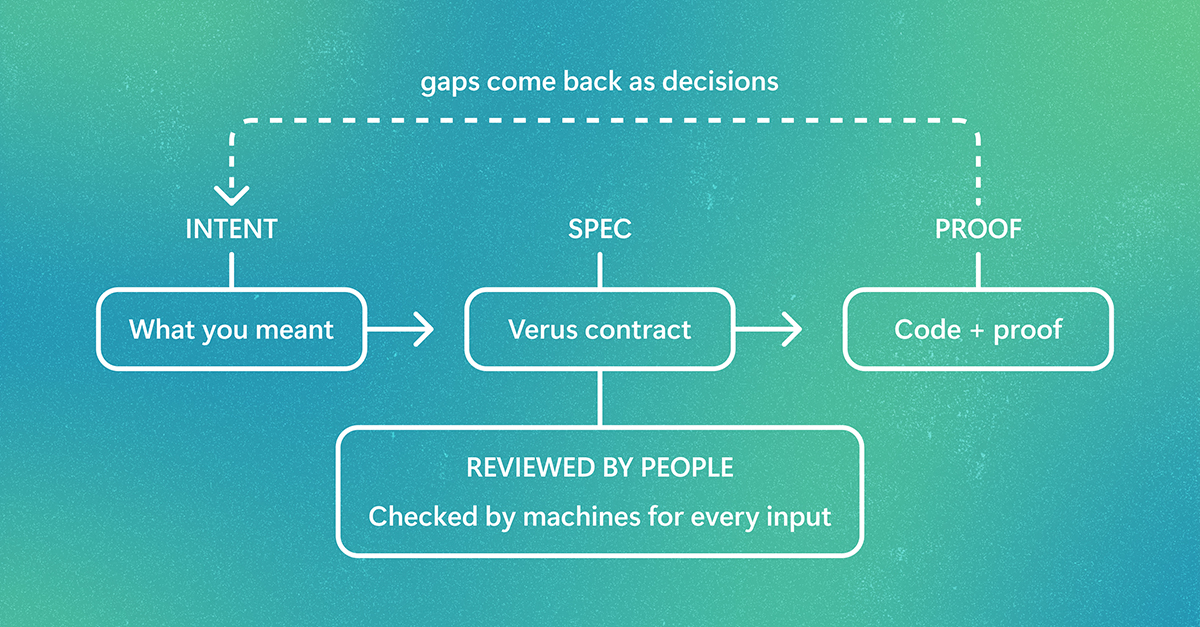
AI agents can generate code at a scale that’s hard for humans to review line-by-line. PDD Kit helps ensure the code is doing what the developer intended by creating formal specifications and testing against them. It converts developer intent into a Verus specification, proves AI-generated code meets it for every input, and uses tests where proofs aren't practical. Developers review intent, not every line. The post Formally verifying agent-written full-stack web apps with PDD Kit appeared first o…
Professor Paris Smaragdis develops computers with superhuman hearing for applications like speech recognition, music understanding, and environmental monitoring.
MIT News · Artificial Intelligence· news.mit.eduOct 23, 2026
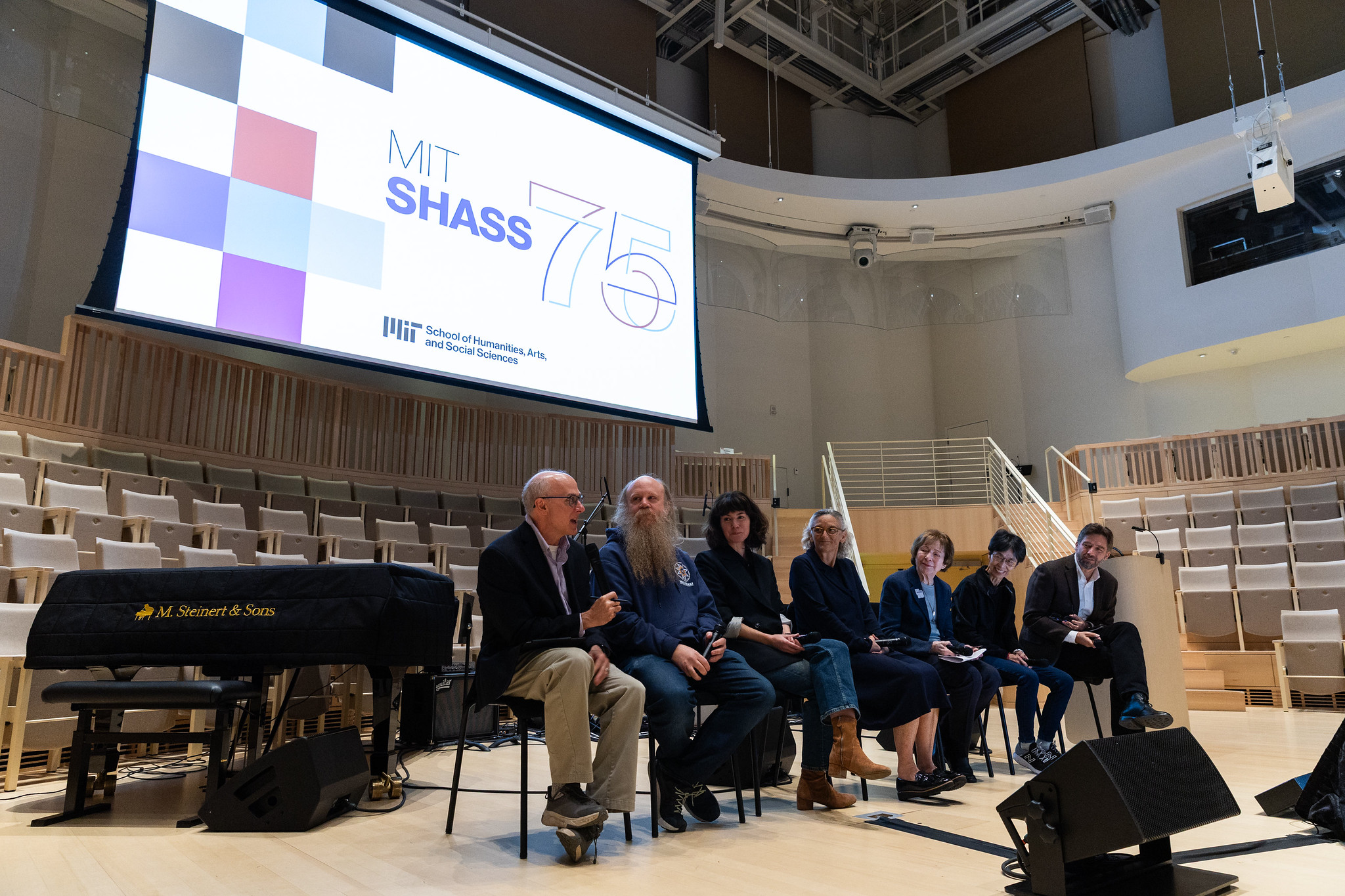
During the School of Humanities, Arts, and Social Sciences’ 75th Anniversary Symposium, President Sally Kornbluth said “MIT has never needed your particular insight and guidance more than we do now.”
MIT News · Artificial Intelligence· news.mit.eduOct 23, 2026
Assistant Professor Benjamin Lindquist studies how engineers deliberately injected randomness into early AI, giving rise to deep-learning models that sometimes hallucinate.
MIT News · Artificial Intelligence· news.mit.eduOct 22, 2026
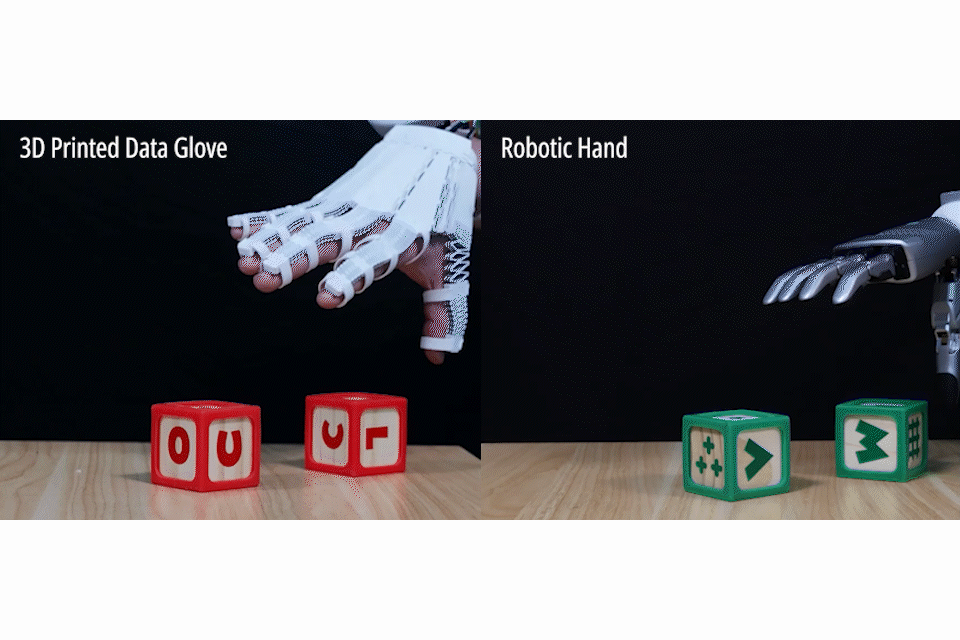
“X-Hinges” helps design and 3D print items like lamps and gloves with an interactive twist: automatically embedded sensors that perceive and adaptively respond to human contact.
We use cookies to run the site and, with your consent, for analytics and to show ads.
See our Cookie Policy.