Achieving cost-efficient and high-reliability operations is increasingly critical as the energy industry advances toward greater digitalization and sustainability. Drilling services fleets alone account for substantial annual maintenance expenditures, highlighting the need for data-driven approaches that improve asse...
Junko Hutahaean, S. Postovalov, M. Tergeist· SPE Asia Pacific Oil & G...· 0 citations
Protologue is an openly licensed, sourced reference for the vocabulary of prompting and large language model techniques. Each entry has a permanent identifier (PTL-NNNN), a standalone one-to-two-sentence definition, synonyms, broader, narrower and related links (SKOS semantics), and the primary source that introduced t...
Protologue· Zenodo (CERN European Organi...· 0 citations
Safety-incident reports are written with deliberate epistemic caution: A reporter marks what was seen, what was inferred, and what remains unsure, and a dropped hedge can turn a tentative observation into an apparent cause. As large language models take over summarizing such reports for triage, indexing, and search, wh...
Simon Baradziej· Frontiers in Language Scienc...· 1 citation
Objective Guided by the Technology Acceptance Model (TAM) as a conceptual framework, this study explored medical students’ use of large language models (LLMs) in graduation thesis writing, focusing on application patterns, perceptions, and potential risks. Methods A comparative cross-sectional questionnaire survey usin...
Xuexiu Liu, Junyang Luo, Yanhan Chen et al.· Frontiers in Medicine· 0 citations
Reach audiences
Advertise in front of researchers, engineers, and readers.
Occupant-centric building operation requires models that can not only predict thermal sensation, but also justify predictions through auditable reasoning. Traditional mechanistic models, such as Fanger’s predicted mean vote (PMV), often show limited field accuracy, whereas advanced machine learning models can improve p...
Moein Younesi Heravi, Inbae Jeong, You-Jin Jang et al.· Advanced Engineering Informa...· 0 citations
The current landscape of science communication is undergoing rapid transformation, shaped by profound societal shifts including the COVID-19 pandemic, the rise of social media, the decline of traditional news media, and the growing influence of large language models. These changes have fundamentally altered how the bio...
Elizabeth A. Burke, Samantha N. Schumm, Amy Jobe et al.· Frontiers in Systems Biology· 0 citations
Abstract This paper presents an integrated surface-to-subsurface digital twin platform developed for end-to-end management of hydraulic fracturing and acidizing operations. The work addresses a persistent visibility and knowledge gap in stimulation campaigns: surface equipment layout and health status are often managed...
Jian Yang, Xudong Wang, Zhouyang Wang et al.· SPE Asia Pacific Oil & Gas C...· 0 citations
Artificial intelligence has moved from a peripheral curiosity to a core feature of modern medical education through adaptive learning, simulation-based training, automated assessment, and large language models such as ChatGPT. Publication activity has accelerated rapidly, but the structure of this expanding literature...
Rishi Selvaraj, E. Nichols, Latha Ganti et al.· International Journal of Eme...· 0 citations
Generative artificial intelligence (AI) has prompted rapidly growing body of scholarship on the role in chemistry education since the public release of ChatGPT in the late of 2022. This thematic narrative review synthesizes 40 English-language sources including empirical studies, curriculum reports, and stakeholder sur...
Amir Alqahm· IJCER (International Journal...· 0 citations
Overview GRAVITY: A Problem-State-Driven Adaptive Computational Intelligence Fabric proposes a constrained framework for allocating computational intelligence, execution strategies, resources, and verification according to the requirements of each problem instance. Modern AI systems frequently frame computation as a mo...
Somnath Banerjee, Soham Das· Zenodo (CERN European Organi...· 0 citations
Large Language Model (LLM) workflows increasingly decompose knowledge-intensive generation into planning, role assignment, subtask execution, and synthesis. Although this structure may support specialization, it also adds coordination and computational overhead. We present a preliminary task-level comparison of a Direc...
A. Hossain, M. Chowdhury, Shafayet Nur et al.· ACM/IEEE Joint Conference on...· 0 citations
A new computational approach reveals how cells communicate to assemble into tissues. This could accelerate stem cell engineering, improve disease models, and inform therapies.
Microsoft Research Blog· microsoft.comOct 15, 2026
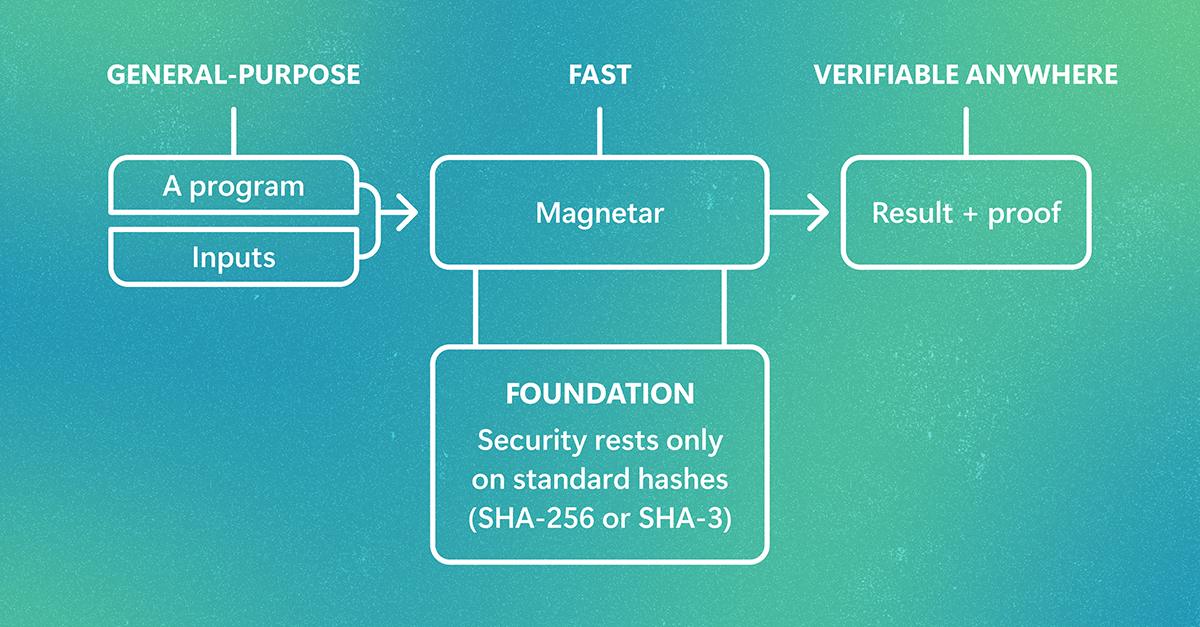
Zero-knowledge proofs can verify computing results without rerunning workloads or exposing sensitive data. Magnetar helps bring them into the mainstream with support for standard programming languages, major speed gains, and quantum-resistant security. The post Proof-based general-purpose computing with Magnetar appeared first on Microsoft Research.
Learn how Google DeepMind and GovTech Singapore uses lightweight on-device Gemma models to intercept conversational scams in private chats with zero cloud data egress.