AI agents are making it easier for the public to interact with government, such as by helping them apply for benefits, understand complex policies, and make their opinions heard. Although improving service accessibility is beneficial, any resulting surges in demand could strain unprepared government services. We term s...
Chris Schmitz, Lewis Hammond, Alan Chan· Proceedings of the AAAI/ACM...· 0 citations
Specifying a penalty can turn a legal obligation into a cost-benefit calculation that favors violation. We show that this enforcement information paradox occurs in AI agents. Most AI safety evaluations test whether models fail; we ask why, using compliance theory from law and economics as a diagnostic. We evaluate twel...
Mika Okamoto, Ansel Kaplan Erol, Kutluhan Erol· Proceedings of the AAAI/ACM...· 0 citations
Overwhelmed courts in the United States review millions of default judgments each year. Unfortunately, such manual reviews are time-consuming and prone to error. In an audit of 188 debt collection cases granted default judgment by the Superior Court of Los Angeles, we find that 4% contained major defects that should ha...
Theodora Worledge, Othman Bensouda Koraichi, Daniel Bernal et al.· Proceedings of the AAAI/ACM...· 0 citations
As large language models gain tool access and are deployed as autonomous agents capable of editing records, executing transactions, and modifying infrastructure, we still evaluate them based on the sole metric of task completion. We argue that this evaluation focus constitutes a systematic design failure. Benchmark sco...
Victor Ojewale, Suresh Venkatasubramanian· Proceedings of the AAAI/ACM...· 0 citations
Reach audiences
Advertise in front of researchers, engineers, and readers.
Large language models (LLMs) have made fluent essay writing, code drafting, and quiz answering instantly available to students at every level, from secondary school through graduate study. Many educators do not object to LLM use per se; what they need to detect is the case in which a student pastes the assignment promp...
Aizierjiang Aiersilan, Artin Yousefi, Robert Pless· Proceedings of the AAAI/ACM...· 0 citations
Abstract Recent research has shown that large language models (LLMs) exhibit rule-based insensitivity to contingencies, a functional analog of a well-documented phenomenon in human behavior. The present study extended these findings by examining whether tracking inductions can attenuate this insensitivity. Six frontier...
Francisco J. Ruiz, Esmeralda Martínez-Carrillo· The Psychological Record· 0 citations
While computer systems that allow users to interact through conversational natural language (i.e., chatbots) have existed for many years, various types of applications advertising AI companionship (e.g., Character AI, Replika) have proliferated in recent years due to advancements in large language models. To better und...
Natalie Grace Brigham, Lucy Qin, Tadayoshi Kohno· Proceedings of the AAAI/ACM...· 0 citations
Human uplift studies, or studies that measure the effects of AI access on human performance via randomized controlled trials (RCTs) or similar methodologies, increasingly inform frontier AI governance and deployment decisions. While RCT methods are robust in other fields, their interaction with the distinctive properti...
Patricia Paskov, Kevin Wei, Shen Zhou Hong et al.· Proceedings of the AAAI/ACM...· 0 citations
Adversary emulation is an essential procedure for cybersecurity assessments such as evaluating an organization’s security posture or facilitating structured training and research in dedicated environments. To allow for systematic and time-efficient assessments, several approaches from academia and industry have worked...
Louis Hackländer-Jansen, Rafael Uetz, Martin Henze· Digital Threats Research and...· 0 citations
Large language models (LLMs) differ from previous technologies in functioning as collaborative "thought partners'' that can engage fluidly in natural language across a range of tasks and increasingly act as autonomous agents on users' behalf. As they come to shape consequential decisions from healthcare to personal adv...
Lujain Ibrahim, Katherine M. Collins, Sunnie S. Y. Kim et al.· Proceedings of the AAAI/ACM...· 4 citations
This thesis asks how information enters prices at intraday horizons, and it approaches the question through three essays that move progressively from the reaction of prices to news toward the mechanism by which that reaction is produced. The first essay studies the intraday processing of firm-specific ESG news for Dow...
Tesfaye Salarin· Institutional Research Infor...· 0 citations
Archived source functions, recorded GPT-4o transformations, paired static metrics and scripts for remeasurement of 910 analysed pairs and a 100-function prompt ablation. Behavioural equivalence was not tested. This deposit contains research data and analysis code; the unpublished manuscript is not included. The manuscr...
Sura Salah, Sama Hayder, Zaher Fadhil Raham· Zenodo (CERN European Organi...· 0 citations
A new computational approach reveals how cells communicate to assemble into tissues. This could accelerate stem cell engineering, improve disease models, and inform therapies.
Microsoft Research Blog· microsoft.comOct 15, 2026
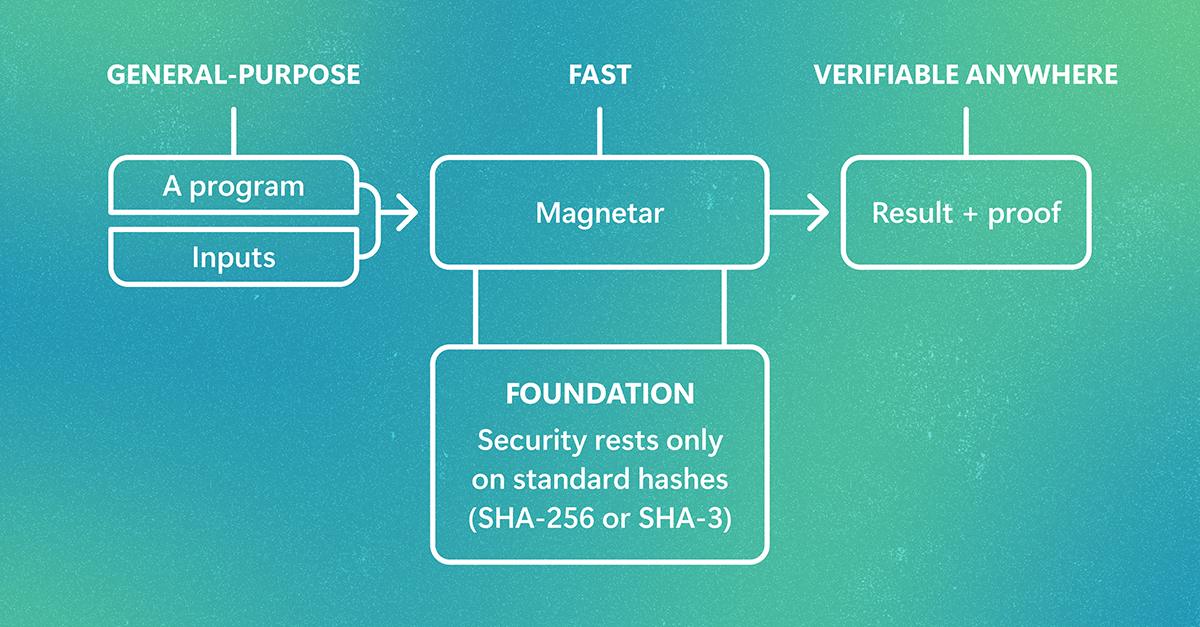
Zero-knowledge proofs can verify computing results without rerunning workloads or exposing sensitive data. Magnetar helps bring them into the mainstream with support for standard programming languages, major speed gains, and quantum-resistant security. The post Proof-based general-purpose computing with Magnetar appeared first on Microsoft Research.
Learn how Google DeepMind and GovTech Singapore uses lightweight on-device Gemma models to intercept conversational scams in private chats with zero cloud data egress.