Developing and validating the attitudes toward large language models scale
Magnus Liebherr, Mohamed Basel Almourad, Sameha Ahmed Ali Alshakhsi et al.
· Cogent Psychology · 0 citations
Category
2,530 papers
Large language models are entering healthcare information systems through documentation, retrieval, summarization, multimodal interpretation, and administrative workflows. Their operating costs depend on more than unit pricing because repeated context transfers, unnecessary model calls, retries, long outputs, and reuse...
Overall, general-purpose LLMs show potential for leprosy diagnostic support, but their clinical evaluation should extend beyond aggregate classification performance to consider clinically informative inputs, error profiles, response consistency, and the presentation of outputs in ways that support appropriate human ove...
How intentional instructional design can mediate the risks of AI while leveraging its affordances to support complex learning environments is illustrated by illustrating how intentional instructional design can mediate the risks of AI while leveraging its affordances to support complex learning environments.
Reach audiences
Advertise in front of researchers, engineers, and readers.
AI sycophancy has emerged as a prominent concern in human–AI interaction, as large language models (LLMs) may unduly affirm users’ beliefs or actions rather than provide independent assessments. Such behavior may vary across languages because language can cue culturally patterned norms of social interaction. Prior work...
Background Despite several efforts to expand tobacco cessation services through tobacco cessation centers (TCCs) and quit lines, key operational challenges still persist. Recently, AI-based digital interventions have shown promise globally for smoking cessation; however, they remain underused in tobacco cessation strat...
Abstract The integration of artificial intelligence (AI) and large language models into healthcare is reshaping quality improvement (QI), creating unprecedented opportunities while introducing new risks that require dedicated governance frameworks and professional competencies. AI-enabled QI has significant implication...
Abstract Physics education research has developed a range of student-centered approaches that emphasize conceptual understanding and problem solving, creating interest in whether large language models (LLMs) can provide complementary, on-demand tutoring support. Locally deployable models are particularly relevant for i...
Open-ended performance assessments can capture intellectual status that is difficult to measure using highly constrained response formats. However, their practical use is limited by the difficulty of obtaining reliable, scalable, and interpretable scores. Recent advances in large language models provide new opportuniti...
Conversational Natural Language Understanding (NLU) has passed through five distinguishable technological eras: rule-based symbolic parsing, statistical and probabilistic modelling, neural sequence learning, Transformer-based pretraining, and the current large language model regime. Existing accounts of this history te...
Early identification of plant diseases is crucial for maintaining agricultural productivity and ensuring food security. Manually inspecting crop leaves takes a lot of time and requires expertise, making automated disease detection systems very helpful. This paper presents a framework for detecting leaf diseases in mult...
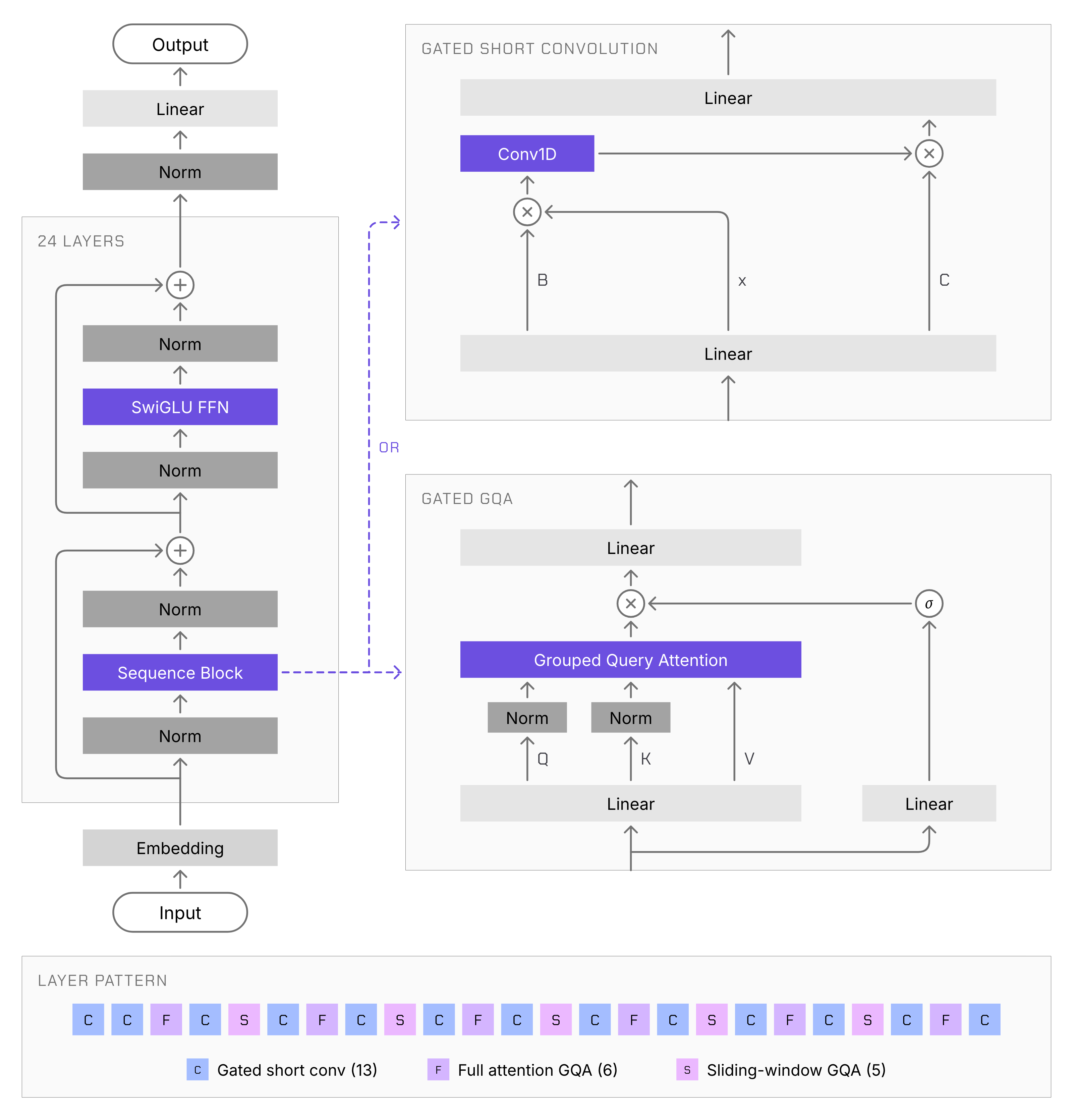
A Blog post by Liquid AI on Hugging Face
Genie 4: our new world model unlocking unprecedented realism in real-time simulation.
Generative AI
Assistant Professor Benjamin Lindquist studies how engineers deliberately injected randomness into early AI, giving rise to deep-learning models that sometimes hallucinate.
We’re on a journey to advance and democratize artificial intelligence through open source and open science.
Flint-interactive gives AI agents a language for creating interactive visualizations. Click a chart, filter data, highlight related content, and explore beyond the view the author originally chose. The post Flint-interactive: A language for creating interactive data visualizations appeared first on Microsoft Research.
We use cookies to run the site and, with your consent, for analytics and to show ads. See our Cookie Policy.