This work presents Eager Multi-Resolution HyperNEAT (EMR-HyperNEAT), which reformulates adaptive substrate discovery as a batch tensor operation: shared position grids are precomputed for all depths, every position is evaluated in one vectorized CPPN call, then the same variance criterion filters the output.
Romain Claret, Michael O'Neill, Paul Cotofrei et al.· Proceedings of the Genetic a...· 0 citations
Experiments and comparisons show that SEMGNN achieves competitive or improved predictive performance while providing more faithful and compact label-conditioned explanations, compared to post-hoc methods.
Ying Feng, Yufei Tang, Min Shi et al.· 0 citations
Deep learning's diagnostic utility in pathology is constrained by model vulnerability to real-world data imperfections. While current strategies favor "perfect data" by filtering low-quality regions, which can lead to the loss of valuable diagnostic context, we propose a paradigm shift: engineering models to thrive in imperfect environments using "Destroy Me", a hybrid framework for realistic artifact synthesis and robust data augmentation. Our approach combines Stable Diffusion, fine-tuned to preserve morphological continuity by realistically integrating artifacts with the underlying tissue architecture, with physics-based procedural modeling to synthesize six common artifact types: tissue folds, precipitates, blur, stitching errors, dust, and pen markers. Artifact fidelity is assessed using Kernel Inception Distance (KID) and color Wasserstein distance metrics. Validating this strategy on lung adenocarcinoma pattern classification with an nnU-Net, we confirm that models trained on "destroyed" patches consistently outperform baselines on independent real-world datasets. Specifically, we observed a 10.5% relative improvement in macro F1-score and a 15% relative increase in the Cohen's Kappa ($\kappa$) coefficient. Crucially, our results demonstrate that selective, impact-weighted augmentation is vital for balancing practical robustness with the preservation of subtle diagnostic features.
Zuzanna Krawczyk-Borysiak, Adam Krawczyk, Mateusz Miller et al.· 0 citations
Post-training quantization is often treated as a semantically neutral optimization for edge deployment of Large Language Models. When a full-precision source checkpoint is evaluated and quantization is applied downstream without equivalent re-evaluation, this workflow creates a structural validation--deployment gap: because quantization is a many-to-one mapping over parameter space, source-precision certification does not guarantee behavioral equivalence in the deployed configuration. We formalize this gap through Quantization Behavioral Equivalence Classes (QBECs) and prove that QBEC membership does not imply behavioral equivalence, providing a theoretical basis for quantization-triggered backdoor attacks. Building on a three-stage adversarial fine-tuning framework, we embed latent malicious payloads into models that satisfy the source-precision checks used in our evaluation, yet activate targeted adversarial behavior upon INT8 or 4-bit compression. We evaluate this threat in two operationally motivated scenarios, tactical machine translation and political content analysis, extending prior work from decoder-only causal LMs to multilingual encoder-decoder sequence-to-sequence models. Results show that backdoored translation models move from zero measured friend--foe corruption at repaired FP16 to up to 85.02% inversion after quantization, and that a paired stance classifier measures an ideological shift of up to $\Delta\mathrm{Bias}=0.33$ upon compression. A cross-quantizer transferability analysis further shows that attack persistence varies across quantization schemes and model architectures, rather than being determined by nominal bit-width alone. These findings demonstrate that source-precision auditing alone does not rule out quantization-triggered behavior and that the final deployed configuration must be included in behavioral certification for trustworthy edge AI.
Jacopo Dardini, Claudio Stanzione, Giordano Colò et al.· 0 citations
Reach audiences
Advertise in front of researchers, engineers, and readers.
Policy Gradient for Parallel State Entropy maximization (PGPSE) expands state-space coverage by training independently parameterized policies in replicated copies of the same environment. However, its pooled team-entropy score measures only collective exploration and cannot identify policies that contribute non-redundant coverage. We introduce Marginal Coverage Credit for PGPSE (MCC-PGPSE), which combines leave-one-policy-out coverage with state-owner specialization to estimate policy-specific credit. MCC-PGPSE preserves PGPSE's pooled objective and redistributes non-negative auxiliary intrinsic rewards according to these credits without changing their total mass. This redistribution is designed to discourage redundant visitation and promote complementary coverage. We evaluated MCC-PGPSE in controlled environments, seven public discrete-state benchmarks, and representative Room and Maze settings from the original PGPSE protocol. Across all tested settings, MCC-PGPSE produced positive final window gains in normalized team state entropy and state support over the Entropy baseline. Controlled-task comparisons and the fixed-suite public aggregate were significant, whereas five-seed original-protocol comparisons were directionally consistent. Ablations and credit alignment controls indicate that most gains arise from leave-one-policy-out coverage rather than non-uniform weighting, mismatched credit, or neural novelty alone. These results support contribution-conditioned auxiliary reward allocation as an interpretable approach to improving complementary coverage among parallel policies in discrete state spaces.
Junhao Cao, Hongyi Xia, Jianian Wu et al.· 0 citations
The proposed DMRA, a deficit-based diagnostic framework that quantifies the contribution of these components to identify the primary cause of unsuccessful cases, reveals that relational reasoning is the primary source of error across all models, followed by memory limitations.
N. Yilmaz, Naga Sai Abhiram Kusumba, Stella Wenxing Liu et al.· 0 citations
This study evaluates survival models that predict time-to-repurchase directly, and adopts Exponential AFT for probability-consuming surfaces and Log-Normal for pure ranking, exposing a principled calibration-ranking trade-off within a single AFT family.
Akshay Kekuda, Shreeranjani Srirangamsridharan, Ishan Bhatt et al.· 0 citations
GRACE, a gradient-guided coreset selection method that constructs both forget and retain sets for LLM unlearning, improves model utility while maintaining comparable forget quality, with particularly consistent gains over prior gradient-based selection methods.
Praveen Bushipaka, Andrea D'Angelo, Lucia C. Passaro et al.· 0 citations
This work proposes a lookahead-guided decoding framework for context-free grammars based on pushdown automata based on bounded pushdown summaries with reachability labels and upper-bound distances to acceptance.
Vincenzo Collura, Karim Tit, Eleonora Giunchiglia et al.· 0 citations
Agitation fluctuates over short time horizons in people living with dementia, yet continuous physiological information for anticipating next-day risk is limited. We assessed whether contactless under-mattress signals from the preceding night inform next-day agitation risk and whether preserving minute-level temporal structure improves performance over conventional nightly summaries. We analyzed 423 patient-nights from 65 subjects in a specialized hospital dementia unit using two under-mattress sensing systems. A unified four-paradigm benchmark compared nightly handcrafted summaries, three-period handcrafted features, full-night sequence modeling, and sliding-window multiple-instance learning. Source-specific preprocessing and five-fold patient-grouped cross-validation were used, with performance estimated from pooled out-of-fold predictions. Evaluation included discrimination, calibration, fixed-threshold metrics, and a comparison of period-signal attribution patterns across two temporal models. Full-night sequence modeling achieved the highest discrimination (AUROC, 0.692; AUPRC, 0.849) and balanced accuracy (0.658). Both minute-level pipelines had higher AUROC than nightly summaries, but differences from three-period handcrafted features were uncertain. Cross-model attribution prioritized activity, heart rate, and respiratory rate during the core overnight period. Calibration remained limited. The preceding night's signals supported modest next-day risk discrimination, with minute-level temporal modeling outperforming nightly summaries. Prospective calibration and external validation are needed before use in individual care decisions. This patient-grouped benchmark identifies contactless overnight sensing as a promising biomedical engineering direction for agitation-risk research in hospitalized dementia cohorts.
Zhen Liu, Marta Bono, Robbe Decloedt et al.· 0 citations
Coding agents are now commonly evaluated on the SWE-bench family of benchmarks, whose tasks are built from curated GitHub issues--long, structured, and information-rich. Real user requests, however, are typically far shorter and less structured. To characterize this gap, we define a six-category information taxonomy and four dimensions of linguistic style, and apply them to real user prompts from SWE-chat and problem statements from SWE-bench Verified and Pro. We find that requests carrying only a problem statement, alone or with limited additional context, account for 88% of real prompts but just 7% of benchmark problems. Furthermore, 87% of real prompts are casually written whereas 94% of benchmark problems are formal. Guided by these observations, we introduce sys, 381 multi-variant task families derived from SWE-bench Verified and Pro. Variants within each family share the same underlying task and gold patch while differing only in information composition and linguistic style. Evaluating seven contemporary LLMs with sys, we find that i) realistic inputs reduce resolution rates by 6.4 pp on average and can change model rankings. Controlled analysis further shows that ii) including Desired Behavior and Motivation significantly affects performance, whereas Environment Information and Reproduction Steps merely add tokens without measurable benefit; iii) linguistic style has only small, model-dependent effects. These findings provide actionable guidance for users and agents: explicitly stating the desired behavior and motivation--which most real prompts omit--substantially improves the LLM's software engineering performance.
Gyuhyeong Kim, Hyojung Gwon, Jeonghyeon Kim et al.· 0 citations
Self-report is the cheapest oversight channel a deployer has, and on capable computer-use agents (CUAs) it fails precisely where oversight matters. On 361 OSWorld tasks our pipeline, a read-only feasibility gate, a planner, and a GUI executor, reaches a mean task score of 82.9, above the 72.4 human reference, yet 64 of its 71 failures (90%) end with a success claim, 61 acknowledging no blocker, and the explicit failure affordance is never used in roughly 9,100 calls. We introduce CURA (Certified Runtime Alarms for Computer-Use Agents), an external monitor that reads only harness-visible telemetry, with no model internals, extra LLM calls, or prompt changes, and turns the running trajectory into a sequential test with certified false-alarm control. At alpha = 0.10 its CUSUM alarm detects 42.3% of failures a median of 31 steps before termination at a realized false-alarm rate of 0.066, and risk is partly resolvable before the first action (gate probe, 0.69 AUROC). Retrospectively the composite reaches 0.828 AUROC (fold-internal floor 0.802), but its margin over a total-token baseline is not significant (Delta = +0.026, p = 0.101); the separation is online, where CURA recalls more at matched certified budgets: 0.41 versus 0.34 at alpha = 0.10, 0.56 versus 0.38 at alpha = 0.20. Alarm-gated mid-execution oversight recovers 23 of 70 failures while spending a frontier overseer on 38, giving a deployable cascade at mean score 86.8 and 84.5% full-solve (305 of 361). The certificate bounds false alarms only. We also report where behavioral monitoring is uninformative.
Divake Kumar, Sina Tayebati, Devashri Naik et al.· 0 citations
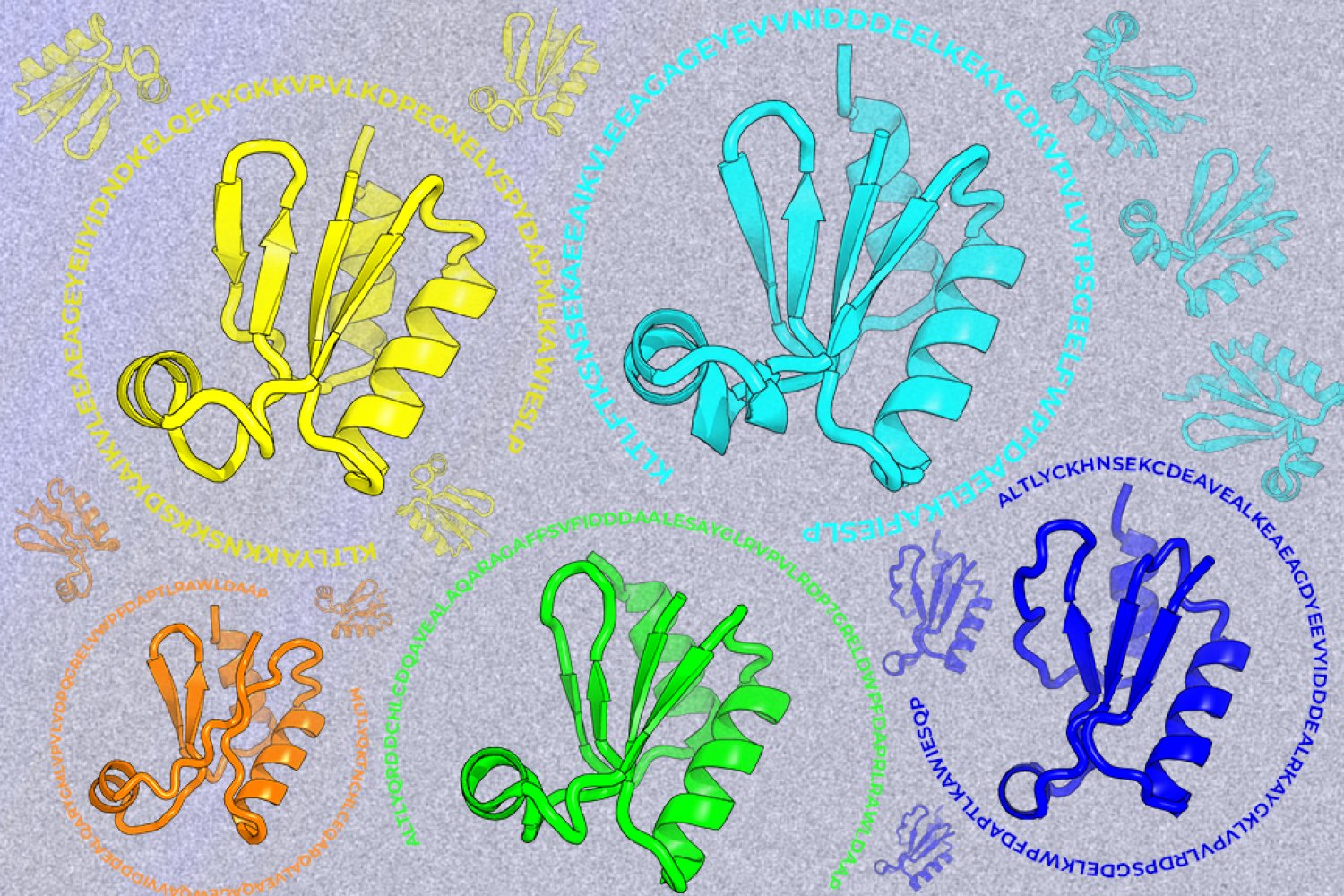
A new machine-learning framework aims to improve the success rate of computational protein design while moving away from results that reproduce sequences found in nature.
MIT News · Artificial Intelligence· news.mit.eduAug 24, 2026
A new method for surgically removing training examples from a model reveals that as datasets grow, the link between what a model learns and what it produces dissolves.