Knowledge-intensive reasoning requires Large Language Models (LLMs) to ground answers in provided evidence. When evidence is insufficient, it is desirable that models abstain rather than confidently generating unsupported answers. Existing abstention methods rely on uncertainty estimation or evidence sufficiency checks, but neither tests whether the reasoning process for generation, driven by the interaction of provided evidence and the model's internal memory parameters, is actually grounded in the evidence. A key contributing factor is that entity mentions in context activate memorised associations, causing models to generate plausible responses ungrounded in evidence. We propose Twin Worlds (TW), a framework for improving reliability in knowledge-intensive reasoning through equivariance-based abstention: unlike invariance, which requires outputs to remain unchanged, equivariance requires outputs to transform correspondingly under entity substitutions. A model grounded in the evidence should produce answers that shift consistently when entities are substituted while their relations are preserved. TW constructs multiple worlds via typed substitutions of the original input that preserve relational structure while reducing parametric priors, and uses equivariance violations as an abstention signal. Across four benchmarks and three model backbones, TW identifies when answers are not reliably grounded in the provided evidence and outperforms uncertainty- and sufficiency-based baselines.
Vy Nguyen, Ziqi Xu, Jeffrey Chan et al.· 0 citations
The decomposition provides a theoretical basis for adapting likelihood-based LLM methods to flow matching, while distinguishing exact substitutions from controlled surrogates, while distinguishing exact substitutions from controlled surrogates.
It is found that for FFN and lm_head the time cost of quantization/dequantization is compensated for by the use of integer arithmetic, while for short context lengths, the opposite holds true for Attention: an additional step of quantization slows execution down.
A privacy-preserving zk-SNARK-based audit framework that searches for probes designed in the spirit of adversarial examples to amplify logit drift between an approved model and a modified deployment and demonstrates that token-based probes consistently deliver the strongest mean sensitivity across models and GPU platforms, although operating in a black-box setting.
Cameron Wilding, Mina Shaker, Fatemeh Ganji· 0 citations
Reach audiences
Advertise in front of researchers, engineers, and readers.
With the growing prevalence of large language model (LLM) generated content, watermarking is considered a promising approach for attributing text to LLMs and distinguishing it from human-written content. A prominent class of techniques embeds subtle but detectable signals in generated text by modifying token sampling probabilities. However, such methods are unsuitable for open-source models, where users have white-box access and can easily disable watermarking during inference. In this work, we introduce OpenStamp, a watermarking technique that encodes the watermarking logic directly into the model weights by modifying only the final projection, or unembedding, layer. Through experiments across two models, we show that OpenStamp achieves superior detection performance, with minimal degradation in model capabilities compared to prior methods. The implanted watermark is explicitly designed, and empirically confirmed, to be more robust to paraphrasing attacks and harder to scrub off through post-hoc fine-tuning than prior open-source watermarks. To enable developers to watermark their models, we release our code alongside watermarked versions of 4 popular open-source models.
SOMTab, a Set-Order Mamba architecture for efficient tabular in-context learning, and DCH-TailMix, a synthetic prior that combines degree-corrected graph heterogeneity with mixed heavy-tailed regimes to diversify synthetic dependency structures are introduced.
Clinical modeling experience is established as a promising collaborative object beyond conventional parameter-centric FL and point toward federated autonomous clinical intelligence.
Explainable artificial intelligence (XAI) increasingly calls for actionable counterfactual recourse, yet current methodologies face challenges related to causal invalidity, excessive cognitive burden, and predictive failure. Exhaustive causal search algorithms often require modifications to multiple attributes, whereas additive attribution-guided methods, such as SHAP, ignore higher-order feature synergies, leading to suboptimal predictive momentum and diffuse intervention effort in complex nonlinear models, such as XGBoost. To bridge this gap, we introduce actionable case-based feature importance (A-CBFI), a diagnosis-prescription integrated framework for tabular machine learning. Grounded in structural causal models (SCMs), A-CBFI isolates synergistic interaction bottlenecks and releases suppressive structural locks, translating them into targeted interventions. By mathematically separating the active user intervention space (L_{\mathrm{active}}) from downstream effects and concentrating over 98.3% of the intervention effort on diagnosed root causes, A-CBFI enables highly targeted interventions. Empirical evaluations across the financial and healthcare domains demonstrate that A-CBFI reduces the active human intervention burden by 76.9% while maintaining comparable global recourse cost to exhaustive causal baselines. By prioritizing the diagnosed causal bottlenecks, A-CBFI provides targeted and actionable recourse while maintaining causal validity and achieving full relative convergence across all causally feasible instances.
Searchless chess networks reach human master strength from a single forward pass by imitating a stronger teacher: the strongest, Leela Chess Zero's (Lc0) released Chessformer, distills the visit counts of an AlphaZero-style Monte Carlo Tree Search (MCTS). Imitating a search is a poor proxy for playing without one, so we fine-tune for single-pass strength with self-play reinforcement learning (RL). Its exploration is usually supplied by an entropy bonus, the reverse Kullback-Leibler (KL) divergence to uniform. We replace it with a forward, mass-covering KL toward the network's own MCTS prior (prior-directed exploration), so exploration covers the moves the prior judges promising, and pair it with an entropy-adaptive sampling temperature, set by the value head's outcome uncertainty, that sharpens once a position is decided. In about two thousand steps it raises puzzle accuracy from 93.9% to 94.9% on a 100,000-puzzle suite and mate-in-four accuracy from 77% to 81% while holding searchless strength at or slightly above the base. Measuring tactical accuracy and playing strength together across a matched-compute sweep, we find the two dissociate: accuracy gains fall in a one-point band while ratings straddle the base, and a control fine-tuned on puzzles alone posts the study's largest tactical gains while shedding roughly 260 Elo; a better puzzle-solver is not thereby a stronger player. Distribution-level measurements show what anchoring buys: without a regularizer self-play collapses onto a single line of play, and the puzzles newly solved are the near misses whose winning move the prior kept alive. The forward-KL prior tops the rating ladder, statistically tied with a reverse-KL anchor that concentrates twice as hard and drops the hardest solutions the mass-covering prior keeps in support.
Szymon Mi{\l}osz, Piotr Duch, Szymon Grabowski· 0 citations
RiskBlend is proposed, a classifier-agnostic prioritization framework that combines four complementary risk signals: historical failure patterns, prediction shift, decision-boundary shift, and neighborhood change that achieves the highest average APFD in all 80 dataset-classifier-scenario combinations.
Cardiovascular risk prediction remains limited by incomplete clinical data and imaging biomarkers that reduce computed tomography (CT) to a small number of handcrafted features. We developed CARDINAL (Cardiovascular Assessment via Representation learning from Deep Imaging with Nested Anatomical Latent embeddings), a clinically grounded framework that learns compact representations from routine non-contrast cardiac CT for major adverse cardiovascular event (MACE) prediction. In 17,659 patients, CARDINAL was evaluated for 1-, 3-, 5-, and 10-year MACE prediction against American Heart Association (AHA) pooled cohort equations (PCE), AHA predicting risk of cardiovascular disease events (PREVENT), coronary artery calcium (CAC), segmentation-derived CT biomarkers, and 70-feature structural radiomics. Gains were largest at longer horizons. At 10 years, CARDINAL (joint) achieved an area under the receiver operating characteristic curve (AUROC) of 0.866 $\pm$ 0.020 and an area under the precision-recall curve (AUPRC) of 0.890 $\pm$ 0.015, compared with an AUROC of 0.826 $\pm$ 0.023 and an AUPRC of 0.826 $\pm$ 0.022 for structural radiomics, the strongest baseline. CARDINAL also achieved the highest survival concordance index (C-index), 0.753 $\pm$ 0.015, and high-versus-low risk-tertile hazard ratio, 10.78 $\pm$ 3.16, with favorable reclassification and exploratory calibration. These findings suggest that non-contrast cardiac CT contains prognostic information beyond conventional risk equations, CAC scoring, and engineered imaging biomarkers.
Roy Gabriel, Nattakorn Kittisut, Jamshid Hassanpour et al.· 0 citations
Curvature-Aware Radius Shrinkage for Adaptive Nearest Neighbor Classification (CARSANN) is introduced, a geometry-driven framework that adapts the spatial support of each neighborhood according to local geometric complexity and is competitive with adaptive nearest-neighbor methods.
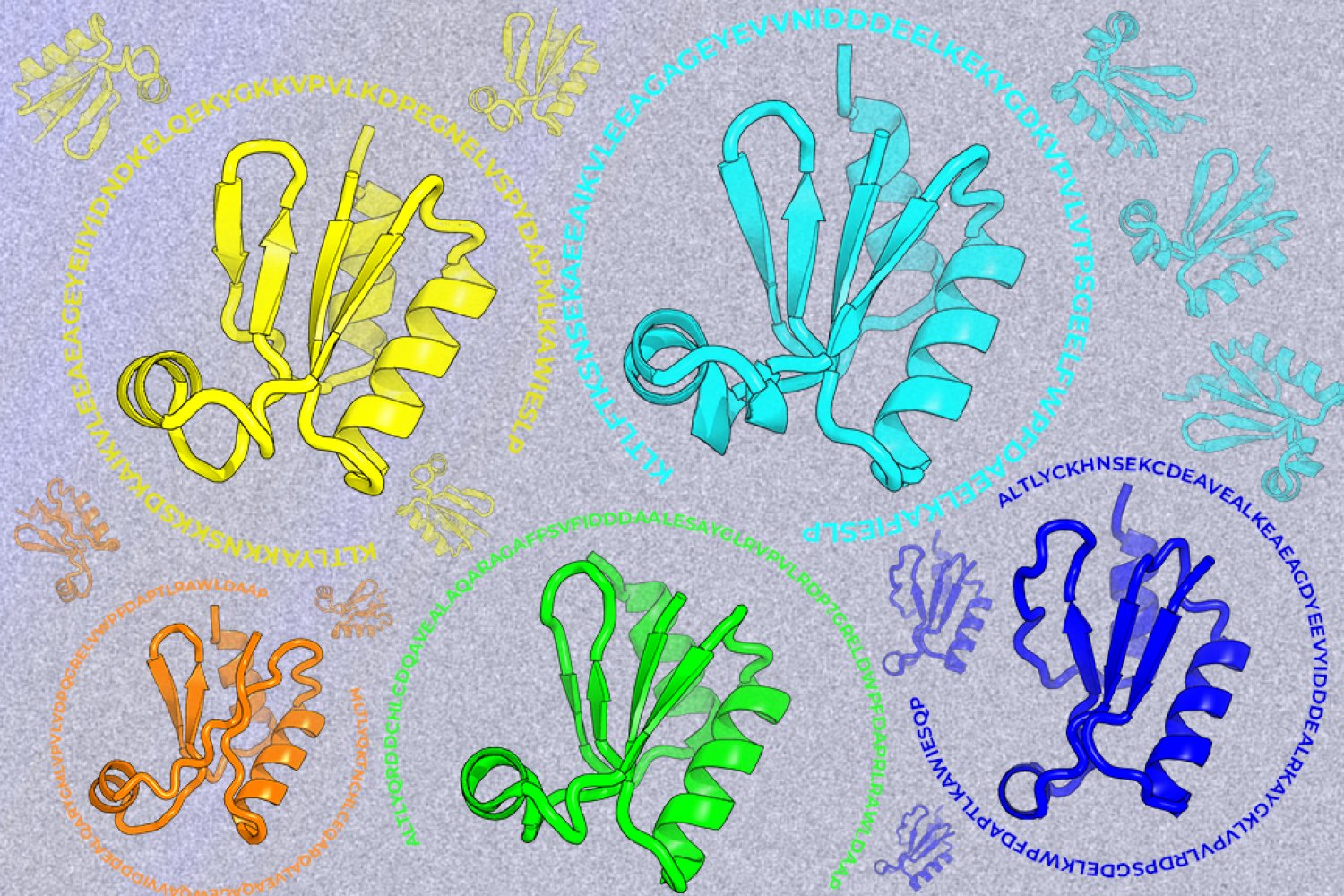
A new machine-learning framework aims to improve the success rate of computational protein design while moving away from results that reproduce sequences found in nature.
MIT News · Artificial Intelligence· news.mit.eduAug 24, 2026
A new method for surgically removing training examples from a model reveals that as datasets grow, the link between what a model learns and what it produces dissolves.