The Standard Interpretable Model is introduced, a general theory grounded in Lagrangian mechanics that enables the deductive design of interpretable methods and offers pedagogical grounding for interpretability curricula and may shift the scientific community's perspective of a discipline that has long been fragmented.
Pietro Barbiero, G. Felice, M. Zarlenga et al.· arXiv.org· 1 citation
Experimental results fully validated the high-precision screening capability of the Mos-Gen framework, a motif-aware generative collaborative framework that couples the pretrained molecular representation model Uni-Mol with a variational autoencoder (VAE) specifically tailored for the design of disulfide-containing allicin derivatives as mosquito insecticides.
Can neural networks learn algebraic rules from visual inputs, or do they merely fit observed patterns? We study this question using MNIST (or EMNIST letters) as states and modular arithmetic operations as actions in a JEPA-style world model. Standard supervised and JEPA baselines with operation embeddings achieve high accuracy on seen operations but fail to extrapolate reliably to unseen operations. We propose BRo-JEPA, a world model with a block-rotation predictor that represents arithmetic operations as rotations, resulting in the cyclic structure of modular arithmetic in latent space. By applying actions as rotations, the BRo-JEPA predictor learns the rotation angles to align the latent representations with the underlying modular structure which enables strict zero-shot operation generalization. While our best block-rotation supervised baseline reaches only 54.54% zero-shot accuracy on MNIST and 25.13% on EMNIST, BRo-JEPA with a ResNet-18 encoder achieves 99.44% and 94.35% respectively, despite being trained only on the primitive operations $\pm$1. Our results suggest that world models can learn algebraic rules when the latent transformations encode the underlying modular structure. Code is available \href{https://github.com/DL-World-Models/brojepa}{here}.
Divyansh Jha, Yuanfang Xie, Brennen Yu et al.· 0 citations
Causal discovery aims to recover directed causal relations from observational and interventional data, providing a basis for mechanistic understanding and reliable decision-making. Causal discovery foundation models (CDFMs) seek to amortize this problem by mapping a dataset directly to a causal graph in a single forward pass, avoiding per-dataset testing, search, or optimization. However, existing CDFMs remain limited, often failing to consistently match strong classical methods, and we find that a key bottleneck is how causal pretraining tasks are constructed. Based on this observation, we propose TabCausal, a data-driven CDFM trained with broad causal pretraining over diverse graph priors, structural mechanisms, noise models, dimensions, sample sizes, and intervention regimes. A dynamic task construction strategy composes these causal environments into varied discovery tasks, enabling more transferable structural learning from observational and mixed-interventional data. On large-scale synthetic benchmarks, TabCausal achieves better macro-averaged performance than a diverse set of causal discovery baselines. To further bridge abstract synthetic generators and realistic causal reasoning scenarios, we introduce a protocol-guided and LLM-audited semantic causal environment benchmark, where domain-grounded SCMs generate interpretable observational and interventional datasets for out-of-distribution analysis. Across both synthetic and semantic environments, TabCausal demonstrates robust structure recovery, especially under interventional evidence, highlighting broad causal pretraining as a key ingredient for transferable amortized causal discovery.
Zi-Rong Li, Si-Yang Liu, Tian-Zuo Wang et al.· 0 citations
Reach audiences
Advertise in front of researchers, engineers, and readers.
Collaborative analysis of decentralized confidential datasets is important, but direct sharing of original datasets is often restricted by privacy and institutional constraints. Data collaboration (DC) analysis transforms each dataset into privacy-preserving intermediate representations via party-specific obfuscation functions and integrates them into common collaboration representations using an anchor dataset. However, many existing DC analysis methods rely on linear transformations for data obfuscation and integration, which may increase reconstruction risk. Although nonlinear dimensionality reduction can mitigate this risk, conventional linear integration methods cannot accurately align intermediate representations produced by nonlinear transformations. Moreover, existing integration methods mainly minimize discrepancies among parties and do not explicitly incorporate geometric or target-variable information useful for downstream analysis. To overcome these limitations, we first formulate linear target-normalized integration (LTI) as a linear integration method and then kernelize it to obtain kernel-based target-normalized integration (KTI). KTI admits a globally optimal solution via kernel ridge regression and an eigenvalue problem. We also introduce graph regularization and a centering constraint so that the target representation can capture geometric and target-variable information useful for downstream analysis. Experiments on image classification tasks demonstrate that KTI improves classification accuracy over existing linear integration methods under nonlinear dimensionality reduction, with further gains from target-variable-aware graph regularization and centering. The results also show that dimensionality reduction choices substantially affect both classification accuracy and reconstruction risk.
Yamato Suetake, Yuta Kawakami, Shunnosuke Ikeda et al.· 0 citations
It is concluded that progress in two-phase AI now depends as much on findable, decodable, benchmarkable, benchmarkable, and physically interpretable data infrastructure as on model architecture.
Christy Dunlap, Ridwan Olabiyi, Firas Al-Hindawi فراس الهنداوي et al.· Transport Phenomena· 0 citations
This work presents ImplicitTerrainV2, which advances terrain INRs toward a compact, efficient neural terrain data format by combining a spectral control mechanism with wavelet-guided spatial adaptivity, derivative-aware supervision, and post-training model compression.
Haoan Feng, Xin Xu, Leila De Floriani· arXiv.org· 0 citations
Activation steering has emerged as a lightweight approach for modifying language model behavior without parameter updates, yet existing methods remain brittle: unstable across layers and prone to disturbing behavior unrelated to the target concept. We trace these failures to a hidden assumption shared by widely-used methods such as CAA, ActAdd, and ITI: that the intermediate activation space is Euclidean. We show this assumption is fundamentally flawed. The metric that actually governs how a hidden-state perturbation changes the output is the Fisher information metric of the softmax layer, pulled back to the intermediate layer through the Jacobian of the intervening layers. From it we derive a closed-form steering direction, applied to a hidden state at an intermediate layer, that reaches a target concept change with the least non-target distortion. The framework is sharpest in the early and middle intermediate layers, where the metric is strongly non-Euclidean and geometric correction matters most. We evaluate it on three verb-morphology concepts: third-person-singular, progressive, and past-tense inflection, following standard counterfactual-concept evaluation. On GPT-2 Small, this non-Euclidean geometry is borne out empirically, and our method lowers off-target KL divergence by median factors of 1.4--6.5x against individual steering baselines. On Llama-3-8B and Qwen3-8B, it lowers off-target KL by median factors of 1.8--3.6x against individual baselines at the early and middle layers. These results show that geometric correction retains its advantage on larger models with more complex internal structure.
Sihan Wang, Jiayi Zhao, Qingyan Cao et al.· 0 citations
These results suggest a tractable operator-level description of learning near dynamical transitions, together with scalable diagnostics for amplified low-dimensional learning geometry.
A posterior-sampling algorithm is proposed and shown that both are competitive with full-prior latent bandits when same-state instances share reward parameters, and preferable to them when reward scales differ between instances with the same latent state.
Emil Carlsson, Newton Mwai, Fredrik D. Johansson· arXiv.org· 0 citations
Finite-iteration behavior of the exact asynchronous recursions used by categorical distributional temporal-difference methods is studied and analogous finite-iteration guarantees for horizon-stacked categorical methods under episodic sampling are established.
Ege C. Kaya, Abolfazl Hashemi· arXiv.org· 2 citations
It is shown that the maximum hypergraph density of any multiclass hypothesis class is upper-bounded by its DS dimension, which proves a longstanding conjecture of Daniely and Shalev-Shwartz (2014) and determines the optimal dependence of the sample complexity on the DS dimension for multiclass as well as list learning.
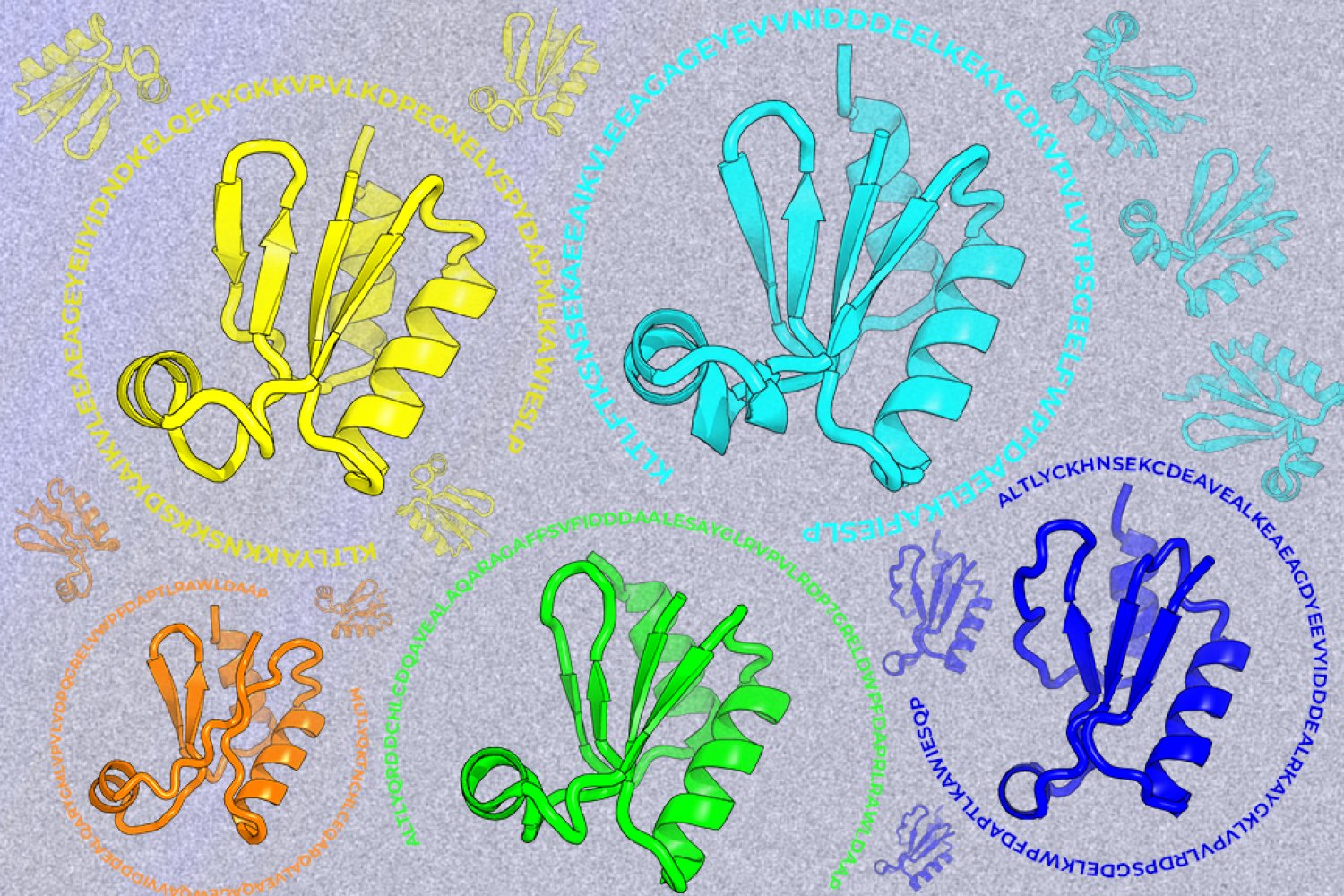
A new machine-learning framework aims to improve the success rate of computational protein design while moving away from results that reproduce sequences found in nature.
MIT News · Artificial Intelligence· news.mit.eduAug 24, 2026
A new method for surgically removing training examples from a model reveals that as datasets grow, the link between what a model learns and what it produces dissolves.