SOMTab, a Set-Order Mamba architecture for efficient tabular in-context learning, and DCH-TailMix, a synthetic prior that combines degree-corrected graph heterogeneity with mixed heavy-tailed regimes to diversify synthetic dependency structures are introduced.
Clinical modeling experience is established as a promising collaborative object beyond conventional parameter-centric FL and point toward federated autonomous clinical intelligence.
Actionable case-based feature importance (A-CBFI), a diagnosis-prescription integrated framework for tabular machine learning, provides targeted and actionable recourse while maintaining causal validity and achieving full relative convergence across all causally feasible instances.
Measuring tactical accuracy and playing strength together across a matched-compute sweep, the two dissociate and a control fine-tuned on puzzles alone posts the study's largest tactical gains while shedding roughly 260 Elo; a better puzzle-solver is not thereby a stronger player.
Szymon Milosz, Piotr Duch, Szymon Grabowski· 0 citations
Reach audiences
Advertise in front of researchers, engineers, and readers.
RiskBlend is proposed, a classifier-agnostic prioritization framework that combines four complementary risk signals: historical failure patterns, prediction shift, decision-boundary shift, and neighborhood change that achieves the highest average APFD in all 80 dataset-classifier-scenario combinations.
Cardiovascular risk prediction remains limited by incomplete clinical data and imaging biomarkers that reduce computed tomography (CT) to a small number of handcrafted features. We developed CARDINAL (Cardiovascular Assessment via Representation learning from Deep Imaging with Nested Anatomical Latent embeddings), a clinically grounded framework that learns compact representations from routine non-contrast cardiac CT for major adverse cardiovascular event (MACE) prediction. In 17,659 patients, CARDINAL was evaluated for 1-, 3-, 5-, and 10-year MACE prediction against American Heart Association (AHA) pooled cohort equations (PCE), AHA predicting risk of cardiovascular disease events (PREVENT), coronary artery calcium (CAC), segmentation-derived CT biomarkers, and 70-feature structural radiomics. Gains were largest at longer horizons. At 10 years, CARDINAL (joint) achieved an area under the receiver operating characteristic curve (AUROC) of 0.866 $\pm$ 0.020 and an area under the precision-recall curve (AUPRC) of 0.890 $\pm$ 0.015, compared with an AUROC of 0.826 $\pm$ 0.023 and an AUPRC of 0.826 $\pm$ 0.022 for structural radiomics, the strongest baseline. CARDINAL also achieved the highest survival concordance index (C-index), 0.753 $\pm$ 0.015, and high-versus-low risk-tertile hazard ratio, 10.78 $\pm$ 3.16, with favorable reclassification and exploratory calibration. These findings suggest that non-contrast cardiac CT contains prognostic information beyond conventional risk equations, CAC scoring, and engineered imaging biomarkers.
Roy Gabriel, Nattakorn Kittisut, Jamshid Hassanpour et al.· 0 citations
Curvature-Aware Radius Shrinkage for Adaptive Nearest Neighbor Classification (CARSANN) is introduced, a geometry-driven framework that adapts the spatial support of each neighborhood according to local geometric complexity and is competitive with adaptive nearest-neighbor methods.
Pothole detection and its severity measurement is still an important challenges in urban infrastructure management, where late maintenance directly contributes to vehicle damage, road accidents, and escalating repair costs. Existing automated approaches depend on 2D RGB images and cannot measure physical depth of potholes. In this paper, we present a depthaware pothole detection framework and then compare five architectures: YOLOv8n, YOLOv8nSeg, YOLOv9t, RTDETRL, and RTDETRX for RGB-D sensor fusion-based detection and automated depth measurement. A custom offline augmentation pipeline is used here to simulate adverse road monitoring conditions. All models are trained on the PothRGBD dataset with an 80% training and 20% validation split and evaluated using Precision, Recall, mAP@50, and mAP@50_95. Before measuring the depth data, all depth maps are corrected for camera tilt using RANSAC ground-plane orthorectification and all zero-valued sensor pixels are cast to NaN before any statistic is computed. YOLOv8nSeg achieves the highest mAP@50 of 0.9556 and mAP@50_95 of 0.6758 with the most accurate depth estimate of 2.96 cm with the pixel-precise Dseg algorithm. YOLOv8n achieves the fastest inference at 3.6ms. RTDETRX achieves the highest detection confidence at 92.70%. An important finding is that even after full RANSAC orthorectification, bounding box models overestimate pothole depth by 0.16 to 0.21 cm compared to pixel precise segmentation masks. This confirms that the pavement inclusion bias is structural rather than a calibration artifact.
This work presents Eager Multi-Resolution HyperNEAT (EMR-HyperNEAT), which reformulates adaptive substrate discovery as a batch tensor operation: shared position grids are precomputed for all depths, every position is evaluated in one vectorized CPPN call, then the same variance criterion filters the output.
Romain Claret, Michael O'Neill, Paul Cotofrei et al.· Proceedings of the Genetic a...· 0 citations
Experiments and comparisons show that SEMGNN achieves competitive or improved predictive performance while providing more faithful and compact label-conditioned explanations, compared to post-hoc methods.
Ying Feng, Yufei Tang, Min Shi et al.· 0 citations
Deep learning's diagnostic utility in pathology is constrained by model vulnerability to real-world data imperfections. While current strategies favor "perfect data" by filtering low-quality regions, which can lead to the loss of valuable diagnostic context, we propose a paradigm shift: engineering models to thrive in imperfect environments using "Destroy Me", a hybrid framework for realistic artifact synthesis and robust data augmentation. Our approach combines Stable Diffusion, fine-tuned to preserve morphological continuity by realistically integrating artifacts with the underlying tissue architecture, with physics-based procedural modeling to synthesize six common artifact types: tissue folds, precipitates, blur, stitching errors, dust, and pen markers. Artifact fidelity is assessed using Kernel Inception Distance (KID) and color Wasserstein distance metrics. Validating this strategy on lung adenocarcinoma pattern classification with an nnU-Net, we confirm that models trained on "destroyed" patches consistently outperform baselines on independent real-world datasets. Specifically, we observed a 10.5% relative improvement in macro F1-score and a 15% relative increase in the Cohen's Kappa ($\kappa$) coefficient. Crucially, our results demonstrate that selective, impact-weighted augmentation is vital for balancing practical robustness with the preservation of subtle diagnostic features.
Zuzanna Krawczyk-Borysiak, Adam Krawczyk, Mateusz Miller et al.· 0 citations
It is demonstrated that source-precision auditing alone does not rule out quantization-triggered behavior and that the final deployed configuration must be included in behavioral certification for trustworthy edge AI.
Jacopo Dardini, Claudio Stanzione, G. Colò et al.· 0 citations
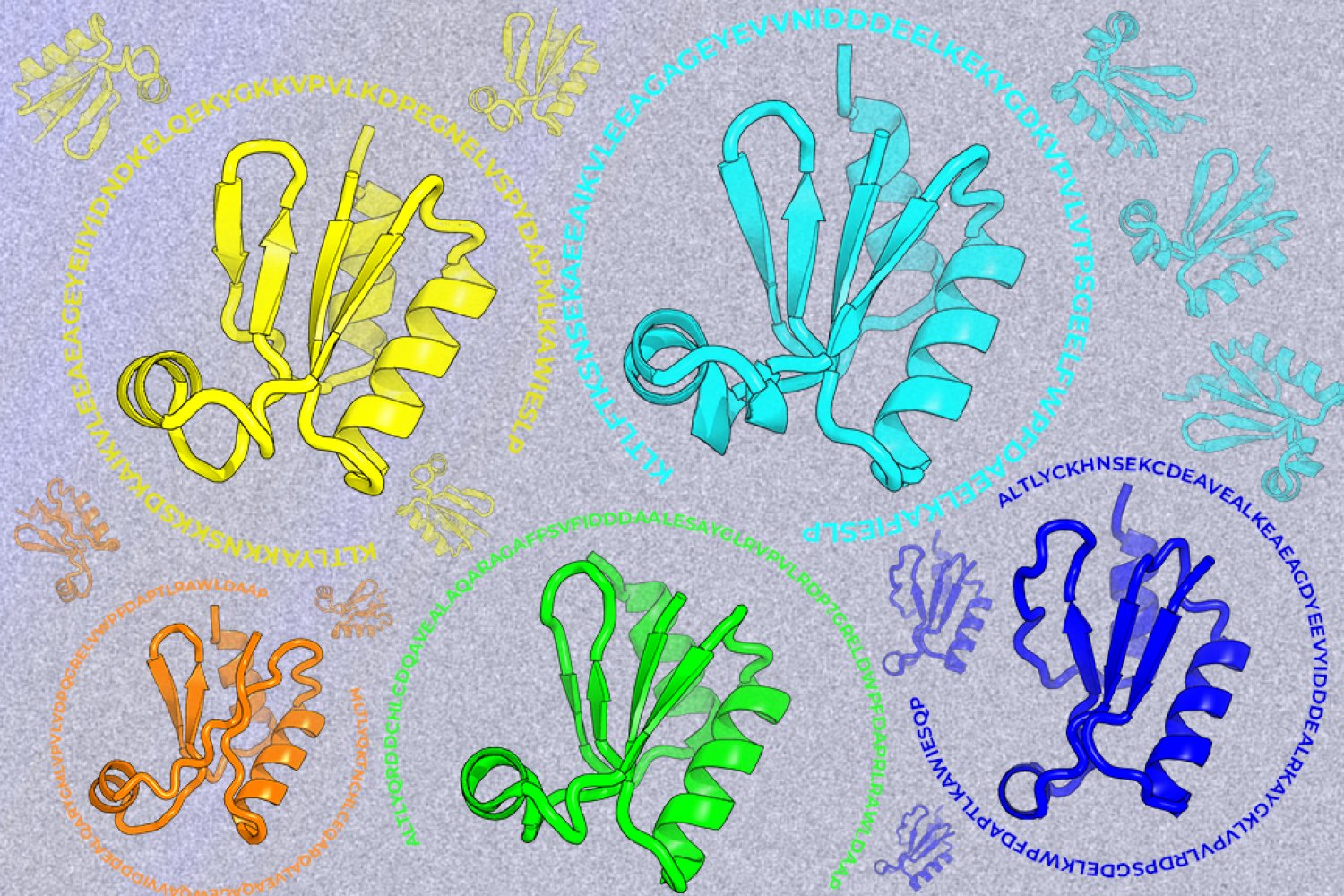
A new machine-learning framework aims to improve the success rate of computational protein design while moving away from results that reproduce sequences found in nature.
MIT News · Artificial Intelligence· news.mit.eduAug 24, 2026
A new method for surgically removing training examples from a model reveals that as datasets grow, the link between what a model learns and what it produces dissolves.