The European Union has committed to reducing greenhouse gas emissions 55% below 1990 levels by 2030, but whether current trends are compatible with this ambition remains uncertain. We apply deep learning to high-resolution socioeconomic and sectoral data across EU27 member states till 2023 to project sectoral CO$_2$ trajectories under current trends, extrapolating observed sectoral momentum without assuming changes in the pace or effectiveness of the policy environment beyond what is already reflected in historical data. We project that EU27 emissions will exceed the 2030 target by 35% (620 Mt CO$_2$ shortfall), with only a small minority of countries on trajectories consistent with the bloc's commitments. While the Power sector achieves target-consistent reductions driven by the renewable transition, Mobility shows minimal progress and accounts for over a third of total emissions by 2030, reflecting a structural inertia across member states rather than geographically concentrated lag. Our findings indicate that substantial additional intervention is required to close Europe's ambition-implementation gap, and call for establishing up-to-date energy information in Europe.
Jacopo Ghirri, Carlos Rodriguez-Pardo, Lara Aleluia Reis et al.· 0 citations
This work proposes a fluctuation-aware evaluation framework for PPG-based BP estimation based on time-series change point detection and introduces a targeted re-calibration framework triggered by detected BP change points, improving robustness without modifying model architectures.
Yunwon Tae, Minje Park, Gyunho Rho et al.· 0 citations
DAEI is proposed, a denoising-aware embedding inversion pipeline that combines a residual denoising autoencoder with generative text inversion where the denoiser is trained in an unsupervised manner using Stein's unbiased risk estimate to enable denoising from noisy observations alone.
Yubo Wang, Shujie Cui, James Bailey et al.· 0 citations
VAKE (Verifiable Activation of Parametric KnowledgE), a two-stage reinforcement-learning framework that externalizes latent parametric knowledge through explicit Priming and transfers the acquired elicitation capability to implicit Reasoning, is proposed.
Zuocheng Ying, Yang Yang, Yumou Wu et al.· 0 citations
Reach audiences
Advertise in front of researchers, engineers, and readers.
The prediction of equilibrium beach profiles (EBPs) under tidal influence is of fundamental importance for sustainable coastal development, informing shoreline protection strategies and managing coastal ecosystems under changing environmental conditions. However, it remains challenging due to the highly nonlinear interactions among wave, tide, and sedimentary processes. Traditional empirical and numerical models often exhibit limited adaptability across diverse coastal environments, with especially pronounced limitations in beach systems where tidal processes are important. To improve data-driven prediction under these conditions, this study proposes MorphoGP, a unified category-specific Gaussian process (GP) framework for predicting EBPs under tidal influence. The framework first introduces a ContourCluster model based on contrastive learning to classify tide-influenced beach morphologies automatically. Within each morphological category, a specialized GP expert learns statistical associations between environmental descriptors including waves, tides, and sediments and the beach profile’s shape. A gating net then integrates the outputs of all experts through a probabilistic weighting mechanism to produce the final prediction. It should be noted that MorphoGP is a data-driven predictive framework and does not explicitly resolve the full wave–tide–sediment transport dynamics. Instead, it incorporates physically relevant descriptors to support prediction and model interpretation. Evaluated on data from over 180 beach profiles from tide-influenced coasts along the Chinese coast, MorphoGP achieves improved predictive performance compared with conventional and deep learning (DL) models, reducing the test root mean square error (RMSE) by about 59.3% compared with the best baseline and achieving a final RMSE of 0.297 m. Additionally, feature relevance analysis suggests that tidal parameters are strongly associated with equilibrium morphology, alongside wave and sediment characteristics. The proposed framework provides a physically informed, data-driven tool for equilibrium beach-profile prediction under tidal influence and coastal management, while stronger process-level physical coupling remains an important direction for future development. The source code is available at https://github.com/Ch1hyaAnon/MorphoGP.git
Xi Wu, Yanqing Wei, Hang Yin et al.· IEEE Transactions on Geoscie...· 0 citations
This work proposes a novel MLaaS Performance Drift Detection framework for IoT environments that employs an MLaaS extraction model that learns service behavior from input-output pairs and identifies prediction-influenced features, and designs an Adaptive-Temporal Performance Drift Detection Mechanism that dynamically adjusts monitoring frequency based on behavioral and data variations.
Deepak Kanneganti, Sajib Mistry, S. Fattah et al.· 0 citations
Interactions are introduced as a fine-grained tool to analyze prompt sensitivity of LLMs and it is discovered that subtle changes to prompts can trigger severe instability in interactions, even when the outputs of the LLM remain the same.
Ruiyang Qin, Qingzhuo Wang, Tianhao Wang et al.· 2 citations· ⚡1
This work proposes DART-SD (Diamond-topology Aware Retrieval and Tuning for Self-Distillation), a novel framework that shifts the paradigm from global forcing to topology-guided localized correction, and significantly outperforms traditional full-trajectory baselines.
Hangrui Xu, Jiarui Wang, Yang Yang et al.· 0 citations
The Gramian Chebyshev Neural Operator is introduced, a physics-based, variable-rate compressor that identifies a sample-dependent set of path directions that achieves better reconstruction accuracy at the same payload - or lower payload at the same accuracy - than neural feedback baselines, and transfers to unseen antenna counts without retraining.
This work proposes Physics-Unrolled Hybrid Neural Operator (PU-HNO), a three-stage cascade that predicts high-fidelity indoor radio maps from low-fidelity ray-tracing outputs and scene priors by progressively capturing reflection, diffraction, and scattering effects, rather than treating radio maps as generic images.
Rafid Umayer Murshed, Saif Ur Rahman, Mingyue Tang et al.· 0 citations
This work introduces SparsePR, which combines Response-Coupled Partitioning with Probe-Fitted Residual Reconstruction and consistently reduces attention-reconstruction error across four heterogeneous video generation and world models.
P. Taghavi, Reza Langari, Gaurav Pandey· 0 citations
The detachment mechanism of Forward-Forward (FF) is reinterpreted as a scheduling primitive: given a local objective, detaching a block's output removes downstream gradient dependencies, making its backward pass ready when its forward pass finishes.
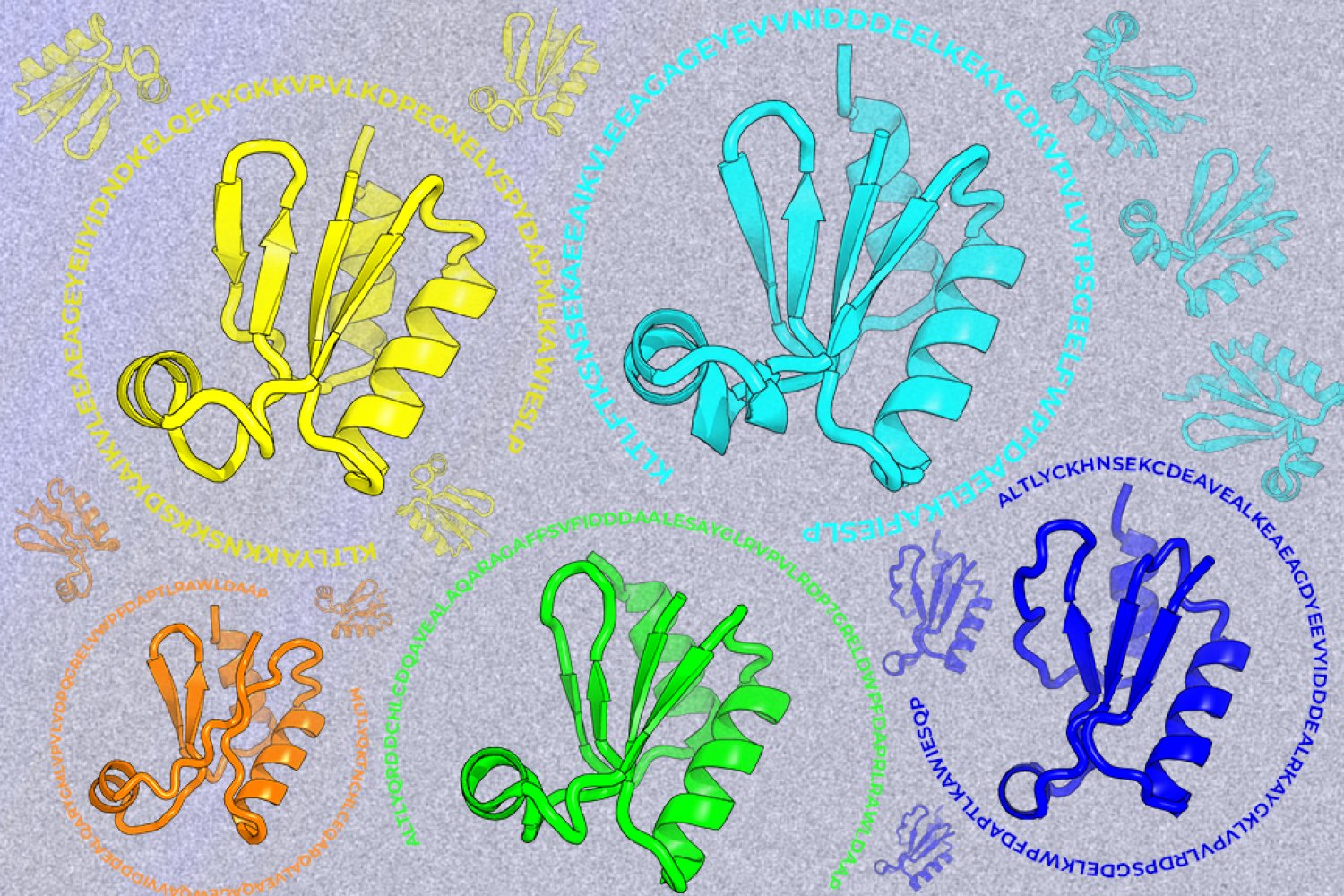
A new machine-learning framework aims to improve the success rate of computational protein design while moving away from results that reproduce sequences found in nature.
MIT News · Artificial Intelligence· news.mit.eduAug 24, 2026
A new method for surgically removing training examples from a model reveals that as datasets grow, the link between what a model learns and what it produces dissolves.