The EXPonential-weight algorithm for prompt Optimization} (EXPO) is proposed to automatically optimize the task description and meta-instruction in the meta-prompt for LLM-based agents and is extended to additionally optimize the exemplars (i.e., history of interactions) in the meta-prompt to further enhance the performance, hence introducing the EXPO-ES algorithm.
Ming-Ze Kong, Zhiyong Wang, Yao Shu et al.· arXiv.org· 7 citations
Amortized sampling of the posterior over data is studied, and the asymptotic correctness of a data-free learning objective, relative trajectory balance, is proved for training a diffusion model that samples from this posterior, a problem that existing methods solve only approximately or in restricted cases.
S. Venkatraman, Moksh Jain, Luca Scimeca et al.· Neural Information Processin...· 75 citations· ⚡5
This work benchmarks several diffusion-structured inference methods, including simulation-based variational approaches and off-policy methods (continuous generative flow networks), and proposes a novel exploration strategy for off-policy methods, based on local search in the target space with the use of a replay buffer.
Marcin Sendera, Minsu Kim, Sarthak Mittal et al.· Neural Information Processin...· 52 citations· ⚡7
Expected Goals (xG) has emerged as a popular tool for evaluating finishing skill in soccer analytics. It involves comparing a player's cumulative xG with their actual goal output, where consistent overperformance indicates strong finishing ability. However, the assessment of finishing skill in soccer using xG remains contentious due to players'difficulty in consistently outperforming their cumulative xG. In this paper, we aim to address the limitations and nuances surrounding the evaluation of finishing skill using xG statistics. Specifically, we explore three hypotheses: (1) the deviation between actual and expected goals is an inadequate metric due to the high variance of shot outcomes and limited sample sizes, (2) the inclusion of all shots in cumulative xG calculation may be inappropriate, and (3) xG models contain biases arising from interdependencies in the data that affect skill measurement. We found that sustained overperformance of cumulative xG requires both high shot volumes and exceptional finishing, including all shot types can obscure the finishing ability of proficient strikers, and that there is a persistent bias that makes the actual and expected goals closer for excellent finishers than it really is. Overall, our analysis indicates that we need more nuanced quantitative approaches for investigating a player's finishing ability, which we achieved using a technique from AI fairness to learn an xG model that is calibrated for multiple subgroups of players. As a concrete use case, we show that (1) the standard biased xG model underestimates Messi's GAX by 17% and (2) Messi's GAX is 27% higher than the typical elite high-shot-volume attacker, indicating that Messi is even a more exceptional finisher than people commonly believed.
This paper proposes a method to approximate the joint posterior over not only the structure of a Bayesian Network, but also the parameters of its conditional probability distributions, using a single GFlowNet whose sampling policy follows a two-phase process.
T. Deleu, Mizu Nishikawa-Toomey, Jithendaraa Subramanian et al.· Neural Information Processin...· 65 citations· ⚡4
The possibility of inferring high-dimensional data inference in a model that consists of a prior and an auxiliary differentiable constraint given some additional information is considered, thereby allowing a range of potential applications in adapting models to new domains and tasks.
Alexandros Graikos, Esmeralda S. Whitammer, N. Jojic et al.· Neural Information Processin...· 316 citations· ⚡15
It is proved that any global minimizer of the trajectory balance objective can define a policy that samples exactly from the target distribution, and empirically demonstrate the benefits of the trajectories balance objective for GFlowNet convergence, diversity of generated samples, and robustness to long action sequences and large action spaces.
Esmeralda S. Whitammer, Moksh Jain, Emmanuel Bengio et al.· Neural Information Processin...· 302 citations· ⚡60
We study the mixing time of weighted Dikin walks for sampling from exponential distributions on polytopes and truncated positive-semidefinite (PSD) cones. Our first result gives a general total-variation mixing bound under strong self-concordance, $\bar{\nu}$-symmetry, and mixed-trace regularity on the local metric. The key idea is to control the Metropolis--Hastings acceptance probability on a high-probability region rather than at every point. Applying this framework to the Lee--Sidford, Lewis-weight, and John metrics yields an $\widetilde O(d^2)$ mixing bound for sampling from polytopes, while applying it to a hybrid barrier yields an $\widetilde O(d^4)$ mixing bound for sampling from truncated PSD cones. Our second result establishes stronger $\chi^2$-divergence guarantees and pointwise acceptance control using a new fourth-order bootstrap condition. For a suitably scaled Lee--Sidford metric, this yields an $\widetilde O(d^2)$ mixing bound in $\chi^2$-divergence, improving on the previous $\widetilde O(d^{9/4})$ bound.
Together, the results clarify how the input geometry shapes the kernel features and fundamentally impacts its generalization properties and clarify how the input geometry shapes the kernel features and fundamentally impacts its generalization properties.
L. Rizzi, Arie Wortsman Zurich, Bruno Loureiro· 0 citations
The results suggest that broad SFT brings most of the model's capability improvement; turn-local supervision can be effective when failure detection is precise, with observed transfer concentrated primarily within-family.
For finite-dimensional linear inverse problems where the variables are Gaussian, it is well-known that the minimum-mean-square error estimator takes the form of a regularized least-squares data fit. In this chapter, we show that this equivalence extends to a much broader infinite-dimensional setting where generalized splines take the role of linear regressors and generalized Gaussian processes on a nuclear space $S$ are the counterpart of Gaussian random vectors. The scope of this extension is of the same nature as the switch from the classic notion of function to that of a distribution, also known as a"generalized function."Our formalism involves a whitening/regularization operator $L: S\to S'$ whose continuous extension induces a native Hilbert space $H\subset S'$ that plays a central role in our characterization. The presentation is self-contained for the most part and remarkably general and powerful. It allows for the recovery of all known instances of such equivalences; in particular, the methods involving innovations and reproducing-kernel Hilbert spaces developed by Kailath and his students, and the mathematical correspondence between fractional splines and Mandelbrot's fractional Brownian motion (fractals), with the former being the optimal estimators of the latter. It also covers general Bayesian methods for the resolution of infinite-dimensional inverse problems.
This work shows that Sliding Window Attention (SWA) with sinks performs as well or better than post-trained Linear Attention models, and recommends switching to SWA instead of post-training linear models.
Alexia Jolicoeur-Martineau, R. Sukthanker, Pashmina Cameron et al.· 0 citations
A weeklong summer workshop brought higher education faculty to campus to explore how AI and machine learning materials can be adapted for their classrooms.
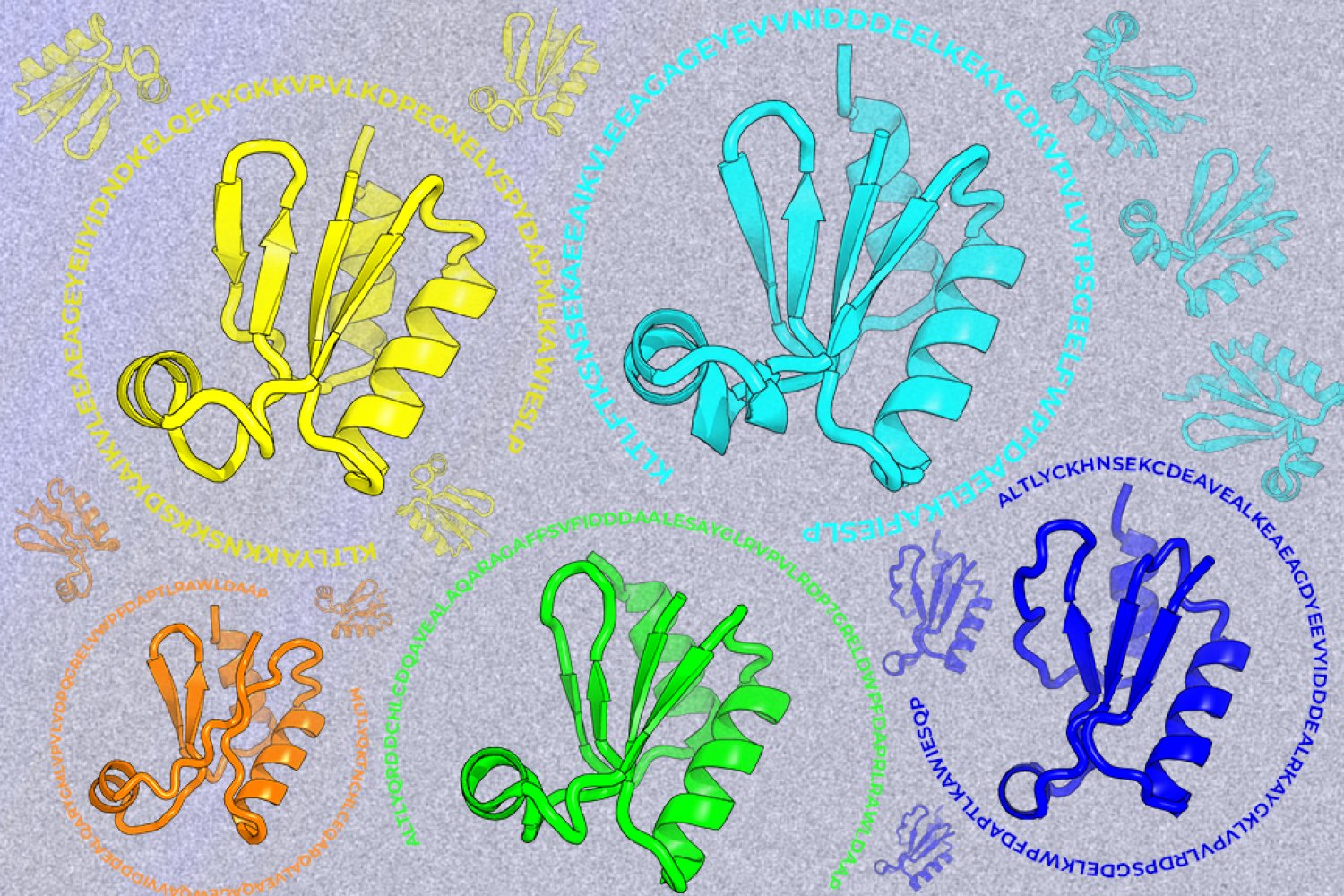
A new machine-learning framework aims to improve the success rate of computational protein design while moving away from results that reproduce sequences found in nature.
MIT News · Artificial Intelligence· news.mit.eduAug 24, 2026
A new method for surgically removing training examples from a model reveals that as datasets grow, the link between what a model learns and what it produces dissolves.
We use cookies to run the site and, with your consent, for analytics and to show ads.
See our Cookie Policy.