Early discovery of at least one valid design satisfying a target requirement is a central objective in failure-prone closed-loop inverse design. A natural batch baseline ranks candidates by a product-form marginal valid-hit score, but selecting the highest-ranked candidates independently can produce redundant recommendations under predictive uncertainty and waste the experiment budget. We introduce ARC-SC(Anchored Risk-Constrained Scenario Coverage), a batch acquisition method that preserves strong marginal candidates as anchors and allocates the remaining batch positions by maximizing complementary coverage over predictive target scenarios under a risk-support constraint. In frozen-oracle closed-loop simulations on superconductivity and JARVIS materials-property benchmarks, ARC-SC yields a statistically supported improvement in first-hit discovery and remains competitive with directionally favorable first-hit performance on more challenging design space. These results establish ARC-SC as a POF-anchored, scenario-aware batch strategy for improving early valid-target discovery under structured experimental failure.
Chu-Han Yang, Chen-Xi Wang, Linhan Wu et al.· 0 citations
Federated recommendation (FedRec) enables personalized modeling without centralizing users'interaction histories, but most existing methods assume a fixed item pool and thus overlook the practical cold-item setting where new items continuously arrive. Under the dual-sided constraint, where the server cannot access clients'interactions while clients cannot access the server's proprietary item attribute features, prior federated cold-start recommendation approaches suffer from three structural limitations: a lack of personalization, compositionality failure caused by forcing heterogeneous semantics into a single embedding space, and training- and communication-inefficiency arising from explicit alignment between separate collaborative and attribute representations. To address these challenges, we propose Personalized and Multi-view Representation for Federated Cold-Start Recommendation (PMFRec). PMFRec learns a personalized representation generator to produce user-specific item representations from attribute features, and introduces a global multi-view encoder with item-adaptive gating and an orthogonality objective to capture complementary semantic views while reducing cross-view redundancy. In addition, PMFRec fuses collaborative and attribute knowledge into a single exchanged item representation, eliminating the need for an explicit client-side regularizer and reducing communication overhead. Extensive experiments on real-world datasets show that PMFRec consistently outperforms strong baselines in cold-item recommendation and further improves user-level fairness, warm-scenario adaptability, and robustness under Local Differential Privacy (LDP).
Jaehyung Lim, Wonbin Kweon, Woojoo Kim et al.· 0 citations
The exact DP constant is pin down for the two that carry the practical weight, counterfactual memorization and adaptive extraction, and it is shown that they do not control each other.
Efficiently and robustly analyzing shape data is critical across many scientific disciplines. While chirality is a fundamental property in numerous applications - most notably in molecular science - existing shape analysis metrics fail to distinguish between a shape and its mirror image. To address this gap, we introduce a multilinear generalization of the Gromov-Wasserstein objective. Under mild assumptions, this objective yields a distance between shapes, represented as probability distributions quotiented by a symmetry group $G$. In particular, for $G = SO(d)$, we introduce the Chiral Gromov-Wasserstein ($\mathrm{CGW}$) distance, sensitive to chirality. We establish robustness properties for the multilinear Gromov-Wasserstein distances and develop efficient algorithms to compute them, reformulating the underlying optimization problem by projecting couplings onto a low-dimensional space. We derive algorithms for both local and approximate global solutions, yielding a fully polynomial-time approximation scheme for these problems. We validate the framework through numerical experiments that demonstrate the effectiveness of $\mathrm{CGW}$ as a shape metric for chiral objects.
Clément Soubrier, Geoffrey Woollard, Andrew Warren et al.· 0 citations
Reach audiences
Advertise in front of researchers, engineers, and readers.
It is shown that the MEM dual problem admits a reformulation as an expected risk minimization problem, thereby placing MEM within the modern framework of stochastic optimization and enabling scalable stochastic gradient algorithms for large-scale inverse problems.
Matthew King-Roskamp, Gabriel Rioux, R. Choksi et al.· 0 citations
This work proposes Quantum SEDONet (Spectral-Embedded Deep Operator Network), which assigns each trunk coordinate a spectral basis according to its boundary condition: Fourier features for periodic coordinates and Chebyshev features for bounded, non-periodic coordinates.
Muhammad Abid, Arth Sojitra, Bipin Tiwari et al.· 0 citations
Inferring elastic constants from resonant ultrasound spectra is a nonlinear and typically overdetermined inverse problem based on finite spectral data. We formulate the Rayleigh-Ritz inverse problem as a constrained inverse-isospectral problem on the set of physically admissible elasticity tensors. This induces effective low-dimensional variables for the inverse map on the admissible elasticity manifold: length and elastic scales, aspect-ratio coordinates, scale-free spectral features, and stability-respecting elastic ratios. We use these variables to construct a physics-informed learning pipeline in which a regression model acts only on reduced spectral and geometric features, while scale recovery and final elastic-constant reconstruction are imposed analytically. For the full cubic benchmark, the reconstructed constants have MAE values of $20.37(35.15)$, $24.30(41.33)$, and $2.13(3.66)~\mathrm{GPa}$ for $C_{11}$, $C_{12}$, and $C_{44}$. In the fixed-geometry benchmark, the corresponding cubic MAPE values are $4.14(3.87)\%$, $8.31(8.50)\%$, and $2.44(2.86)\%$, while the isotropic values are $4.0(3.6)\%$ and $0.4(0.3)\%$ for the bulk and shear moduli. The inverse problem then becomes a constrained regression problem in variables adapted to the geometry, scaling, crystal symmetry, and thermodynamic stability of Hookean elasticity.
Alejandro Cubillos Muñoz, M. Rivas, J. Rincón· 0 citations
Training effective foundation models requires massive and organized datasets, yet scientific domains such as nuclear fusion present unique challenges due to largely heterogeneous and sparse data. Here we characterize the data used in developing such a model: with over 20 sensor types spanning 5 orders of magnitude in sampling rate, mixed tensor structures (point measurements, spectrograms, images), and nonstationary physics. We analyze our input complexity and discuss trade-offs between temporal context and frequency resolution. Our analysis provides a template for representing multi-modal fluctuation data at scale, with implications for both multi-modal control systems and nuclear fusion.
Na Chen, Kouroche Bouchiat, Peter Steiner et al.· 0 citations
A mathematical theory of superposition in neural networks using tools from frame theory and compressed sensing and a novel characterization of the distribution of signs in the Gram matrix is developed.
Michael I. Ivanitskiy, J. Jasper, Emily J. King et al.· 0 citations
It is revealed that the presence of undercoordinated metal atoms close to the semiconductor-oxide interface significantly affects the magnitude of the electronic current and its propagation through MoS2.
M. Kaniselvan, Mauro Dossena, Denghui Lu et al.· 0 citations
Concept-Targeted Attribution (CTA) provides a framework for moving from behavioral probe accuracy to mechanistic explanations of probe performance, enabling more detailed audits of internal concept representations, including safety-critical ones.
V. Palit, Florent Draye, Terry Jingchen Zhang et al.· 0 citations
This paper examines the closed form of the Wasserstein distance in one dimension via node feature probability distributions, and shows how the transport plans of the Wasserstein and Gromov-Wasserstein distances visualize how mass is shifted to transform one network into another.
A weeklong summer workshop brought higher education faculty to campus to explore how AI and machine learning materials can be adapted for their classrooms.
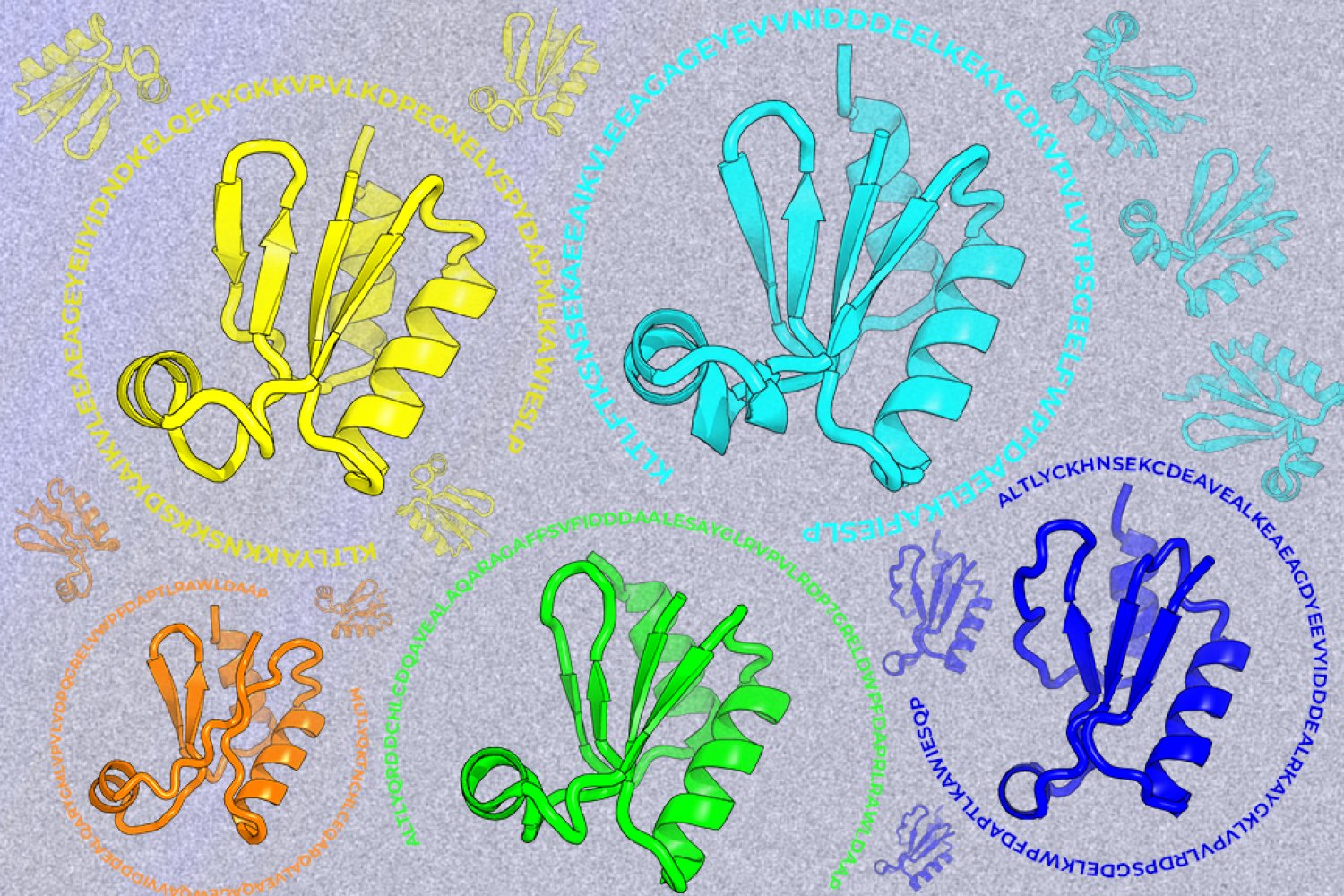
A new machine-learning framework aims to improve the success rate of computational protein design while moving away from results that reproduce sequences found in nature.
MIT News · Artificial Intelligence· news.mit.eduAug 24, 2026
A new method for surgically removing training examples from a model reveals that as datasets grow, the link between what a model learns and what it produces dissolves.
We use cookies to run the site and, with your consent, for analytics and to show ads.
See our Cookie Policy.