Two GPU kernels implementing the same scaled INT8 GEMM interface are usually treated as interchangeable but cross-implementation FP8 GEMM shows a different signature: both the prevalence and the magnitude of differences grow with reduction depth, while the INT8 fraction stays at parts per million and within one spacing over a 64x range of K.
CoMedBench is introduced, a reproducible benchmark that evaluates a family of generators under a common clinical-validity framework and one shared training and evaluation engine, spanning static tabular and temporal downstream tasks on established critical-care datasets.
This work proposes an effective federated compositional Muon (FedCoMuon) optimizer to solve distributed matrix-wise compositional optimization problems and proposes a variance reduced variant of FedCoMuon (FedCoMuon-VR) based on a momentum-based variance reduced technique.
The correctness signal behind reported progress in kernel generation is far weaker than the numbers suggest, and a set of tolerance-free contracts would close most of the gap.
Rishita Shah, Rishav Shrestha· 0 citations
Reach audiences
Advertise in front of researchers, engineers, and readers.
Trained transformer models develop privileged bases: coordinate axes whose statistics differ from the rest of the residual stream. But what kind of direction does such a basis select? We investigate the prediction direction, the unembedding direction of the token a model currently predicts, and find that it functions as a content-defined privileged anchor. Measured with respect to this anchor, residual-stream variation is geometrically and behaviorally stratified by proximity to the prediction.
The stratification holds in all eighteen models tested (dense and mixture-of-experts, 7B-120B, base and instruction-tuned). A narrow, scale-invariant prediction interface concentrates readout-relevant structure, while the vast prediction-distal complement expands with model scale. Because the prediction direction sits nearly orthogonal to the principal variance axes, variance-based analyses recover this organization only partly, and the shortfall grows with prompt heterogeneity.
Anchoring reveals a steep geometric gradient: prediction-proximal regions are highly structured and cluster related prompts, while the complement is flatter and anti-discriminates among prompt groups. The interface is a narrow slice but functionally decisive. Disrupting the variance directions closest to the prediction causes immediate divergence and frequent task-frame shifts; disrupting the next level down delays divergence and preserves framing. The complement is weakly readout-aligned per direction yet causally and temporally load-bearing, and behavior is driven by direction rather than magnitude.
These results establish the prediction direction as a privileged anchor distinct from previously described coordinate axes, and give a geometric account of how high-dimensional computation coexists with linear readout.
The central observation is that the negative product-of-scores feedback employed in accelerated score-driven recursions can be read as the stochastic gradient of this predictive loss, offering a new variational perspective.
This study focuses on diagnosis-related features and compares five feature selection paradigms for opioid use disorder prediction: recurrence enrichment, NTK-motivated early gradient sensitivity, LightGBM-SHAP, Elastic Net, and large language model (LLM)-guided semantic selection.
Zihan Ding, Yinan Liu, Tengfei Ma et al.· 0 citations
Magnetic components in high-frequency, high-power-density converters are increasingly driven by non-sinusoidal flux-density waveforms with fast transitions, minor-loop operation, dc bias, and temperature variation. Under these conditions, steady-state core-loss formulas and single-valued material curves cannot fully capture transient magnetization responses. This work proposes the Physics-Informed Hybrid Neural Operator (PI-HNO), a compact material-specific neural model with B-H energy-consistency regularization for core-loss-oriented transient magnetization prediction. Given the measured B(t)-H(t) history, the input B(t) series over the prediction interval and operating-condition information, PI-HNO predicts the H(t) series and the corresponding reconstructed B-H trajectory. The model integrates a local recurrent branch for boundary-state representation and rate-dependent response evolution with a Preisach-inspired global branch that extracts waveform-level hysteresis context. Evaluation on the MagNetX transient database using material-specific models for 14 ferrite materials demonstrates that PI-HNO achieves a compact trade-off between sequence accuracy and B(t)-H(t) energy consistency, with the mean and 95th percentile B(t)-H(t) energy consistency errors of 1.92% and 7.60%, respectively, using only 4777 trainable parameters per model. Ablation studies further demonstrate that the local, global, and energy-aware regularized components provide distinct contributions to transient magnetization prediction.
Yachao Zhu, Qiujie Huang, Sinan Li et al.· 0 citations
This work investigates the expressiveness of general query/key rotations and finds that any normalized continuous positive-definite attention modulation function can be approximated by random rotations induced by its own Fourier transform, which is term Random Fourier Rotations.
Yiwen Chen, J. Ainslie, Krzysztof Choromanski et al.· 0 citations
GEqTrain is presented, a configuration-driven framework that separates dataset semantics, model composition, and training objectives, and GEqDiff, a generative extension based on equivariant flow matching that aims to make equivariant modeling more reproducible, extensible, and reusable.
Daniele Angioletti, Marco Nobile, V. Limongelli· 0 citations
See, a two-stage data synthesis framework consisting of an efficient exploration stage that builds an explicit UI transition graph over screens and elements, and a graph-based synthesis stage that composes diverse multi-step trajectories via planning and controlled sampling, yields reproducible and explainable data generation.
Zhuohang Fan, Beichen Zhang, Yuanfa Li et al.· 0 citations
The results suggest that low-dimensional topology can be a useful tool to guide designs of AI architectures, and generalize the results from $d = 3$ to arbitrary $d>3$.
A weeklong summer workshop brought higher education faculty to campus to explore how AI and machine learning materials can be adapted for their classrooms.
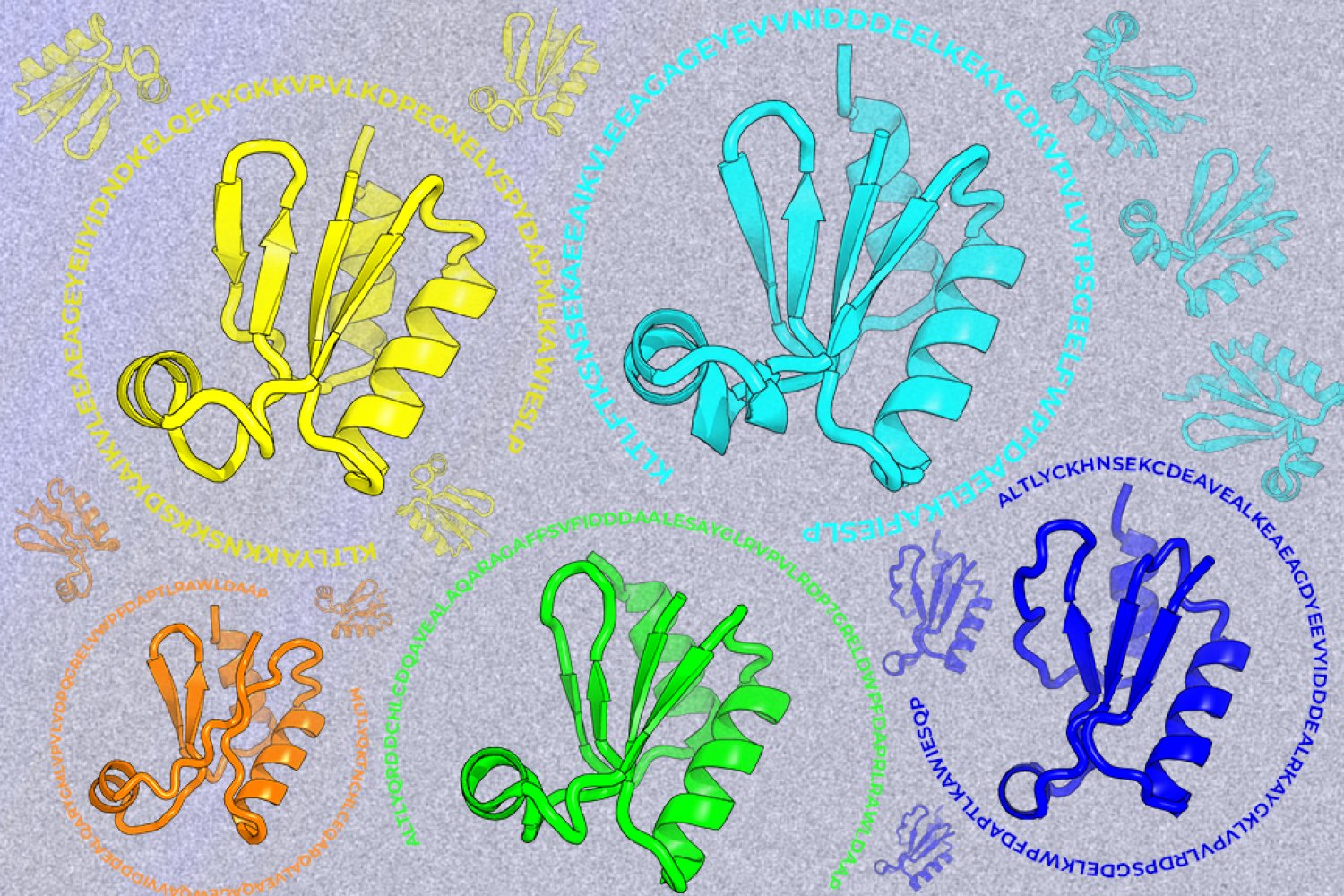
A new machine-learning framework aims to improve the success rate of computational protein design while moving away from results that reproduce sequences found in nature.
MIT News · Artificial Intelligence· news.mit.eduAug 24, 2026