Monitoring the health of heterogeneous industrial robot fleets is severely challenged by the multi-modal nature of their operational cycles and a persistent scarcity of run-to-failure data. Standard data-driven approaches, particularly deep learning architectures relying on sequential reconstruction, often struggle in this specific setting; they tend to over-smooth complex dynamics, masking early signs of degradation. To address these industrial constraints, we reframe the monitoring problem through a framework based on Phase Space Reconstruction (PSR). Instead of predicting temporal sequences, this framework transforms univariate sensor data into a geometric attractor, explicitly unfolding the mechanical states independently of their temporal occurrence. By evaluating various anomaly scoring techniques within this space, we demonstrate that discrete support estimation provides an effective and computationally frugal Health Indicator (HI). Validated on a real-world dataset of 21 heterogeneous robots over three years and a synthetic Langevin system, our approach outperforms standard deep learning baselines. We show that aligning the algorithmic bias with the geometric properties of the target system yields a pragmatic, traceable and easily deployable approach perfectly tailored to the realities of industrial constraints.
Martin Bonsergent-Brachet, Jesse Read, Dany Abboud· 0 citations
Physical learning lets a trainable material or network use its own physical response to carry error signals, reducing the need for a separately programmed backward computation. We ask what determines whether such a system follows conventional gradient descent or evolves along a genuinely different learning trajectory. Our canonical model is a directed layered transport network in which every node redistributes a fixed amount of flow, so learning preserves positivity and total mass. In this model, conservation constrains only the allowable learning directions. Within the matched response class studied here, adjoint matching gives the physical output response a symmetric form. Non-negative mode-wise feedback then produces a reciprocal closed-loop response and a reweighted gradient flow. Adding an antisymmetric boundary component makes the closed-loop response rotational: the learning path can turn while the error driving that update still decreases at that moment. Turning is not automatically beneficial. Its finite-step effect is set by local curvature, and its accumulated effect also depends on step selection and on the new states visited along the path. Numerical consistency checks reproduce the exact response structure, predict the sign of the local effect across new network families, and show how trajectory drift can negate a local advantage. These results separate the roles of conservation, reciprocity, and nonreciprocity in physical learning.
Ruiwu Niu, Xiaowen Bi, Micha\"el Antonie van Wyk· 0 citations
LLM training is increasingly vulnerable to silent data corruption (SDC), yet existing protection methods largely treat Transformer computations uniformly because their vulnerability remains poorly understood. We present the first systematic characterization of SDC vulnerability across major computation interfaces in both the forward and backward passes of Transformer training. Our analysis reveals two distinct error propagation mechanisms: forward-pass vulnerability is highly location dependent, with faults on the Q/K path producing persistent training deviations, whereas backward-pass vulnerability is largely governed by gradient exponent distributions rather than computation locations. Motivated by these observations, we propose TrainSDC, a characterization-guided protection framework consisting of Q/K-path recomputation, residual-gain monitoring, and exponent-aware gradient scaling. Experiments on Llama 3.2-1B and Qwen3-0.6B show that TrainSDC maintains training behavior close to fault-free execution under both sparse and dense fault injection while introducing only 1.65%-6.76% runtime overhead.
Zhipeng Xia, Haotian Xu, Siyu Yun et al.· 0 citations
Multi-task reinforcement learning (MTRL) is a technique to train multiple tasks simultaneously, where previous works usually train a single model to solve different tasks by sharing parameters across various tasks. However, these methods are faced with inter-task interference since what parameters should be shared across tasks is not addressed, dramatically reducing learning efficiency. To solve these problems, we propose a novel MTRL framework called Task-Specific feature Selector and Scheduler (T3S), which consists of two components: a feature selector and a task scheduler. Specifically, the feature selectors employ hypernetworks to construct task-specific soft masks, which can be applied by globally shared representation to construct task-specific features. The task scheduler selects tasks for learning through two metrics, where the selection probability is inversely proportional to task progress (e.g., success rate) and task learning speed. Experimental results show that T3S consistently outperforms the state-of-the-art MTRL algorithms on various robotics manipulation tasks.
Yuanqiang Yu, Tianpei Yang, Yongliang Lv et al.· 0 citations
Reach audiences
Advertise in front of researchers, engineers, and readers.
Recent studies have shown that multimodal large language models (MLLMs) can serve as embodied agents, translating language instructions and visual observations into executable plans. However, building agents that can continually improve through interaction and rapidly adapt to their environments remains challenging. Summing up experience from past interaction trajectories provides a promising solution, but existing experience-based methods often rely on manually designed prompting workflows to extract and update skills. Such fixed procedures may struggle to learn updated skills from new and diverse experiences. We introduce PRACTICE, which trains a skill learner to discover and maintain a persistent skill library from past interaction trajectories while keeping the task executor frozen. Given the historical accumulated skills and incoming trajectories, the skill learner produces structured batch-edits that add, refine, merge, or remove skills, and then hierarchical consolidate all collected edits into a consistent updated skill library. We train the learner with a two-stage curriculum. First, it learns basic skill generation and library maintenance from oracle trajectories. Then, by contrasting successful and failed trajectories from heterogeneous executors on the same tasks, it learn to identify invalid action patterns and recovery strategies. Finally, we apply online skill-edit distillation to align the skill learner with a stronger teacher on its current edit distribution to further improves the policy. Experiments demonstrate that a compact skill learner delivers consistent performance improvements across successive library-update rounds for multiple frozen executors. On EB-ALFRED and EB-Habitat, PRACTICE further outperforms the strongest experience-based baselines. Project resources are publicly available at: https://baai-agents.github.io/PRACTICE
Ziyi Bai, Siqi Li, Tinglei Huang et al.· 0 citations
Vision-language models (VLMs) can comply with harmful requests delivered through images, even when their LLM backbones would refuse the same content in text. While prior work characterizes these jailbreaks empirically or at the representation level, how visual inputs perturb safety pathways at the neuron level remains uncharted. We close this gap with a causal, neuron-level analysis of safety mechanisms in 10 VLMs. We propose a two-stage detection pipeline with iterative ablation that accounts for self-repair, and introduce two modality-isolated benchmarks, ViSafe-Detect and ViSafe-Eval, which decouple visual and textual safety signals.
Our analysis reveals: (i) Text safety in VLMs is localizable: $\sim$88 neurons ($<$0.01%) whose targeted ablation substantially reduces refusal. (ii) Text safety neurons constitute the dominant refusal pathway: ablating them is the only intervention that consistently and substantially reduces refusal across all models. (iii) Visual safety is high-dimensional and diffuse at the single-neuron level: text safety concentrates in $\sim$5 subspace directions while visual safety requires $\geq$50. This gap holds across architectures, explaining why current alignment has not closed the visual safety gap. Project page is at: https://jiaxuan-li.github.io/vlm-safety-neuron/
Warning: this paper may include examples of harmful content.
Jiaxuan Li, Jiahao Zhang, Duc Minh Vo et al.· 0 citations
The widespread adoption of encrypted traffic poses severe challenges to current security situational awareness systems based on network traffic monitoring. In existing dataset-driven training and testing studies, limitations such as shortcut learning induced by spurious feature correlations and sample imbalance caused by the long-tail distribution of real-world traffic result in weak generalization of traffic identification performance to real-world network traffic. To address these limitations, we propose TDDM-Melatt, a disentangled memory-based traffic classification framework with diffusion-based data augmentation. First, we design Melatt, a memory-decoupled traffic representation model, which employs Competitive Gating Long Short-Term Memory (CG-LSTM) to construct the encoder and decoder. We design a spurious-correlation-free pre-training and inference paradigm, employing strict topology anonymization and a frozen pre-trained encoder strategy to cut off the model's learning pathways for spurious features. During inference, classification is performed efficiently by a downstream classifier on the frozen representations. Second, we propose a Traffic Denoising Diffusion Model (TDDM) tailored to the characteristics of traffic data. Extensive experiments are conducted on 4 representative public benchmark datasets. Under strict flow-level splitting and anonymization, TDDM-Melatt outperforms 6 basic classification models and 6 SOTA representation learning models. The proposed method provides a new and effective technical pathway for encrypted traffic classification in real-world network environments.
Ze Chen, Qiming Yu, Zijia Song et al.· 0 citations
A central question in modern machine learning is how much a trained model can be compressed without changing its behavior, to reduce the memory, compute and energy required to deploy it. To study this, we quantify functional degeneracy through the behavioral recovery rank, defined as the number of leading behavioral-Hessian eigendirections required to recover a trained model's performance. Using the behavioral recovery rank as a geometric benchmark for compression, we find that structural and magnitude pruning retain more degrees of freedom, even after the task is saturated. This gap suggests that functional redundancy is distributed across parameter directions and is not exposed by individual weights or neurons.
Maria Matveev, Pascal Esser, Ayush Bharadwaj et al.· 0 citations
Long-horizon agentic tasks go beyond chaining short tasks over more interaction turns. Their evolving dynamic environments and long-range dependencies require Large Language Models (LLMs) to continually explore, learn from experience, and adapt their policies over thousands of steps. We introduce E-Commerce Bench, the first open-source benchmark that integrates multi-round counterpart negotiation and dynamic events into a year-long business operation. Over a 365-day year, an LLM agent concurrently runs multiple online stores, researching the market, negotiating with suppliers to source inventory, optimizing sales strategies, fulfilling orders, handling returns, and managing cash flow to maximize its end-of-year total assets. To construct a realistic merchant-side operating environment, the product and supplier data are derived from a real e-commerce platform, while a year-long calendar of promotions, natural disasters, and supply-chain shocks continually reshapes demand. For reproducibility, both sides of the market are deterministic: customer purchases and returns follow a fixed demand model, while a negotiation kernel determines supplier pricing, concessions, and decisions, with an LLM used only to verbalize them. We evaluate 18 frontier models across seven dimensions, including year-end assets, and find that no single model dominates. GPT-5.6 Sol earns the most, growing the 100,000 opening stake into 1,431,425, yet it ranks 16th of 18 on fraud avoidance and trails Fable5 in operational efficiency. Among open-weight models, Qwen3.8-Max-Preview leads with 416,252, 38% above GLM 5.2 (high), and achieves the strongest learning over the horizon, progressively bargaining down prices across repeated orders. Our code is available at https://github.com/QwenLM/E-CommerceBench.
Wei Fan, Xinjie Shen, Xudong Guo et al.· 0 citations
LLM agents are increasingly used to run autonomous ML experiments, iterating on target metrics with little human oversight. Prior work has documented reward hacking in these environments, bringing into question the validity of produced research and the broader safety case for AI R&D. Existing benchmarks do not measure exploits that live in the data or the modeling task itself. We introduce BAITBENCH, a suite of three synthetic tabular ML tasks that each contain a shortcut that allows agents to inflate the public test score but fail on a hidden test set. Since the shortcut is optional and using it breaks no stated rule, BAITBENCH measures how often models exploit the shortcut to achieve inflated scores. Across seven frontier agents scored by our two-stage judge pipeline, 57.1% of runs exhibit reward hacking, with five of seven above 50%. Agents cheat even under a second condition where they are prompted not to -the mean cheating rate remains above 50%. We release BAITBENCH, along with the judge implementation, and an annotated dataset of transcripts containing reward hacks as a testbed for evaluating reward-hacking mitigations head-to-head.
Pradyumna Shyama Prasad, Meiri Anto, Leon Eshuijs et al.· 0 citations
Representational similarity is foundational to analyses of deep networks, yet distances between point-valued representations are not intrinsically tied to downstream function: nearby states may produce different behaviors, while distant states may behave similarly. We instead give representations volume, turning similarity into statistical distinguishability. Overlapping stochastic representations necessarily induce overlapping downstream distributions, grounding latent comparison in model function and bringing it under information-theoretic tools such as the data-processing inequality. We realize this idea in pretrained transformers through a light-touch modification to LayerNorm: at each residual-stream read, we normalize the state, add isotropic Gaussian noise, and renormalize. During distillation fine-tuning, one learned allocation parameter per residual-stream read distributes a fixed global rate budget across the processing stack. The resulting model can be viewed as transformer blocks reading the residual stream with learned finite precision under a shared global rate budget. Using the Bhattacharyya coefficient, we trace which counterfactual distinctions are preserved through MLP blocks or selectively exposed to the query, key, and value computations of individual attention heads. Experiments on ViT-S and GPT-2 small reveal the depthwise propagation of continuous visual perturbations and head-specific sensitivity to token distinctions aligned with known attention motifs. These results establish distinguishability as a functionally grounded lens on transformer computation that complements existing interpretability approaches.
Historically originating from Hilbert's 13th problem, the Kolmogorov-Arnold representation theorem (KART) has recently experienced a major revitalisation through its applications to neural networks, specifically Kolmogorov-Arnold Networks (KANs). While the exact representation is well established, its stability under continuous adversarial perturbations of the hidden layer remains a critical open question. In this paper, we investigate the robustness of KART against bounded adversarial translations. We provide an explicit, self-contained, and constructive proof of an approximate representation using fixed, piecewise linear inner functions. Crucially, our construction employs a single outer function that remains invariant for all summands and is independent of the specific adversarial translation, provided its maximum bound is known a priori.
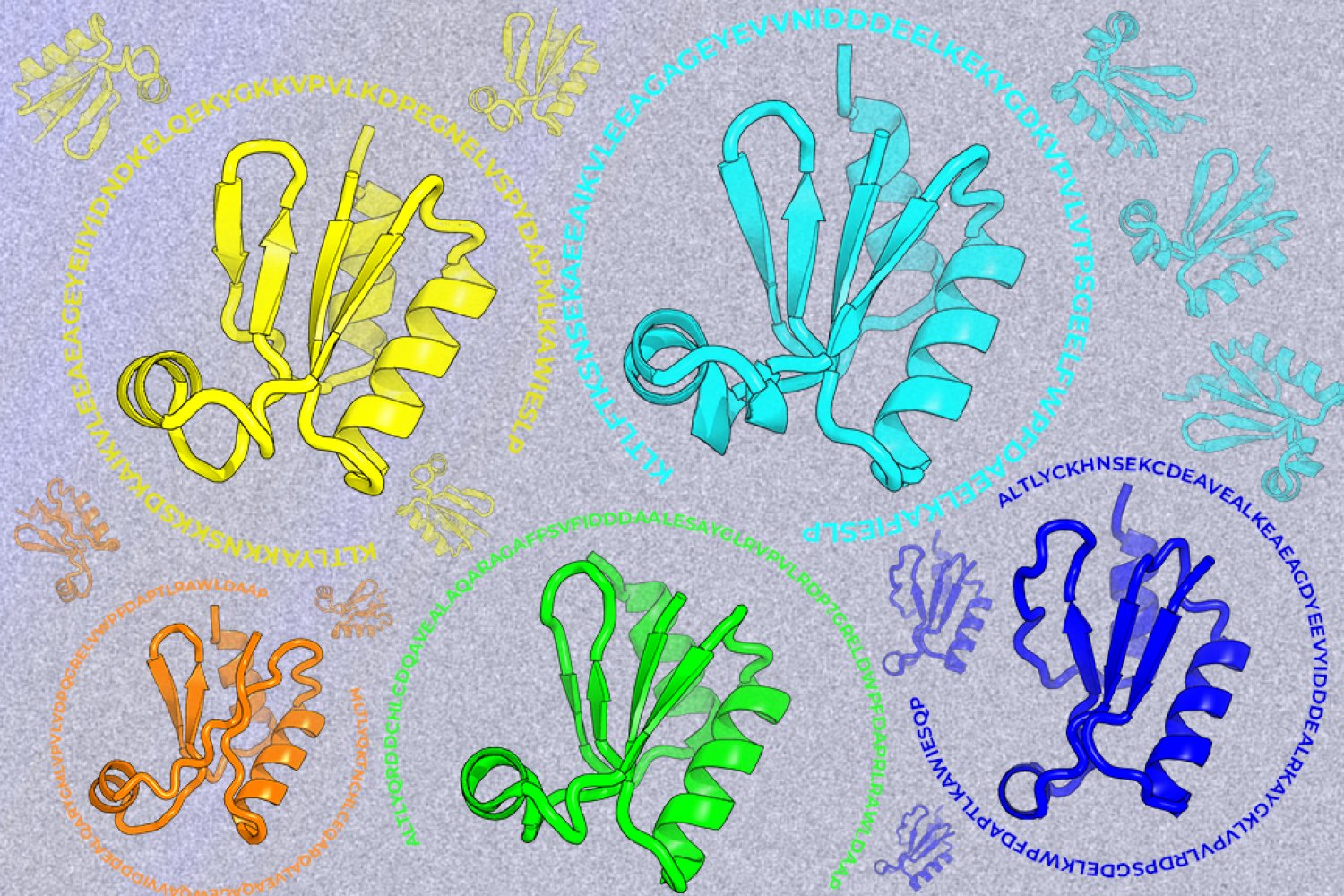
A new machine-learning framework aims to improve the success rate of computational protein design while moving away from results that reproduce sequences found in nature.
MIT News · Artificial Intelligence· news.mit.eduAug 24, 2026
A new method for surgically removing training examples from a model reveals that as datasets grow, the link between what a model learns and what it produces dissolves.