Relay introduces a differentiable per-token channel that passes information between forward passes and is trained via truncated backpropagation through time (BPTT), demonstrating that state-of-the-art DLMs can be explicitly trained to relay latent information forward across decoding steps, advancing the performance-latency Pareto frontier.
Benjamin Rozonoyer, Jacopo Minniti, Dhruvesh Patel et al.· arXiv.org· 0 citations
Treatment allocation under budget constraints is a central challenge in digital advertising. The standard approach trains an offline uplift model on historical data, then solves a constrained optimization to allocate budget. This fails in cold-start settings where little historical data exists. We propose Budget-Constrained Causal Bandits (BCCB), an online framework that learns which users respond to ads while simultaneously spending the budget. BCCB unifies three components: learning individual-level treatment effects, exploring users whose response is uncertain, and pacing the budget over time. We derive the per-arrival decision rule as the KKT condition of a Lagrangian relaxation of the budgeted causal-allocation objective, providing a principled foundation for the algorithm. We evaluate on the Criteo Uplift dataset using 20 random seeds with paired statistical tests. Our central finding is a data-efficiency crossover at n = 7,500 historical observations (paired one-sided t-test, p = 0.043): below this threshold, offline pipelines either fail or produce unreliable allocations, while BCCB operates from the first user. BCCB exhibits 2-4x lower run-to-run variance than offline methods and outperforms all four online baselines (Thompson Sampling, budgeted Thompson Sampling, HTE Greedy, and Uplifting Bandits) at every budget level tested (p < 0.001). These results give practitioners a concrete decision rule for choosing between offline and online paradigms.
Medical vision-language datasets are often limited in size and biased toward negative findings, as clinicians report abnormalities mostly but might omit some positive/neutral findings because they might be considered as irrelevant to the patient's condition. We propose a self-supervised data enrichment method that leverages semantic clustering of report sentences. Then we enrich the findings in the medical reports in the training set by adding positive/neutral observations from different clusters in a self-supervised manner. Our approach yields consistent gains in supervised fine-tuning (5.63%, 3.04%, 7.40%, 5.30%, 7.47% average gains on COMET score, Bert score, Sentence Bleu, CheXbert-F1 and RadGraph-F1 scores respectively). Ablation studies confirm that improvements stem from semantic clustering rather than random augmentation. Furthermore, we introduce a way to incorporate semantic cluster information into the reward design for GRPO training, which leads to further performance gains (2.78%, 3.14%, 12.80% average gains on COMET score, Bert score and Sentence Bleu scores respectively). We share our code at https://github.com/igulluk/SemEnrich
Halil Ibrahim Gulluk, Olivier Gevaert· 0 citations
We propose a conjugate and calibrated Gaussian process (GP) model for multi-class classification by exploiting the geometry of the probability simplex. Our approach uses Aitchison geometry to map simplex-valued class probabilities to an unconstrained Euclidean representation, turning classification into a GP regression problem with fewer latent dimensions than standard multi-class GP classifiers. This yields conjugate inference and reliable predictive probabilities without relying on distributional approximations in the model construction. The method is compatible with standard sparse GP regression techniques, enabling scalable inference on larger datasets. Empirical results show well-calibrated and competitive performance across synthetic and real-world datasets.
Bernardo Williams, Harsha Vardhan Tetali, Arto Klami et al.· 0 citations
Reach audiences
Advertise in front of researchers, engineers, and readers.
Designing experiments that systematically gather data from complex physical systems is central to accelerating scientific discovery. While Bayesian experimental design (BED) provides a principled, information-based framework that integrates experimental planning with probabilistic inference, the selection of utility functions in BED is a long-standing and active topic, where different criteria emphasize different notions of information. Although Kullback--Leibler (KL) divergence has been one of the most common choices, recent studies have proposed Wasserstein distance as an alternative. In this work, we first employ a toy example to illustrate an issue of Wasserstein distance - the value of Wasserstein distance of a fixed-shape posterior depends on the relative position of its main mass within the support and can exhibit false rewards unrelated to information gain, especially with a non-informative prior (e.g., uniform distribution). We then further provide a systematic comparison between these two criteria through a classical source inversion problem in the BED literature, revealing that the KL divergence tends to lead to faster convergence in the absence of model discrepancy, while Wasserstein metrics provide more robust sequential BED results if model discrepancy is non-negligible. These findings clarify the trade-offs between KL divergence and Wasserstein metrics for the utility function and provide guidelines for selecting suitable criteria in practical BED applications.
Reinforcement-based learning has attracted considerable attention both in modeling human behavior as well as in engineering, for designing measurement- or payoff-based optimization schemes. Such learning schemes exhibit several advantages, especially in relation to filtering out noisy observations. However, they may exhibit several limitations when applied in a distributed setup. In multi-player weakly-acyclic games, and when each player applies an independent copy of the learning dynamics, convergence to (usually desirable) pure Nash equilibria cannot be guaranteed. Prior work has only focused on a small class of games, namely potential and coordination games. To address this main limitation, this paper introduces a novel payoff-based learning scheme for distributed optimization, namely aspiration-based perturbed learning automata (APLA). In this class of dynamics, and contrary to standard reinforcement-based learning schemes, each player's probability distribution for selecting actions is reinforced both by repeated selection and an aspiration factor that captures the player's satisfaction level. We provide a stochastic stability analysis of APLA in multi-player positive-utility games under the presence of noisy observations. This is the first part of the paper that characterizes stochastic stability in generic non-zero-sum games by establishing equivalence of the induced infinite-dimensional Markov chain with a finite dimensional one. In the second part, stochastic stability is further specialized to weakly acyclic games.
EEG-based emotion recognition is hampered by profound dataset heterogeneity (channel/subject variability), hindering generalizable models. Existing approaches struggle to transfer knowledge effectively. We propose 'One Model for All', a universal pre-training framework for EEG analysis across disparate datasets. Our paradigm decouples learning into two stages: (1) Univariate pre-training via self-supervised contrastive learning on individual channels, enabled by a Unified Channel Schema (UCS) that leverages the channel union (e.g., SEED-62ch, DEAP-32ch); (2) Multivariate fine-tuning with a novel 'ART' (Adaptive Resampling Transformer) and 'GAT' (Graph Attention Network) architecture to capture complex spatio-temporal dependencies. Experiments show universal pre-training is an essential stabilizer, preventing collapse on SEED (vs. scratch) and yielding substantial gains on DEAP (+7.65%) and DREAMER (+3.55%). Our framework achieves new SOTA performance on all within-subject benchmarks: SEED (99.27%), DEAP (93.69%), and DREAMER (93.93%). We also show SOTA cross-dataset transfer, achieving 94.08% (intersection) and 93.05% (UCS) on the unseen DREAMER dataset, with the former surpassing the within-domain pre-training benchmark. Ablation studies validate our architecture: the GAT module is critical, yielding a +22.19% gain over GCN on the high-noise DEAP dataset, and its removal causes a catastrophic -16.44% performance drop. This work paves the way for more universal, scalable, and effective pre-trained models for diverse EEG analysis tasks.
RECAP (Robust Safety Alignment via Counter-Aligned Prefilling), a principled reinforcement learning (RL) method for post-training that explicitly teaches models to override flawed reasoning trajectories and reroute to safe and helpful responses, substantially improves safety and jailbreak robustness, reduces overrefusal, and preserves core reasoning capability.
Sheng-Hsuan Peng, E. Smith, Ivan Evtimov et al.· arXiv.org· 10 citations· ⚡2
Low-rank structure is a common implicit assumption in many modern reinforcement learning (RL) algorithms. For instance, reward-free and goal-conditioned RL methods often presume that the successor measure admits a low-rank representation. In this work, we challenge this assumption by first remarking that the successor measure itself is not approximately low-rank. Instead, we demonstrate that a low-rank structure naturally emerges in the shifted successor measure, which captures the system dynamics after bypassing a few initial transitions. We provide finite-sample performance guarantees for the entry-wise estimation of a low-rank approximation of the shifted successor measure from sampled entries. Our analysis reveals that both the approximation and estimation errors are primarily governed by a newly introduced quantitity: the spectral recoverability of the corresponding matrix. To bound this parameter, we derive a new class of functional inequalities for Markov chains that we call Type II Poincar\'e inequalities and from which we can quantify the amount of shift needed for effective low-rank approximation and estimation. This analysis shows in particular that the required shift depends on decay of the high-order singular values of the shifted successor measure and is hence typically small in practice. Additionally, we establish a connection between the necessary shift and the local mixing properties of the underlying dynamical system, which provides a natural way of selecting the shift. Finally, we validate our theoretical findings with experiments, and demonstrate that shifting the successor measure indeed leads to improved performance in goal-conditioned RL.
Bastien Dubail, Stefan Stojanovic, Alexandre Prouti\`ere· 0 citations
This work introduces a novel generative continual learning framework based on self-organizing maps (SOMs), a brain-inspired natural computing model, extended with learned distributional statistics and encoder--decoder models for class incremental continual learning. These extended SOMs enable exemplar-free replay with fixed-capacity statistical memory, eliminating the need to store raw data samples. For high-dimensional input spaces, the SOM operates over the latent space of the encoder--decoder, while for lower-dimensional inputs, the SOM operates in a standalone fashion. Our method stores a running mean, variance, and covariance for each SOM unit, from which synthetic samples are then generated during future learning iterations. For the encoder--decoder method, generated samples are fed through the decoder to be used in subsequent replay. Experimental results on standard class-incremental benchmarks show that our approach performs competitively with state-of-the-art memory-based methods and outperforms memory-free methods, notably improving over the best state-of-the-art single-class incremental performance without pretrained encoders on CIFAR-10 and CIFAR-100 by nearly 10% and 7%, respectively. We also achieve the best performance on single-class incremental CIFAR-100 using a foundational encoder-decoder and present the first baseline results for single-class incremental TinyImageNet. Our methodology facilitates easy visualization of the learning process and can also be utilized as a generative model post-training. Overall, the results demonstrate that SOM-based statistical replay offers a scalable, label-free, exemplar-free approach to class-incremental continual learning under standard task-boundary protocols.
Pujan Thapa, Alexander Ororbia, Travis Desell· 0 citations
Multi-sensorial media systems, including AR/VR, remote operation, and embodied AI, require visual grounding modules that remain reliable as sensing environments and application domains evolve. The Segment Anything Model (SAM) provides a strong foundation for dense visual segmentation, but its performance degrades on specialized and dynamically arriving domains such as medical imagery, camouflaged scenes, and shadow-dominant environments. Existing continual learning methods often rely on replay data or growing domain-specific modules, limiting compact deployment in evolving media pipelines. To address this issue, we propose RegCL, a non-replay continual adaptation framework that consolidates multi-domain segmentation knowledge into a single SAM adapter through incremental model merging. RegCL merges lightweight adaptation modules, e.g., LoRA-style AugModules, by optimizing prediction consistency between the merged model and domain-specific adapters while carrying forward compact historical feature statistics. Experiments across five heterogeneous segmentation datasets show that RegCL achieves strong retention and adaptation under domain-incremental learning, outperforming competitive non-replay continual learning and merging baselines. These results suggest that RegCL can serve as a compact visual adaptation component for evolving multi-sensorial media pipelines. The code is available at \href{https://github.com/Anderw-S/RegCL}{https://github.com/Anderw-S/RegCL}
Yuan-Chen Shu, Zhiwei Lin, Xiaoyu Zhou et al.· 0 citations
The EXPonential-weight algorithm for prompt Optimization} (EXPO) is proposed to automatically optimize the task description and meta-instruction in the meta-prompt for LLM-based agents and is extended to additionally optimize the exemplars (i.e., history of interactions) in the meta-prompt to further enhance the performance, hence introducing the EXPO-ES algorithm.
Ming-Ze Kong, Zhiyong Wang, Yao Shu et al.· arXiv.org· 7 citations
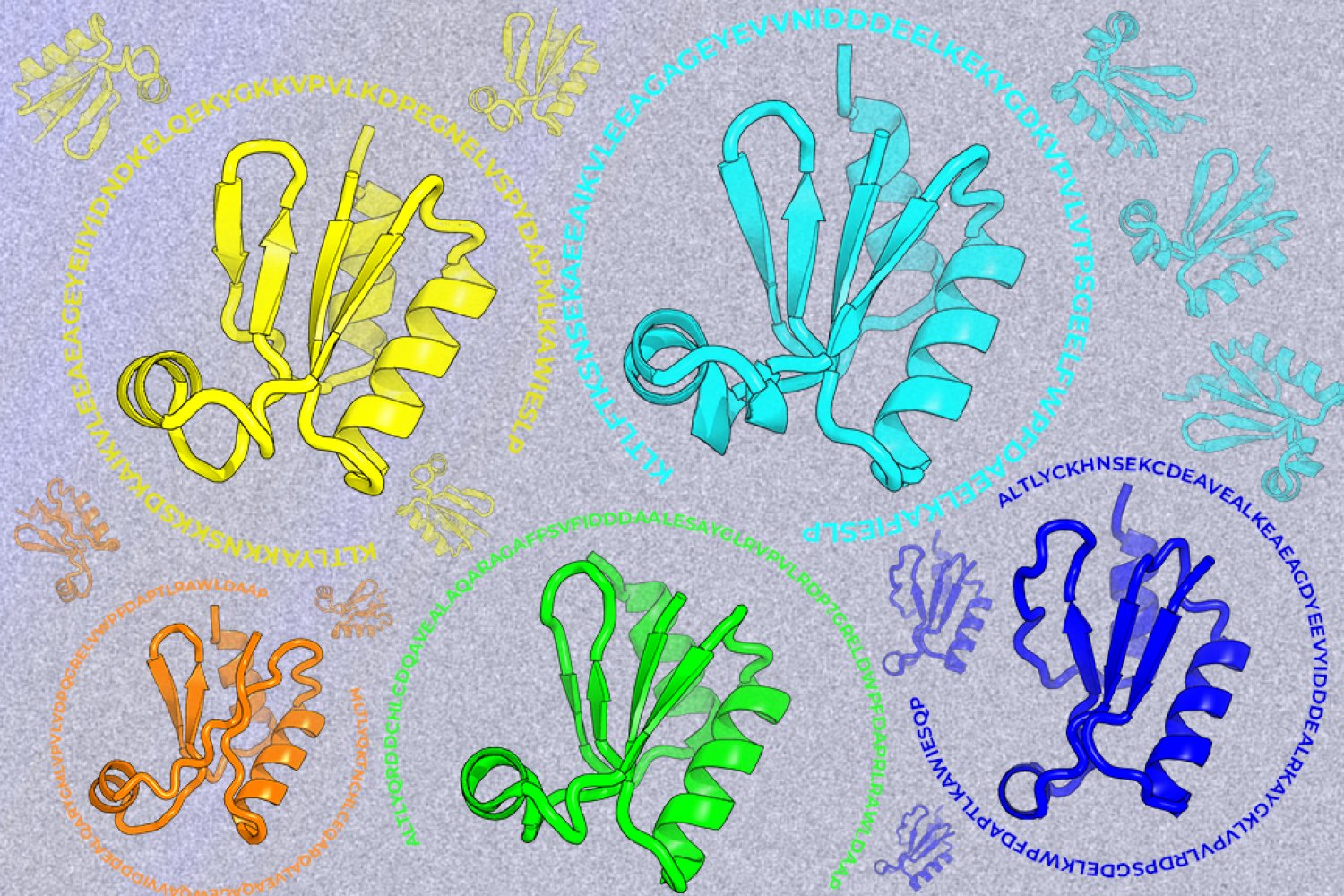
A new machine-learning framework aims to improve the success rate of computational protein design while moving away from results that reproduce sequences found in nature.
MIT News · Artificial Intelligence· news.mit.eduAug 24, 2026
A new method for surgically removing training examples from a model reveals that as datasets grow, the link between what a model learns and what it produces dissolves.