Abstract The rapid adoption of renewable energy sources has radically changed the dynamic qualities of the modern power system, making load frequency control (LFC) problem worse due to unforeseeable generation, reduced system inertia, and the constant changes in disturbances. This paper presents a control framework bas...
Language models are typically trained to predict the next token in a sequence. Here, we explore an alternative predictive principle from reinforcement learning: Successor Representations (SRs), which model the expected discounted distribution of future states rather than the immediate next state. We transfer this frame...
# LUPittore[cite: 2] ## Description[cite: 2] LUPittore is an autonomous, standalone Python desktop application for Windows 10 and Windows 11 combining raster canvas manipulation, multilayer digital compositing, procedural brush engines, and autonomous stroke-based rendering (SBR)[cite: 2]. The software is implemented e...
Luigi Usai· Zenodo (CERN European Organi...· 0 citations
# LUPittore[cite: 2] ## Description[cite: 2] LUPittore is an autonomous, standalone Python desktop application for Windows 10 and Windows 11 combining raster canvas manipulation, multilayer digital compositing, procedural brush engines, and autonomous stroke-based rendering (SBR)[cite: 2]. The software is implemented e...
Luigi Usai· Zenodo (CERN European Organi...· 0 citations
Reach audiences
Advertise in front of researchers, engineers, and readers.
This work presents a reproducible empirical comparison of Direct Preference Optimization (DPO) and Reinforcement Learning from Human Feedback (RLHF) for Large Language Model alignment. Experiments are conducted on GPT-2 (124M parameters) using the Anthropic HH-RLHF dataset. The study evaluates alignment quality, reward...
Mohit Yadav· Zenodo (CERN European Organi...· 0 citations
Challenges that beset the current landscape still include overall adoption, difficult-to-understand models or algorithm interpretability, quality input of training data, good ethical practices, high computational cost associated with complex structural simulations, and the need for standardized processes.
K. A. Oyeniran, Lara Donaldson· Frontiers in Bacteriology· 1 citation
In-pipe turbines have emerged as a promising solution for harnessing surplus energy in water transmission networks for distributed power generation. While much of the previous research has focused on optimizing the turbine itself, practical implementation presents additional challenges. To address these challenges, thi...
Arian Shahnoori, Nima Hasanzadeh, Amir F. Najafi· Energy Reports· 0 citations
This paper proposes a novel approach to neural-symbolic reasoning by introducing a Dynamic Topological Memory Network (DTMN). The core idea is to construct a memory network capable of dynamically adjusting its internal topology to mirror the complexity and relationships within the input data. This addresses a key limit...
Jincheng Zhang· Zenodo (CERN European Organi...· 0 citations
This paper investigates the optimization of distributed resource scheduling using a multi-agent reinforcement learning (MARL) framework. Traditional resource scheduling methods often rely on static rules or centralized control, which can be inflexible and inefficient in dynamic environments. This research proposes a no...
Jincheng Zhang· Zenodo (CERN European Organi...· 0 citations
This paper investigates the application of Deep Reinforcement Learning (DRL) for intelligent traffic signal control. Traditional traffic signal control methods often rely on pre-defined rules or simple optimization algorithms, which may not effectively adapt to dynamic traffic conditions. DRL offers a promising approac...
Jincheng Zhang· Zenodo (CERN European Organi...· 0 citations
This paper introduces a novel framework for reinforcement learning, termed "Adaptive Heterogeneous Networks" (AHN), designed to dynamically adjust learning strategies based on the environment's dynamic characteristics. Traditional reinforcement learning often relies on static policies, limiting adaptability. AHN levera...
Jincheng Zhang· Zenodo (CERN European Organi...· 0 citations
Research Manager Mike Walker reflects on a career spanning hacker culture, cybersecurity, and AI, sharing lessons about trust, teamwork, leadership, and why solving difficult problems requires curiosity, judgment, agility—and an understanding of the rules. The post Learn the rules: The hacker mindset appeared first on Microsoft Research.
Learn how Google Antigravity and our Cheminformatics Skills accelerate drug discovery workflows, search compounds, and propose novel rigidified macrocycles.
MIT News · Artificial Intelligence· news.mit.eduOct 27, 2026
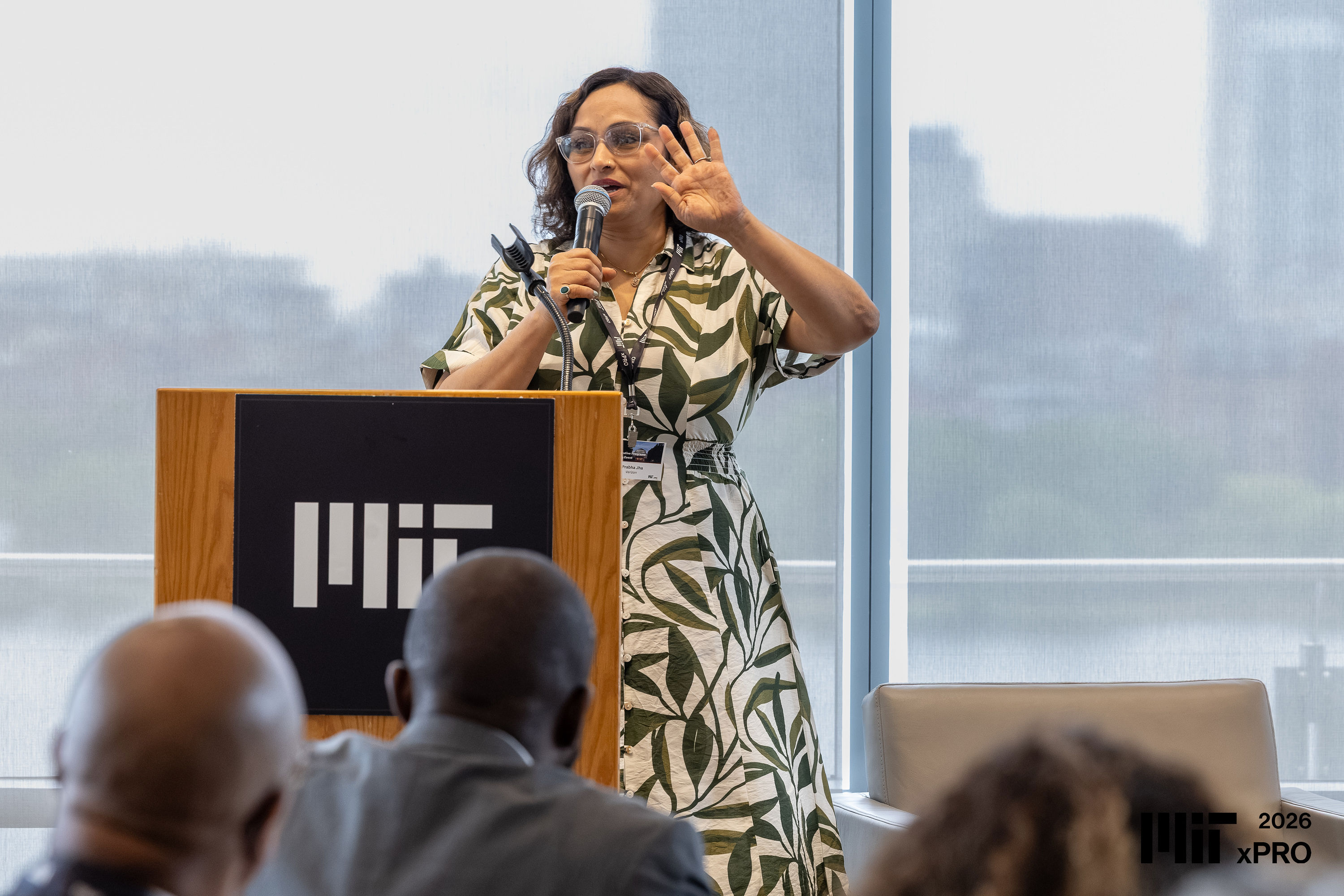
Prabha Jha used her experience with MIT Open Learning’s program for senior executives to develop AI solutions for her employer, Verizon, and to write a book.
Assistant Professor Benjamin Lindquist studies how engineers deliberately injected randomness into early AI, giving rise to deep-learning models that sometimes hallucinate.
We use cookies to run the site and, with your consent, for analytics and to show ads.
See our Cookie Policy.