C++/HLS research scaffold for a qLDPC decoder: a minimal C++20 program that links Joschka Roffe's ldpc library through CMake FetchContent (OpenMP enabled), a Catch2 unit-test target, and a GF(2) sparse matrix-vector micro-benchmark used as a CI regression gate, plus Vitis HLS / Vivado / PetaLinux scripts targeting the...
Jean-François Brisson· Zenodo (CERN European Organi...· 0 citations
Autonomous AI-Based Cloud Security Monitoring and Attack Prediction System Using Deep Neural Networks presents a comprehensive approach to modern cloud cybersecurity by combining cloud monitoring, artificial intelligence, deep learning, anomaly detection, attack classification, threat prediction, risk assessment, and a...
Anantha Raman Rathinam, M. Sakthivel, Dr. J. Gladson Maria Britto· Zenodo (CERN European Organi...· 0 citations
Profile A sidecar to oes32-residual: a deterministic, standard-library-only Python telemetry-triage harness (residual latch, EVEN/ODD symmetry, FOLD8 continuity) for 32-element vectors. It evaluates a proposed 32-element state vector against a reference and returns a deterministic SAFE / LATCH containment decision plus...
Jean-François Brisson· Zenodo (CERN European Organi...· 2 citations
Normative OES-32 residual reference (ADR-001): a deterministic Python definition of the max-absolute residual between two 32-component vectors, with a strict > tolerance failure rule and executable contract tests. Contract. Input: two finite real-valued vectors of length 32 and a finite, non-negative tolerance. Compone...
Jean-François Brisson· Zenodo (CERN European Organi...· 12 citations
Reach audiences
Advertise in front of researchers, engineers, and readers.
This document describes, building block by building block, how one might design an "artificial individual": a machine that does more than answer questions, with a body, needs, emotions, memories, and a personality that develops over time. The architecture draws on current knowledge from human neuroscience, psychology,...
Josselin Orta· Zenodo (CERN European Organi...· 0 citations
Browser-study source, 1,728 final-test observations, frozen policy decisions and offline score reproduction for a controlled comparison of contextual and fixed rendering policies. Mac and hosted Linux cohorts remain separate, and the cloud analysis is descriptive. Original software is MIT licensed; original research da...
Vishwak Thatikonda, Shravani Parsi· Zenodo (CERN European Organi...· 0 citations
This study aimed to determine the effect of the Ponjurang (Addition and Subtraction Tree) learning media on the numeracy skills of first-grade students at SDN 1 Marong in the 2025/2026 academic year. This research employed a quantitative approach with a pre-experimental method using a one-group pretest–posttest design....
Background Driven by both the strategy to build a sports powerhouse and the development of digital technology, China's sports broadcasting market has shown rapid growth. However, academic research has yet to systematically explore the underlying psychological mechanisms associated with the transition from “viewing” beh...
# GALAXY v0.7.0–v0.8.0 GALAXY v0.7.0–v0.8.0 records two consecutive milestones in the development of GALAXY's resident Barnes–Hut self-gravity execution family. Version v0.7.0 established the correctness-first Barnes–Hut self-gravity and GPU tree-construction foundation. It introduced deterministic resident N-body self...
Trent Slade· Zenodo (CERN European Organi...· 0 citations
This document describes, building block by building block, how one might design an "artificial individual": a machine that does more than answer questions, with a body, needs, emotions, memories, and a personality that develops over time. The architecture draws on current knowledge from human neuroscience, psychology,...
Josselin Orta· Zenodo (CERN European Organi...· 0 citations
Browser-study source, 1,728 final-test observations, frozen policy decisions and offline score reproduction for a controlled comparison of contextual and fixed rendering policies. Mac and hosted Linux cohorts remain separate, and the cloud analysis is descriptive. Original software is MIT licensed; original research da...
Vishwak Thatikonda, Shravani Parsi· Zenodo (CERN European Organi...· 0 citations
Purpose To evaluate the efficacy of functional neuronavigation combined with intraoperative fluorescein sodium in the operation of brain metastases. Patients and methods From January 2018 to December 2023, 80 patients with brain metastases were divided into observation and control groups based on using sodium fluoresce...
G. Hang, Wei-Ran Yang, Zhong Wang· Frontiers in Oncology· 0 citations
“X-Hinges” helps design and 3D print items like lamps and gloves with an interactive twist: automatically embedded sensors that perceive and adaptively respond to human contact.
StudentSim is a research system for evaluating and improving AI tutoring tools before they are tested with learners. It models how individuals may engage with tutors, giving feedback to improve tutor performance across subjects like chess, writing, and mathematics. The post Simulating student learning for better AI tutoring appeared first on Microsoft Research.
MIT News · Artificial Intelligence· news.mit.eduOct 6, 2026
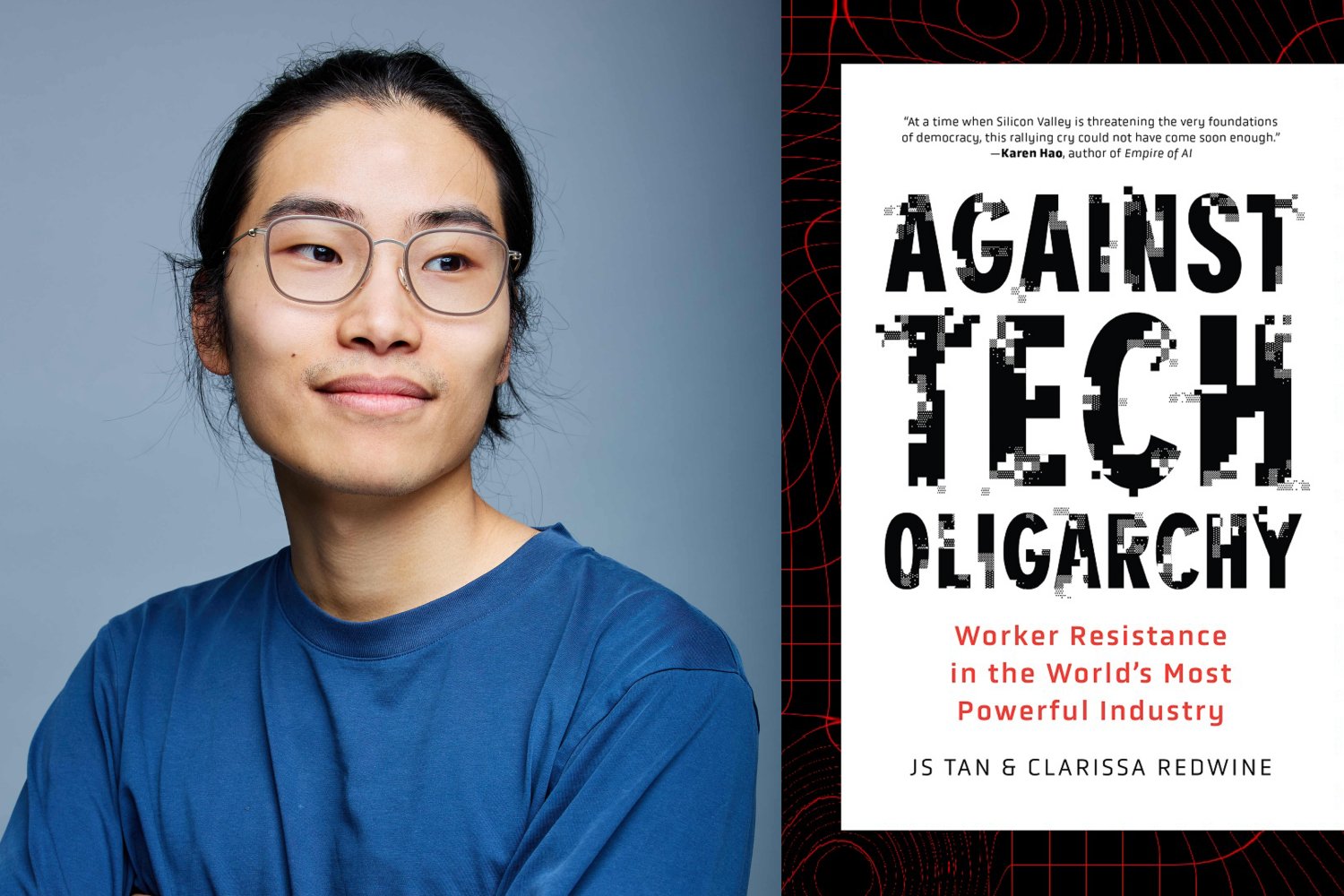
Writing as a participant and researcher, PhD student JS Tan SM ’22 has co-authored a new book about the rise of tech worker protests and the employer backlash that followed.
We use cookies to run the site and, with your consent, for analytics and to show ads.
See our Cookie Policy.