This work compares human-written and AI-generated code at scale, characterize structural complexity and statistical naturalness, and map static-analysis findings onto Orthogonal Defect Classification for defects and the Common Weakness Enumeration for vulnerabilities, making authors and languages directly comparable.
Cristina Improta, Pietro Liguori, D. Cotroneo· 0 citations
The NDT factory is introduced, a multi-agent software system that synthesizes executable behavioral NDTs on demand from semantic models using Large Language Model (LLM), demonstrating reliable synthesis with deterministic, verifiable execution.
Sudipta Acharya, P. Djukic, Burak Kantarci· 0 citations
Software development follows an implementation-verification loop in which developers or agents iteratively revise an implementation until an evaluator, such as a test suite, accepts it. The evaluator checks the implementation against a set of requirements under a model of the deployment environment. Yet even a formal p...
Alexander Krentsel, Shubham Agarwal, M. Cemri et al.· 0 citations
Digital morphology can improve standardization, image traceability, remote consultation, education, proficiency testing, quality assurance, and selected aspects of laboratory workflow.
G. Zini· Clinical Chemistry and Labor...· 0 citations
Reach audiences
Advertise in front of researchers, engineers, and readers.
Version 2.0.0 provides two separate collections of 8,600 persisted probability files each, covering historical and supplementary experiments on the same 43 binary tasks and five seeds. Each NPZ contains validation/test probabilities and aligned binary labels (p_val, p_test, y_val, y_test). No raw feature tables or mode...
Siyu Cai· Zenodo (CERN European Organi...· 0 citations
Cybersickness remains a practical barrier to sustained virtual-reality use because mitigation often begins only after discomfort is reported, while aggressive countermeasures can themselves degrade presence and task performance. This paper presents PAVR, a closed-loop adaptive virtual-reality architecture that reframes...
Md. Amir Khusru Akhtar· Zenodo (CERN European Organi...· 0 citations
Autonomous software agents are increasingly transacting over the HTTP 402 (x402) protocol, yet the empirical economics of machine-to-machine commerce remain largely uncharacterized. The prevailing industry narrative assumes a migration toward multi-dollar, compound transactions. To test this, we analyzed a census-scale...
Oscar Underwood, Roman Kurnovskii· Zenodo (CERN European Organi...· 0 citations
This software accompanies the manuscript “A Method for Characterizing the Reinforcement Environments of Concurrent Schedules.” The Python program generates two-dimensional outcome landscapes for concurrent reinforcement schedules from the Reinforcement Model described in the manuscript. It calculates total reinforcemen...
Fernando Gonzalez· Zenodo (CERN European Organi...· 0 citations
Independent maintained research companion for You Look Nice, but I Am Here to Negotiate: The Influence of Robot Appearance on Negotiation Dynamics. Includes paper-specific protocol configurations, independent scientific tests, hashed reproduction recipes, environment constraints, paper-to-code map and user/contributor...
Onur Keskin· Zenodo (CERN European Organi...· 0 citations
Touchstone alpha v1.0 What it is Touchstone is a reproducible statistical and algebraic screening tool for distinguishing supported mathematical relationships from search-induced patterns in sequences and numerical datasets. A methodological analysis tool for testing whether apparent mathematical structure in data is g...
Coates david· Zenodo (CERN European Organi...· 0 citations
TrialMatchAI 0.9.0 establishes a tested CLI and package-delivery foundation, with integrity and recovery fixes from the codebase and Copilot reviews. Try it Use Python 3.11 in an activated virtual environment: python -m pip install trialmatchai==0.9.0 trialmatchai demo --workdir ./demo-workspace trialmatchai demo --wor...
Majd Abdallah, mikageorges· Zenodo (CERN European Organi...· 0 citations
Evaluating Microsoft Copilot at enterprise scale requires test data that captures the full complexity of real organizations, yet real enterprise data contains sensitive information that cannot be used for evaluation under any circumstances. The post From synthetic enterprise data evaluations to real Microsoft Copilot AI confidence appeared first on Microsoft Research.
Microsoft Research Blog· microsoft.comOct 29, 2026
Host Sowbhagya Suresh shares some of the latest news and cutting-edge research from across Microsoft—from understanding the challenges facing coding agents to uncovering how people use AI at work and improving extended-range weather forecasting. The post Microsoft Research Focus – Edition #97 appeared first on Microsoft Research.
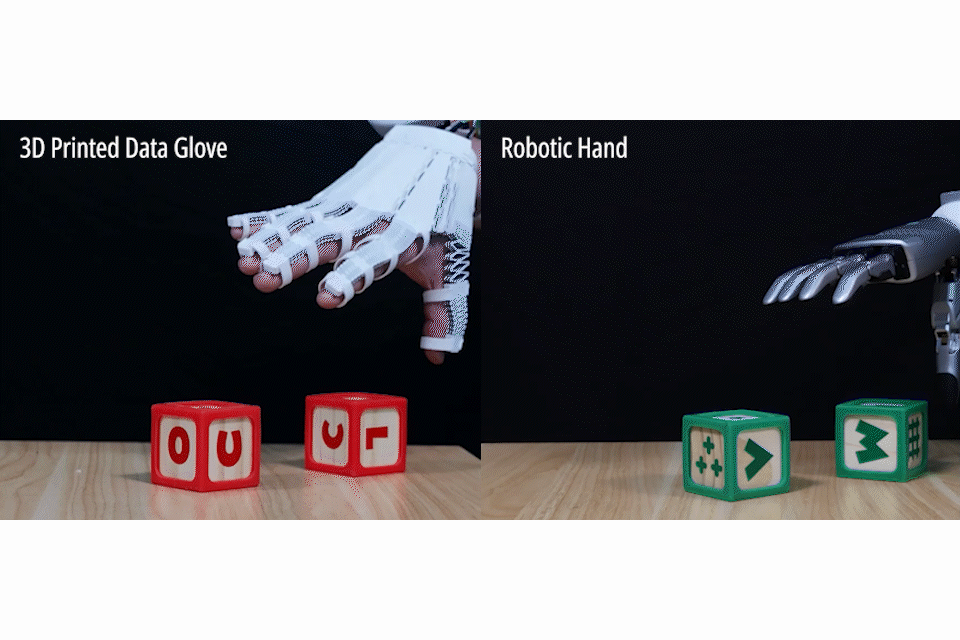
“X-Hinges” helps design and 3D print items like lamps and gloves with an interactive twist: automatically embedded sensors that perceive and adaptively respond to human contact.
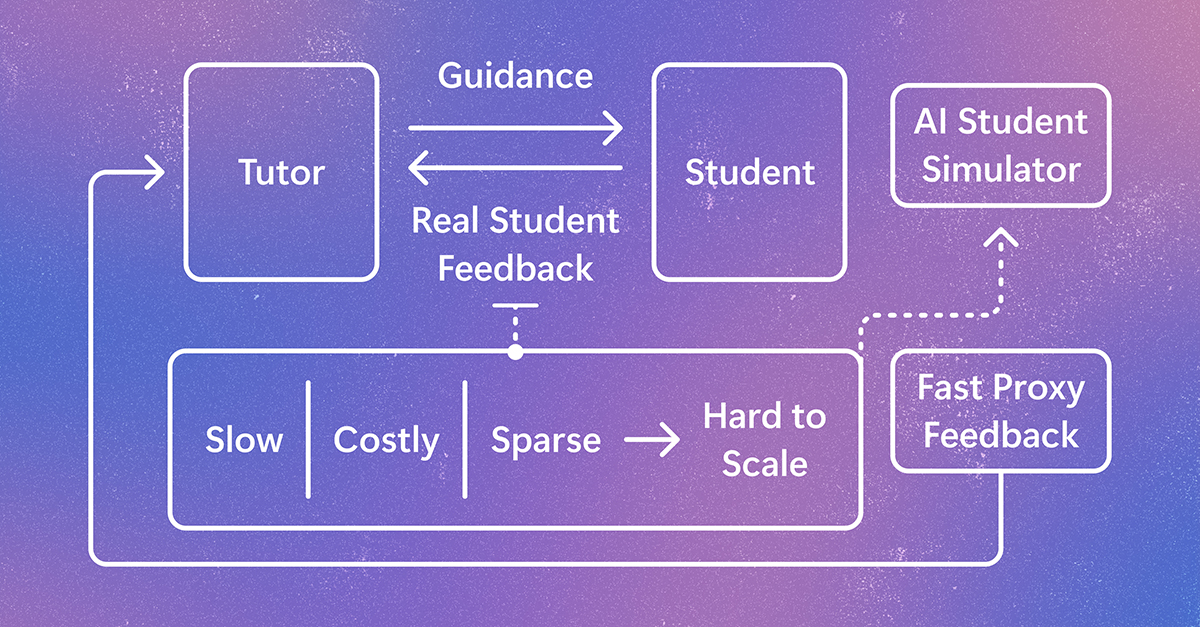
StudentSim is a research system for evaluating and improving AI tutoring tools before they are tested with learners. It models how individuals may engage with tutors, giving feedback to improve tutor performance across subjects like chess, writing, and mathematics. The post Simulating student learning for better AI tutoring appeared first on Microsoft Research.
We use cookies to run the site and, with your consent, for analytics and to show ads.
See our Cookie Policy.