PTA-IRT is proposed, a Privileged Trajectory-Aware Item Response Theory framework that fuses process and outcome signals and consistently outperforms prior IRT baselines on score and ranking recovery across four SWE benchmarks.
Ke-Feng Duan, De-Wu Zheng, Yan-Lin Wang et al.· 1 citation· ⚡1
A runtime-independent architecture for persistent agents with six continuity invariants and a quiesce--checkpoint--validate--bind--rehydrate--resume protocol is presented and Enoch realizes the design as a reusable body plus private installed identity, memory, workflow state, and continuation authority.
Zhe Zhao, Roy Zhao Independent Researcher, P. G. A. S. O. C. ScienceEngineering et al.· 2 citations· ⚡1
In a multi-day deployment with more than 70 iterations, HoH autonomously develops a first-person-shooter game, featuring a coherent storyline, fully implemented core mechanics, human-playable experience, polished visuals and integrated audio.
Hao Yan, Min-Le Su, Hang-Fan Zhang et al.· 4 citations
This study traces the full decision-making pipelines of the 5 APR agents across 500 real-world repair tasks, from issue description to patch validation, and reveals that, while agents excel at simple fixes, they struggle with logic-intensive bugs.
Ira Ceka, Saurabh Pujar, Shyam Ramji et al.· Proceedings of the ACM on so...· 0 citations· ⚡1
Reach audiences
Advertise in front of researchers, engineers, and readers.
AcrossWAM1.0 contributes an auditable software and evaluation boundary for compact latent world-action policies, distinct from LaWAM's original latent-subgoal contribution.
While multi-agent LLM pipelines show real promise for legacy code specifically, since their capacity for autonomous context reconstruction and iterative, feedback-driven refinement directly addresses the sparse documentation and thin test coverage that define legacy environments, the literature to date has been validat...
Harsh Verma· International Journal of Sci...· 0 citations
A comprehensive framework integrating robotic arms with automation components such as programmable logic controllers, sensors, and actuators, aiming to improve assembly accuracy and efficiency is explored, highlighting the potential of this integration scheme in optimizing high-precision assembly processes.
Yue-Hong Zhao, Wen-Lei Zhao, Pengfei Yan et al.· 電腦學刊· 0 citations
ABSTRACT Software, hardware, and brainware of hospital management information systems play a role in employee performance, although there are still problems/weaknesses in each variable that need to be improved. This study focuses on providing a deeper understanding of software, hardware, and brainware of hospital manag...
This study introduces TrustChain-Review, a framework that combines verifiable evidence, strategic incentives, and risk-sensitive governance to support more trustworthy code review and concludes that strong evidence-based governance is most appropriate for high-risk or audit-sensitive changes.
According to the results, deep learning can be more beneficial for forecasting technical debt but does not bring the required level of improvement only due to the complexity of the model.
Abdalmenam Khalif Masaud Abuswah, Abdarrahman Khalif Ali Abousowa, Ziad Omar Salem Wareg· Comprehensive Journal of Sci...· 0 citations
This study compared explainable machine learning models for predicting customer churn using the IBM Telco Customer Churn dataset in R and found Logistic Regression achieved the best performance, with an accuracy of 82.30% on this dataset.
Uppu Venkata Subbarao, Tedlapu Narayana Rao, Vantaku Bala et al.· International Journal of Man...· 0 citations
Groundwater is essential for agricultural development, particularly where surface-water resources are limited.
However, groundwater occurrence in crystalline basement terrains is difficult to predict because lithology and geological
structures vary considerably over short distances. This study evaluated the groundwater...
M. Aka, Okechukwu Ebuka Agbasi· International Journal for Re...· 0 citations
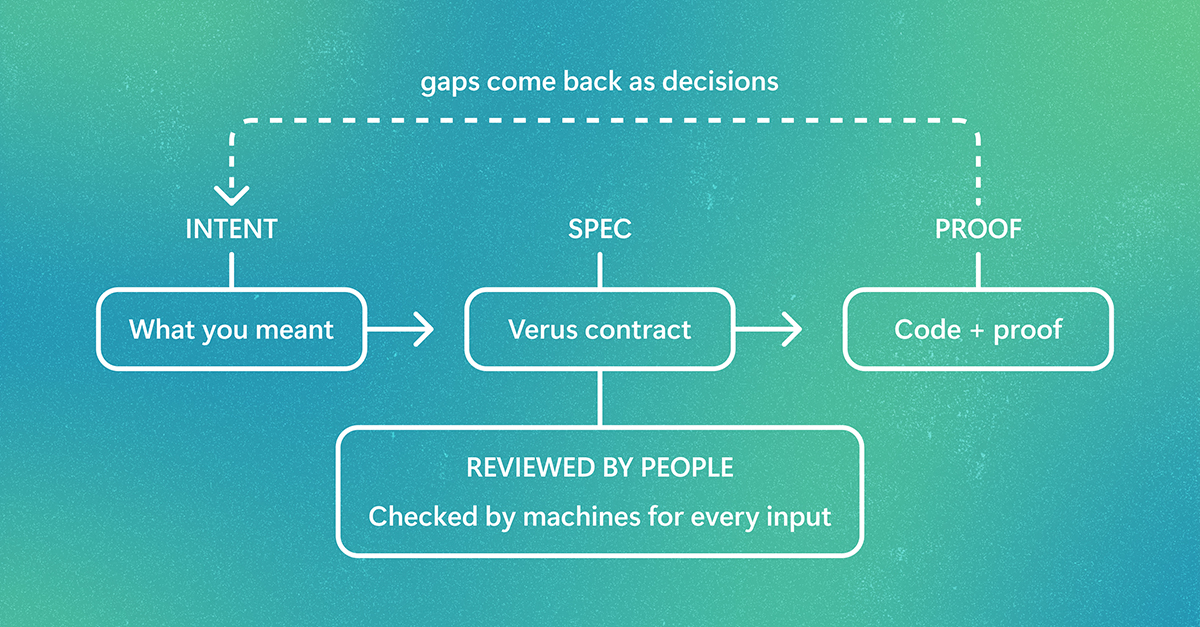
AI agents can generate code at a scale that’s hard for humans to review line-by-line. PDD Kit helps ensure the code is doing what the developer intended by creating formal specifications and testing against them. It converts developer intent into a Verus specification, proves AI-generated code meets it for every input, and uses tests where proofs aren't practical. Developers review intent, not every line. The post Formally verifying agent-written full-stack web apps with PDD Kit appeared first o…
Is your company’s AI sovereign? A practical guide for CIOs on AI vendor lock-in, EU Data Act switching, cloud sovereignty, and testing your exit plan before you need it. The post Sovereignty Is the Option to Leave appeared first on GPT-Lab.
Microsoft Research Blog· microsoft.comOct 30, 2026
Evaluating Microsoft Copilot at enterprise scale requires test data that captures the full complexity of real organizations, yet real enterprise data contains sensitive information that cannot be used for evaluation under any circumstances. The post From synthetic enterprise data evaluations to real Microsoft Copilot AI confidence appeared first on Microsoft Research.
Microsoft Research Blog· microsoft.comOct 29, 2026
Host Sowbhagya Suresh shares some of the latest news and cutting-edge research from across Microsoft—from understanding the challenges facing coding agents to uncovering how people use AI at work and improving extended-range weather forecasting. The post Microsoft Research Focus – Edition #97 appeared first on Microsoft Research.