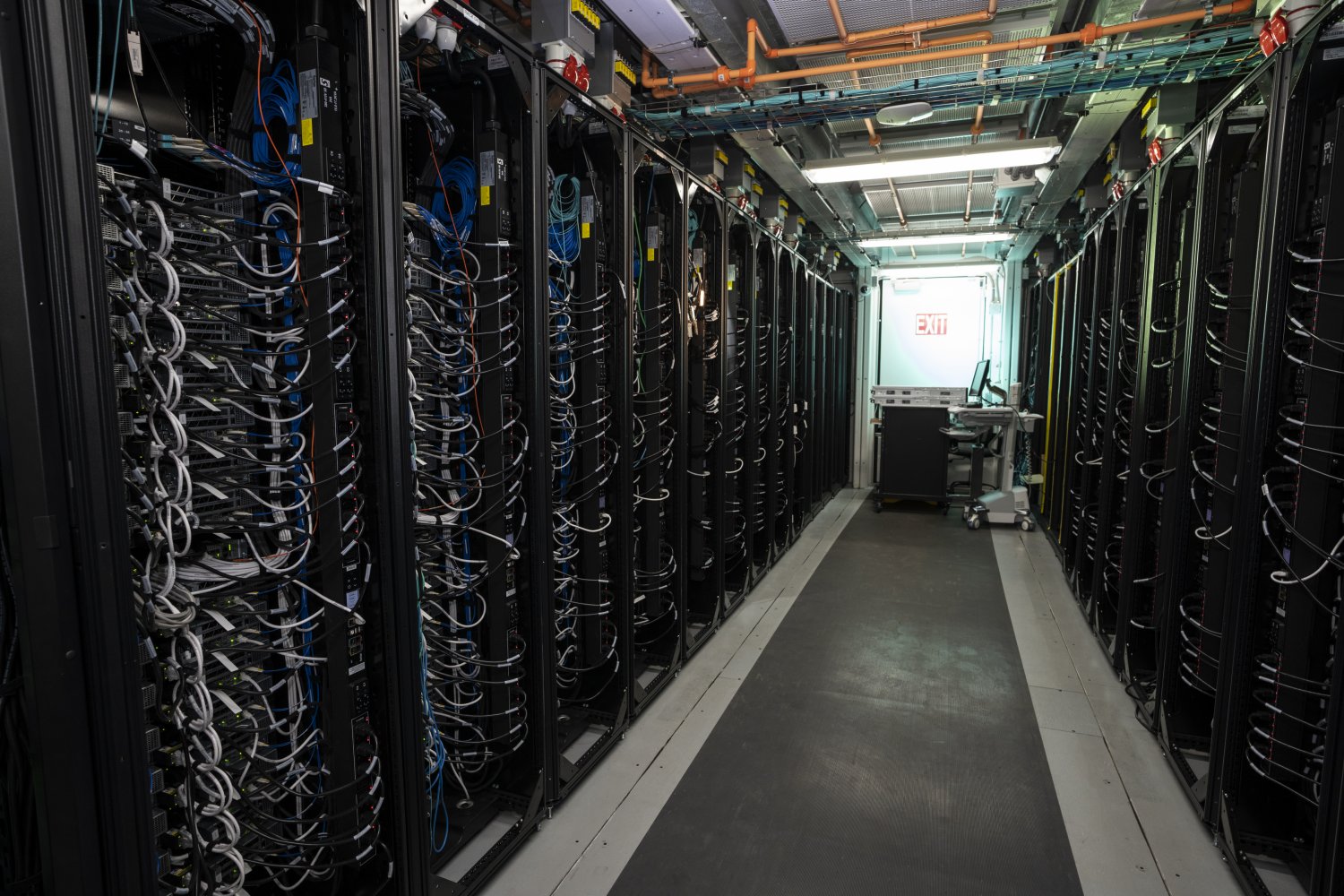
This archive provides the files, data, and software needed to reproduce and verify a Hadamard matrix of order 668. A Hadamard matrix is a square matrix whose entries are either positive one or negative one and whose rows are mutually orthogonal. For a matrix of order 668, this means that multiplying the matrix by its t...
Kelly Rhys· Zenodo (CERN European Organi...· 0 citations
Signal Loom is an offline browser performance-art prototype by Spark AI NLP. Separate synthetic EEG-like and synthetic ECG-like streams become an interactive visual score: an EEG slow-envelope feature expands an abstract 2D field; ECG-derived synthetic R–R intervals set pulse rhythm; an adjustable β/τ injection draws a...
Jean-François Brisson· Zenodo (CERN European Organi...· 0 citations
Experimental software: convergence_gate asks one narrow question of a verified input, with adversary coverage tests. Access: files are restricted. The description, DOI and test report are public; request access through Zenodo to obtain the code. Test report (2026-10-06) Source commit 6a165e8273747fbb52ee6085d915d49a145...
Harley Cameron· Zenodo (CERN European Organi...· 0 citations
Reach audiences
Advertise in front of researchers, engineers, and readers.
flip-observer-1024 is a deterministic, offline Python prototype for an ordinary classical weighted readout under a hidden channel-order reversal. It uses 512 dimensionless synthetic input channels. The optional 1,024-slot layout is two noisy/dropout-affected banks observing the same 512 underlying signals—not 1,024 ind...
Jean-François Brisson· Zenodo (CERN European Organi...· 0 citations
Autoware is an open-source autonomous driving software platform widely adopted by researchers and industry developers. Originally developed primarily for public-road applications, including passenger vehicles, taxis, and buses, Autoware is increasingly being extended to off-road environments such as construction and ag...
Yu Otsuki, Teja Emmey, Sena Matsushita et al.· 0 citations
Large Language Models (LLMs) are increasingly deployed for automated software vulnerability analysis. Binary classification alone is insufficient; practitioners need explanations to triage bugs and engineer patches. Standard practice relies on Chain-of-Thought (CoT) prompting, but free-form reasoning allows models to o...
Boyue Caroline Hu, K. Ahir, Ronghao Ni et al.· 0 citations
Code language models must be maintained like the software around them: when a library evolves, a model keeps writing the interface that it saw during training. Repairing the model itself lets one correction reach all downstream uses. Existing repair methods attribute a failure to neurons, select the highest-ranked ones...
Jian Gu, Hong-Yu Zhang, Chun-Yang Chen et al.· 0 citations
The release decision for frontier AI systems increasingly relies on cyber capability benchmarks, yet public vulnerability benchmarks can expose agents to previously published advisories, exploits, and fixes, making it difficult to distinguish prior exposure from capability on unseen vulnerabilities. We evaluate open-we...
Tobias Heldt, Matthew Turk, Christoph R. Landolt et al.· 0 citations
Tool-using AI agents are increasingly deployed across enterprise software systems, yet widely used benchmarks primarily evaluate nominal task completion, conflating baseline planning competence with operational fault recovery. We introduce UndoBench, a benchmark spanning 36 base workflows and 36 fault scenarios across...
Dolly Sah, Tanmay Sah, Harshul Jain et al.· 0 citations
A coding agent may safely modify one repository while silently breaking downstream services, libraries, or datastores that depend on it. Exhaustively running integration tests after every agent action is impractical, so the agent must predict these failures before executing them. Existing software world models predict...
Tong-Li Su, Yun-Tong Hu, Liang Zhao et al.· 0 citations
“X-Hinges” helps design and 3D print items like lamps and gloves with an interactive twist: automatically embedded sensors that perceive and adaptively respond to human contact.
StudentSim is a research system for evaluating and improving AI tutoring tools before they are tested with learners. It models how individuals may engage with tutors, giving feedback to improve tutor performance across subjects like chess, writing, and mathematics. The post Simulating student learning for better AI tutoring appeared first on Microsoft Research.
MIT News · Artificial Intelligence· news.mit.eduOct 6, 2026
Writing as a participant and researcher, PhD student JS Tan SM ’22 has co-authored a new book about the rise of tech worker protests and the employer backlash that followed.
MIT News · Artificial Intelligence· news.mit.eduOct 2, 2026
Writing as a participant and researcher, PhD student JS Tan SM ’22 has co-authored a new book about the rise of tech worker protests and the employer backlash that followed.
We use cookies to run the site and, with your consent, for analytics and to show ads.
See our Cookie Policy.