A coding agent may safely modify one repository while silently breaking downstream services, libraries, or datastores that depend on it. Exhaustively running integration tests after every agent action is impractical, so the agent must predict these failures before executing them. Existing software world models predict...
Tong-Li Su, Yun-Tong Hu, Liang Zhao et al.· 0 citations
This work conducts the first empirical study to systematically investigate the test adequacy of harness in real-world agentic systems and proposes HarnessTester, the first harness-oriented test generation technique that incorporates explicit agent-harness contract support to construct contract-faithful test setups and...
Yi-Fan Xiong, Jing-Yi Ge, Zhen-Peng Chen et al.· 0 citations
Computer-use agents need to capture procedural knowledge of how people use software. User telemetry offers a scalable source of this knowledge. However, learning reusable skills from these logs requires addressing three challenges: (1) Goal Underspecification, since logs do not record the goal behind each action; (2) N...
J. Chen, Elias Stengel-Eskin, Yan Chen et al.· 0 citations
Generating corner-case scenarios with appropriate adversity in a simulation environment is critical for testing an autonomous vehicle (AV) software stack's safety performance before deployment. Existing autonomous-driving scenario generators can enforce specific behavior, adversity, or feasibility conditions, but they...
Jia-Xi Liu, Hang Zhou, Hang-Yu Li et al.· 0 citations
Reach audiences
Advertise in front of researchers, engineers, and readers.
Differentiable programming connects scientific computation with gradient-based inference, learning and design. Extending these capabilities across a heterogeneous software ecosystem requires specialized effort to implement derivatives, integrate interfaces and evaluate quality. AI coding agents can accelerate this tran...
Peng-Cheng Hou, Xiao-Jun Tan, Si-Han Hu et al.· 0 citations
We introduce AgentPersonaBench (APB), a benchmark evaluating whether persona conditioning faithfully steers downstream agent behavior. While language models are increasingly deployed for persona-driven user simulation, existing benchmarks primarily evaluate conversational styling or self-reports rather than authentic b...
Jin-Tao Huang, Yi-Fan Wang, Hong-Yuan Shen et al.· 0 citations
IEC-Bench is built from the changes observed in real-world use, with chains of dependent calls under the execution paths of 4 widely-used harnesses, and intent-execution correspondence (IEC) is defined as the property that the executed action matches the action the emitted call denotes under the tool contract.
Bo-Yang Yang, Zhen-Hao Li, Zi-Yao Yang et al.· 0 citations
When autonomous Large Language Model (LLM) agents maintain and refactor safety-critical enterprise software under automated verification constraints, task completion incentives frequently induce reward-hacking heuristics. Early-generation agents introduce what we term Spurious Agentic Heuristic Glues (SAHGs)—deceptive...
Chen Jiang· Zenodo (CERN European Organi...· 0 citations
L'adozione enterprise di modelli LLM pone sfide inedite in termini di governance, qualità e gestione del rischio. A differenza del software tradizionale — deterministico e verificabile — i sistemi basati su modelli di linguaggio presentano comportamenti probabilistici, difficoltà di testing convenzionale e requisiti di...
Claudio Fontanarosa· Zenodo (CERN European Organi...· 0 citations
“X-Hinges” helps design and 3D print items like lamps and gloves with an interactive twist: automatically embedded sensors that perceive and adaptively respond to human contact.
StudentSim is a research system for evaluating and improving AI tutoring tools before they are tested with learners. It models how individuals may engage with tutors, giving feedback to improve tutor performance across subjects like chess, writing, and mathematics. The post Simulating student learning for better AI tutoring appeared first on Microsoft Research.
MIT News · Artificial Intelligence· news.mit.eduOct 6, 2026
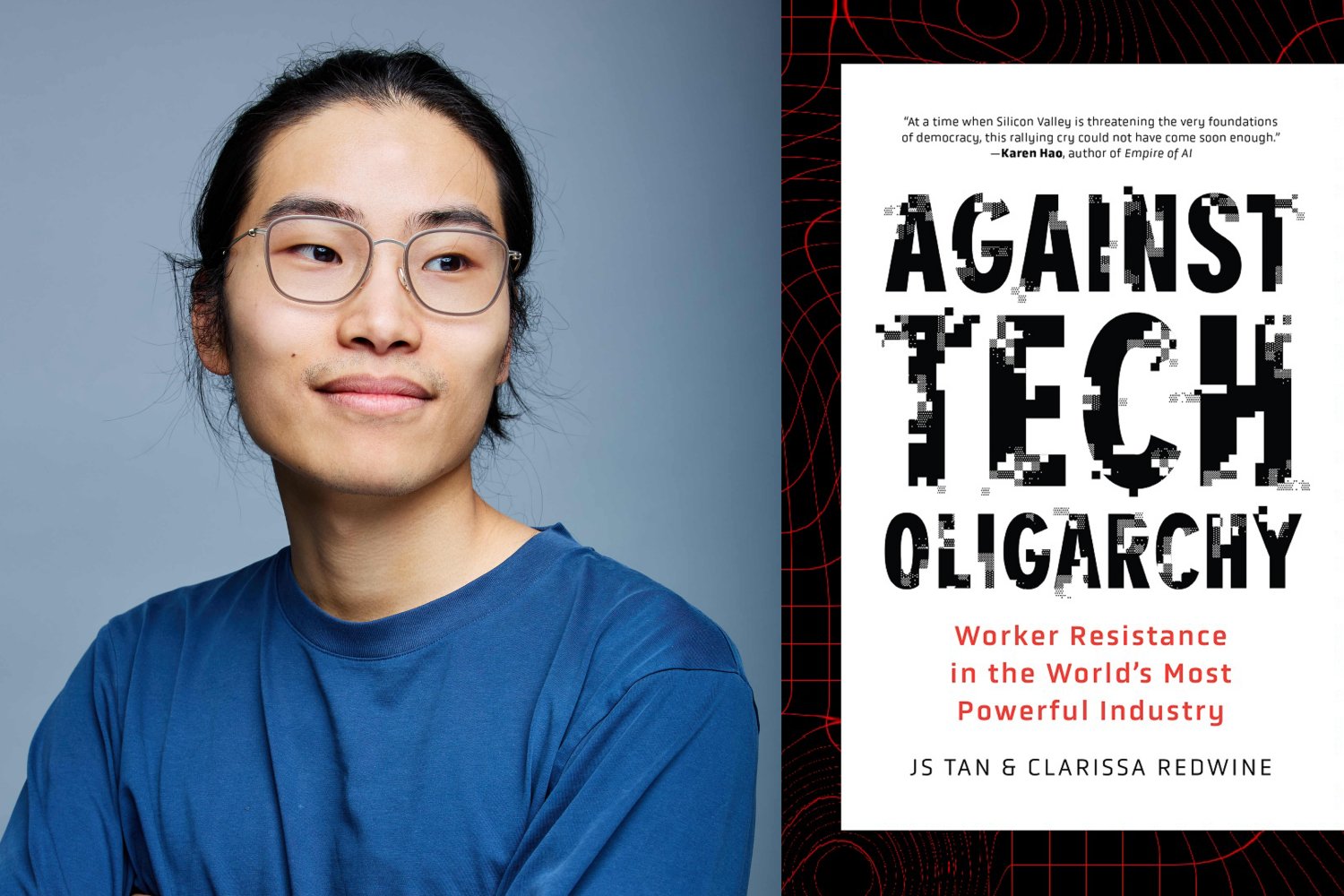
Writing as a participant and researcher, PhD student JS Tan SM ’22 has co-authored a new book about the rise of tech worker protests and the employer backlash that followed.
MIT News · Artificial Intelligence· news.mit.eduOct 2, 2026
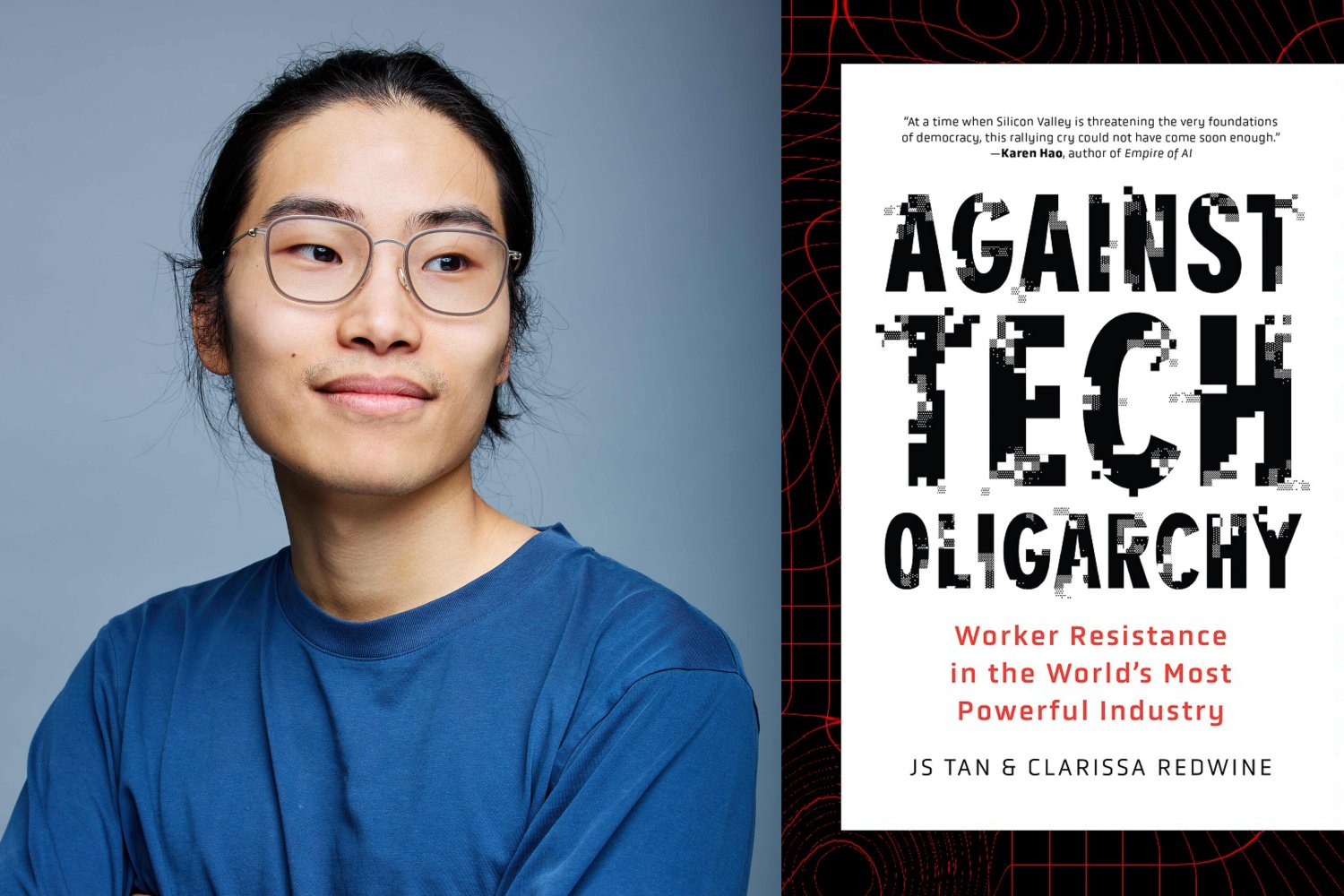
Writing as a participant and researcher, PhD student JS Tan SM ’22 has co-authored a new book about the rise of tech worker protests and the employer backlash that followed.
We use cookies to run the site and, with your consent, for analytics and to show ads.
See our Cookie Policy.