We aim to characterise the value of artificial intelligence in the workplace. Current studies largely measure this value in terms of the current automation capabilities and public adoption of AI. However, such metrics ignore the greater impacts of human--agent collaboration in transforming the nature of work. To account for this, we must expand the scope of our analysis beyond atomised tasks of today, and instead focus on how AI can augment entire workflows of the future. To ground this analysis, we establish a precise definition of AI augmentation comprising six conditions, spanning durable net value, meaningful human control, accountability and recovery, and long-term human development through learning, career pathways, and job purpose. We elaborate on these conditions and apply the framework in a case study of AI-mediated social surveys. We conclude by outlining how organisations, researchers, and government leaders can use this framework to make sense of the future of work.

This publication proposes a definition and a classification of agile software development approaches and analyses ten software development methods that can be characterized as being "agile" against the defined criterion.
P. Abrahamsson, O. Salo, Jussi Ronkainen et al.· arXiv.org· 727 citations· ⚡54
The study shows that agile practices improve both informal and formal communication, but indicates that, in larger development situations involving multiple external stakeholders, a mismatch of adequate communication mechanisms can sometimes even hinder the communication.
M. Pikkarainen, Jukka Haikara, O. Salo et al.· Empirical Software Engineeri...· 401 citations· ⚡48
The results indicate that software engineering work practices are chosen opportunistically, adapted and configured to provide value under the constrains imposed by the startup context.
Nicolò Paternoster, Carmine Giardino, M. Unterkalmsteiner et al.· Information and Software Tec...· 394 citations· ⚡54
The perception of the impact of agile methods is predominantly positive, and several challenge areas were discovered, but based on this study, agile methods are here to stay.
M. Laanti, O. Salo, P. Abrahamsson· Information and Software Tec...· 260 citations· ⚡20
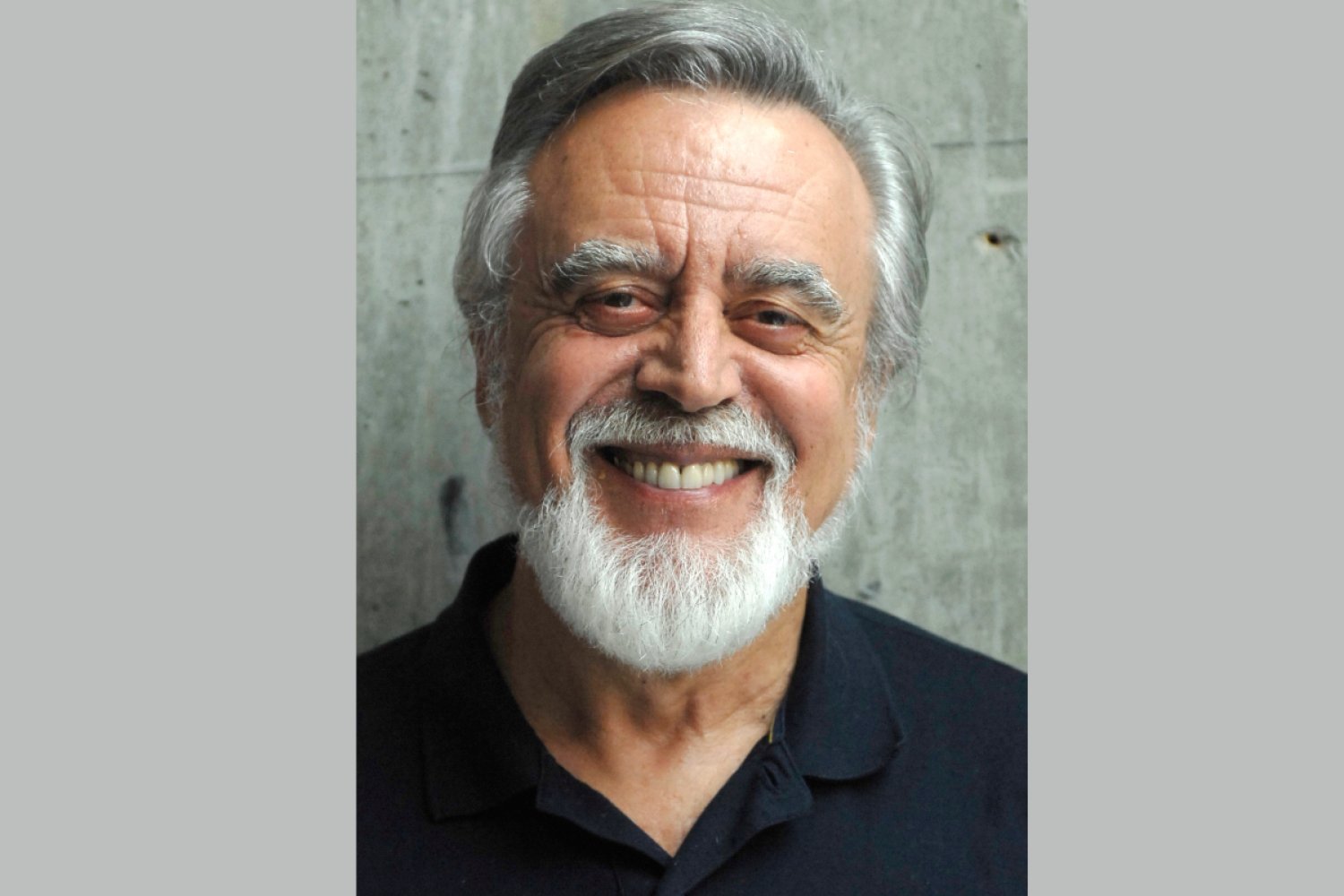
Known for his clear and elegant writing style, Bertsekas shaped fields from control and optimization to large-scale computation and artificial intelligence.
MIT News · Artificial Intelligence· news.mit.eduJul 7, 2026
The professor of physics and inaugural director of the NSF AI Institute for Artificial Intelligence and Fundamental Interactions will lead LNS and continue his research in particle physics.
We use cookies to run the site and, with your consent, for analytics and to show ads.
See our Cookie Policy.