This work presents R2VC, a modular retrieve, reason, verify, calibrate architecture for evidence-grounded fact checking with citations and abstention that can substantially improve both predictive accuracy and confidence reliability in open-domain verification.

Abstract
Large language models are increasingly used for automated fact checking, but end-to-end prompting often entangles evidence retrieval, reasoning, and uncertainty estimation, making failures difficult to diagnose and confidence difficult to trust. We present R2VC, a modular retrieve, reason, verify, calibrate architecture for evidence-grounded fact checking with citations and abstention. R2VC combines hybrid sparse+dense retrieval over Wikipedia, a supervised fine-tuned and DPO-aligned generator that produces diverse structured verdict candidates, an external NLI cross-encoder for evidence-based candidate selection, and a lightweight sequence-level calibrator for confidence estimation and selective abstention. On FEVER, an 8B backbone with R2VC achieves 13.74% higher accuracy than baseline. Ablation studies show that verifier-based candidate selection and confidence calibration are the largest contributors to performance. Removing candidate selection drops FEVER accuracy to 76.24%, while removing calibration nearly doubles the Brier score to 0.161. A manual analysis of 250 errors further shows that retrieval failures, especially wrong-entity evidence, remain the dominant bottleneck. Together, these results show that modular fact-checking pipelines can substantially improve both predictive accuracy and confidence reliability in open-domain verification.
Software projects often maintain large requirement and test repositories, yet explicit trace links between them are incomplete or inconsistently maintained. This paper presents a requirements-to-test traceability pipeline that ranks candidate links for natural-language requirements using hybrid retrieval and optional L...
Arda Barış Özten, Eren Tarak, H. Kilinc· 2026 11th International Conf...· 0 citations
EviGraphRAG is proposed, a ranker-agnostic reliability layer that separates candidate ranking from exact verification and explicit abstention, and exact conjunction over represented event constraints and linked source-record connectivity can improve selective reliability, while parser quality and candidate retrieval re...
Yu-Teng Sun, Yang Su, Xu-An Wang· Computers, Materials & C...· 0 citations
It is argued that each NLP subfield should pair its main performance metric with a calibration score and call for treating calibration as an essential property of every model rather than a niche topic.
Mario Sanz-Guerrero, Katharina von der Wense· The Proceedings of the Third...· 1 citation
Fact verification pipelines are often unrealistic: they assume full-input access, operate on isolated atomic claims, and overlook the central question of when a system should act under partial evidence. We introduce DIVER (Deliberative and Iterative fact VERification), an LLM -based framework for calibrated incremental...
Sen-Yi Zhang, Tasnim Kabir, Jordan L. Boyd-Graber· Conference on Empirical Meth...· 0 citations
Related blog posts
MIT News · Artificial Intelligence· news.mit.eduNov 17, 2026
By studying the computational foundations of language learning, Associate Professor Jacob Andreas builds intelligent systems that can communicate effectively with humans.
MIT News · Artificial Intelligence· news.mit.eduAug 27, 2026
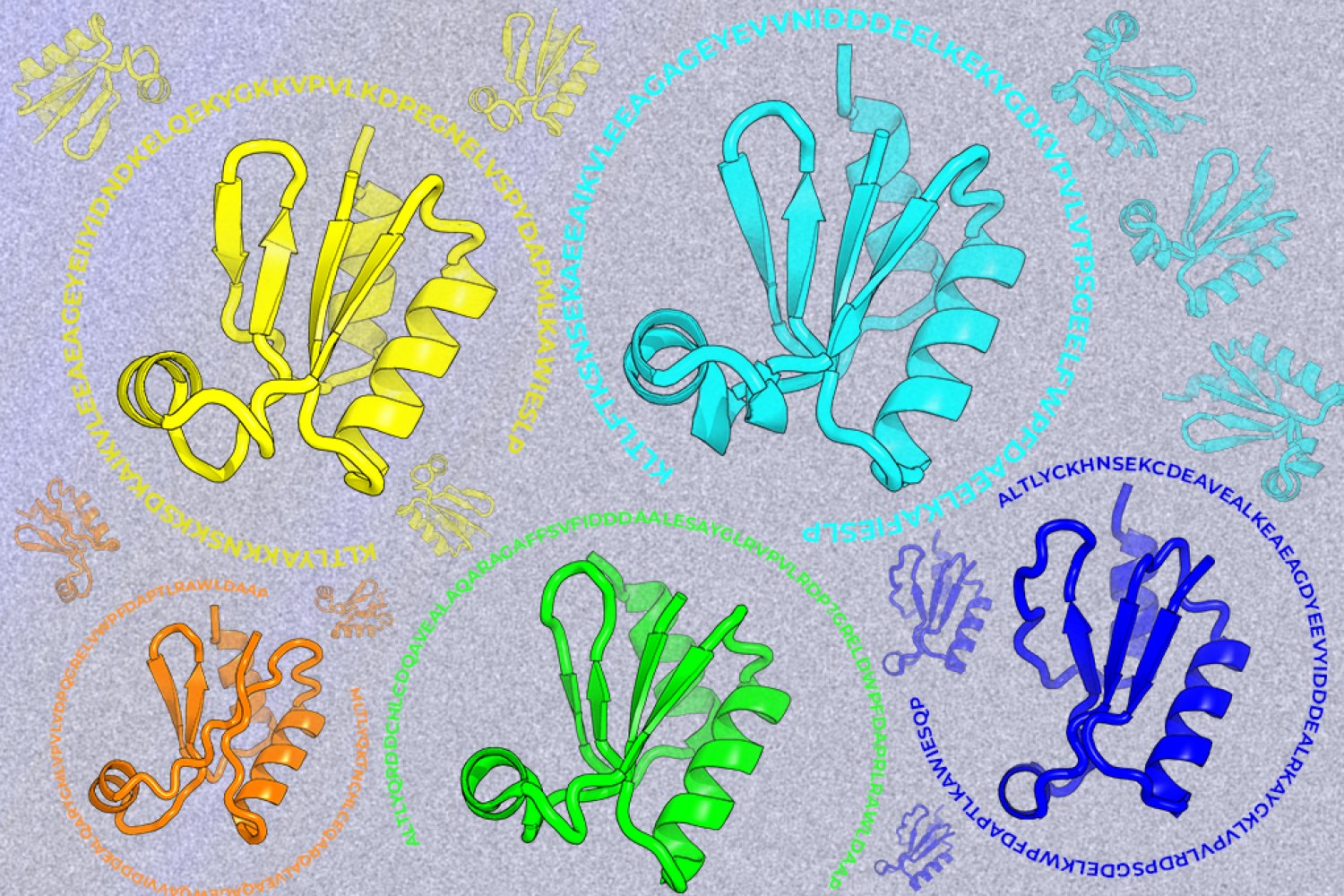
A new machine-learning framework aims to improve the success rate of computational protein design while moving away from results that reproduce sequences found in nature.