Oct 2026· IEEE Transactions on Mobile Computing· Vol 25, pp. 17243-17261· 1 citation· 39 references
Abstract
Through bypassing the long-distance transmission of cloud services, Mobile Edge Computing (MEC) reduces response delay and ensures Quality-of-Service (QoS). In resource-constrained MEC, due to the strong coupling between service provisioning and task execution, reasonable service caching and resource allocation face many challenges on 1) coordinating the limited storage resources to improve cache hit rate, 2) allocating limited computing resources under delay constraints, and 3) sample collection and model training in dynamic environments. To address these important challenges, we propose CAMART, a novel service Caching and resource Allocation framework via Multi-Agent Reinforcement learning (MARL) with hierarchical knowledge Transfer in Digital Twin (DT) empowered Cloud-Edge Networks (DTCEN). Specifically, we first construct a new DTCEN to realize the mapping from physical to virtual networks. Next, we decouple the joint optimization of service caching and resource allocation into two sub-problems. For the service caching sub-problem, we design an improved MARL-based method to capture global information via a shared-feature extraction network and optimize caching and offloading decisions via a dual-head feature processing network. For the resource allocation sub-problem, we convert it into 0-1 integer programming and design an improved branch-and-bound-based method to reduce computational complexity while guaranteeing a high-quality solution set. Finally, we develop an original DT-driven hierarchical knowledge transfer mechanism to realize cross-scenario knowledge reuse and convergence acceleration. Using real-world datasets, extensive experiments are conducted to validate the superiority of the proposed CAMART. Compared to the state-of-the-art methods, CAMART achieves higher rewards, task completion rate, and cache hit rate in different scenarios.

With the deployment of 5G NR-U (5th Generation New Radio in Unlicensed Spectrum) in unlicensed spectrum and the rise of sparse large-scale models (exemplified by Switch Transformers) in edge computing, edge-cloud collaborative training faces the dual challenges of dynamic spectrum contention and heterogeneous load...
De-Feng Duan, Hong Liu, Li-Yun Huang et al.· Tsinghua Science and Technol...· 0 citations
Pretrained Foundation Models (PFMs) enable highaccuracy inference services but are typically deployed in remote datacenters, resulting in prohibitively high inference delay. Mobile Edge Computing (MEC) can mitigate such high delays by caching PFMs or their fine-tuned variants on cloudlets located close to end users. Ho...
Li-Zhe Zhou, Qiu-Fen Xia, Zi-Chuan Xu et al.· IEEE Transactions on Paralle...· 0 citations
This work introduces Online Pricing-based Slice Admission Control and Resource Allocation (OPA) framework, which dynamically assigns pseudo-prices to resources that capture long-term scarcity and anticipated inter-temporal opportunity costs and designs an exponential pricing strategy that guarantees bounded worst-case...
Muhammad Sulaiman, Bo Sun, M. A. Salahuddin et al.· 0 citations
This work proposes an enhanced Proximal Policy Optimization (PPO) framework for resource-aware and latency-sensitive SFC placement in edge-enabled networks, and demonstrates the applicability of the proposed framework in mission-critical and latency-sensitive service environments.
Nithin Melala Eshwarappa, Ching-Hsien Hsu, Hojjat Baghban et al.· ACM Transactions on Modeling...· 0 citations
Satellite-terrestrial integrated communication and computing network (STICCN) faces the core challenge of supporting highly heterogeneous tasks with differentiated requirements, under stringent dual constraints of communication and computing resources. Most existing scheduling schemes focus on macroscopic system perfor...
The coexistence of Ultra-Reliable Low-Latency Communication (URLLC) and Enhanced Mobile Broadband (eMBB) can simultaneously meet the reliability and real-time performance requirements of critical services as well as the requirements of high-bandwidth services. In 5G and beyond 5G (B5G) networks, radio access network (R...
Yixuan Bai, Heng Wang· IEEE Transactions on Communi...· 0 citations
Related blog posts
MIT News · Artificial Intelligence· news.mit.eduOct 2, 2026
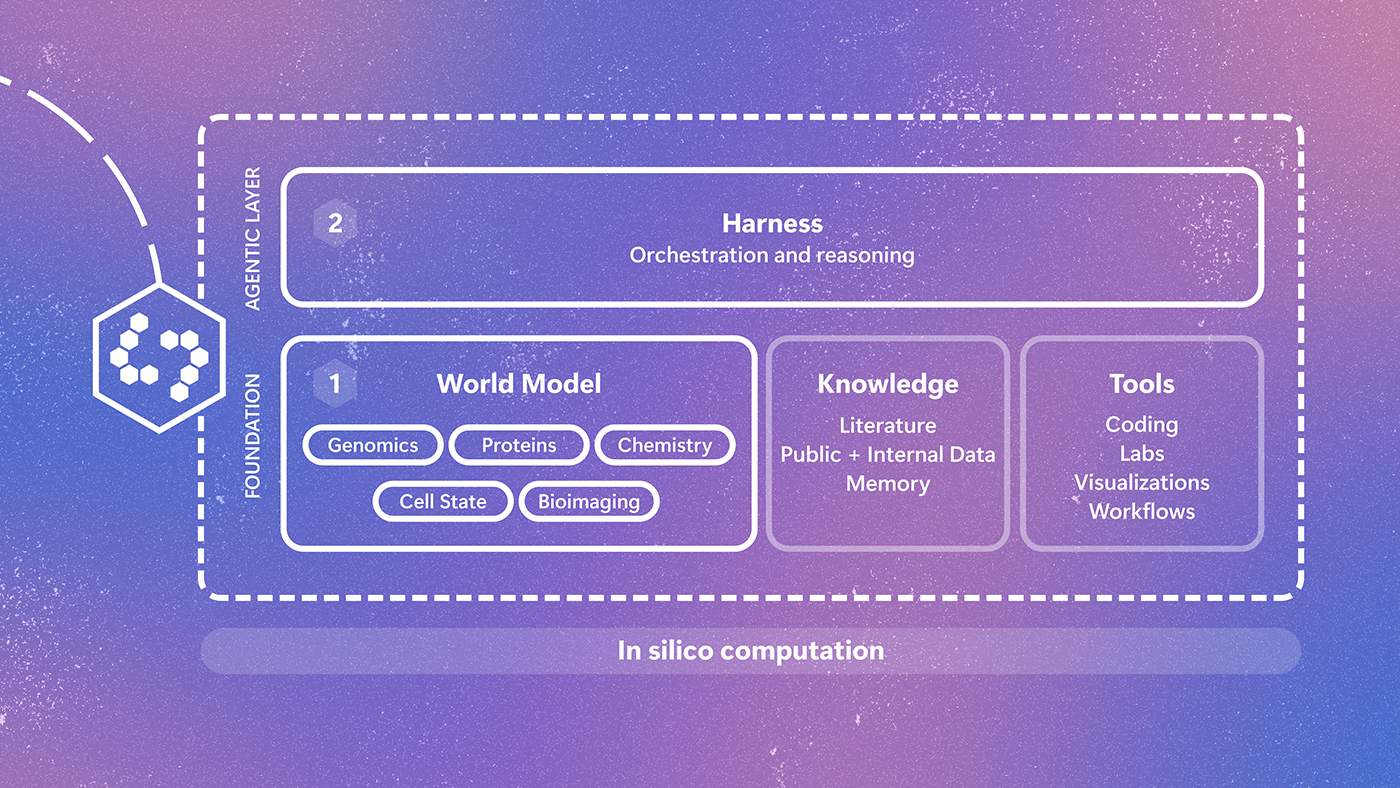
Biology doesn't operate in silos, and neither should the AI representation of it. Quine is an early-stage research effort to create a multimodal world model of biology. By connecting insights across biological scales and modalities, Quine helps scientists computationally search a space far larger than intuition allows and prioritize hypotheses before they reach the lab. Experimental results provide important feedback, helping researchers sharpen future research directions. The post Introducing Q…