Skip to content
#edge computing Open access

Pushing the Limits of Computing: Transistor-to-Processor Benchmarking at 77 K With Self-Heating Effect

Oct 2026 · IEEE transactions on computers · Vol 75, pp. 3643-3652 · 1 citation · 33 references

Abstract

Owing to increased power density with each newer technology node, transistors suffer from increased Self-Heating (SH) at room temperature, which is a daunting challenge for circuits and processors’ reliability. Given the increasing interest in leveraging cryogenic temperatures to enhance the performance and energy efficiency of computing systems, understanding SH effects at cryogenic temperatures is critical for the reliability and optimization of such systems. This work presents a comprehensive investigation of SH effects from the transistor to the processor level on the advanced 5 nm FinFET node under cryogenic conditions, specifically at 77 K. Further, it presents a pioneering comparison of SH effects between 5 nm FinFET and 28 nm FDSOI transistors at 77 K. Our findings reveal that FinFET devices on bulk substrate, despite their 3D-confined structure and reduced scale to extreme 5 nm, exhibit better thermal characteristics compared to FDSOI devices at 77 K. This is primarily attributed to the inherent design of FDSOI devices, where the buried oxide layer acts as a thermal barrier, thereby significantly restricting heat dissipation. Further, we explore the standard cell libraries and a processor core operating at 77 K with and without i) SH effect and ii) scaled parasitic resistance using 5 nm FinFETs. The exploration undertaken in this study not only demystifies the thermal behavior of a cutting-edge 5 nm technology under extremely low temperatures but also establishes a new paradigm in selecting technologies for future high-performance computing applications at cryogenic temperatures. It opens new avenues for the development of more efficient and reliable computing systems, paving the way for future innovations in cryogenic computing.

Read PDF

Similar papers

#computer vision Review Sep 2017

Agile Software Development Methods: Review and Analysis

This publication proposes a definition and a classification of agile software development approaches and analyses ten software development methods that can be characterized as being "agile" against the defined criterion.

P. Abrahamsson, O. Salo, Jussi Ronkainen et al. · 727 citations · ⚡54
#computer vision Jun 2008

The impact of agile practices on communication in software development

The study shows that agile practices improve both informal and formal communication, but indicates that, in larger development situations involving multiple external stakeholders, a mismatch of adequate communication mechanisms can sometimes even hinder the communication.

M. Pikkarainen, Jukka Haikara, O. Salo et al. · 401 citations · ⚡48
#machine learning Review Open access Oct 2014

Software development in startup companies: A systematic mapping study

The results indicate that software engineering work practices are chosen opportunistically, adapted and configured to provide value under the constrains imposed by the startup context.

Nicolò Paternoster, Carmine Giardino, M. Unterkalmsteiner et al. · 394 citations · ⚡54

Related blog posts

Microsoft Research Blog Sep 29, 2026

Introducing Quine: An AI research system designed for the complexity of biology

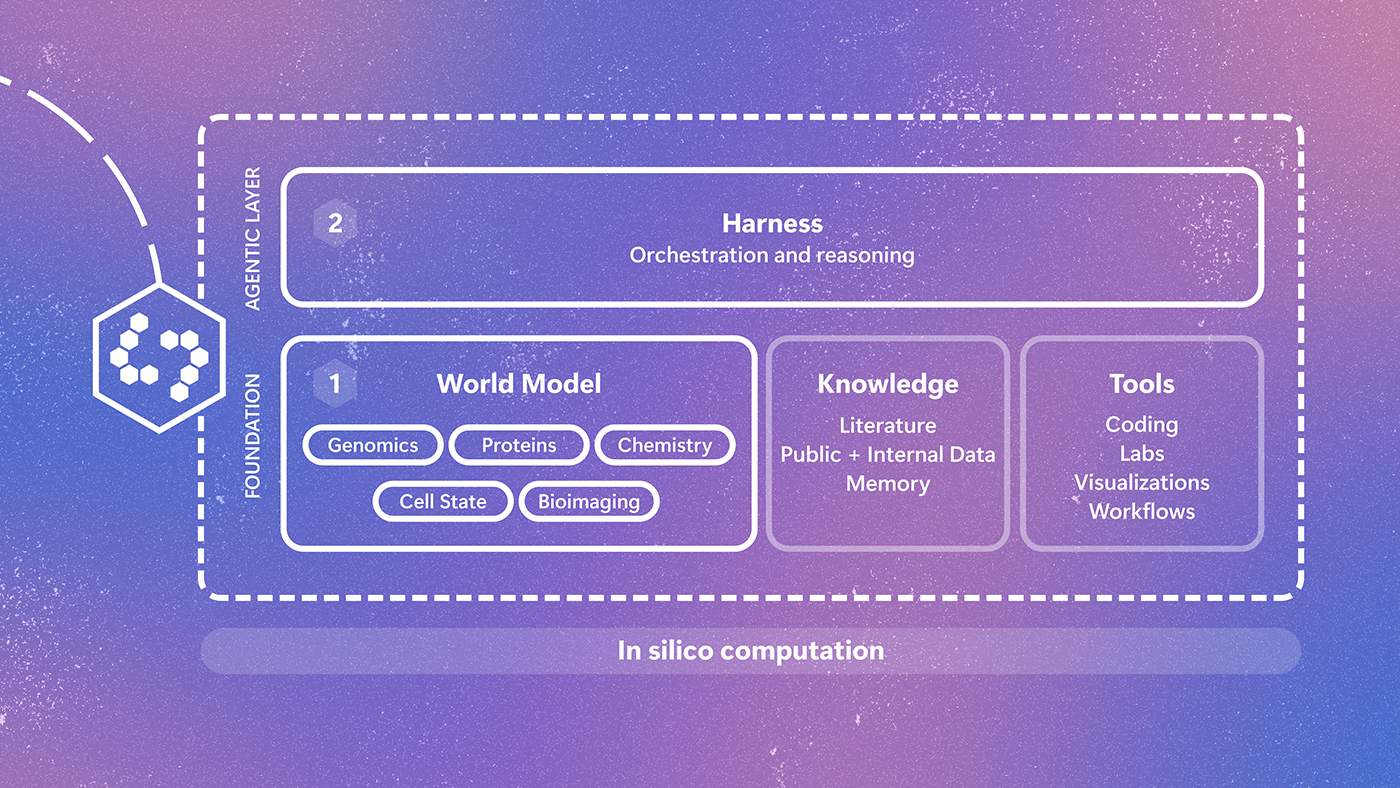
Biology doesn't operate in silos, and neither should the AI representation of it. Quine is an early-stage research effort to create a multimodal world model of biology. By connecting insights across biological scales and modalities, Quine helps scientists computationally search a space far larger than intuition allows and prioritize hypotheses before they reach the lab. Experimental results provide important feedback, helping researchers sharpen future research directions. The post Introducing Q…

We use cookies to run the site and, with your consent, for analytics and to show ads. See our Cookie Policy.