Oct 2026· IEEE transactions on computers· Vol 75, pp. 3468-3482· 0 citations· 43 references
Abstract
Deep Neural Networks integrated into sensor-driven embedded systems have become fundamental to edge computing applications. While Inertial Measurement Units (IMUs) are ubiquitous in these architectures due to their cost-efficiency, the reliance on data-driven models expands the attack surface of the embedded computing pipeline. This paper investigates the vulnerability of such systems by presenting a synchronization-free backdoor attack framework. We address two critical threat models in the system lifecycle: training-data poisoning and outsourced training. For the poisoning setting, we exploit the physical-digital signal interface by developing a frequency-domain injection method that utilizes sidelobe perturbations to implant stealthy triggers. For the outsourced scenario, we propose a dual-optimization joint trigger learning scheme that co-optimizes trigger patterns and model objectives, eliminating the dependency on synchronization with the victim’s training process. To ensure attack stealthiness within the operational bounds, a dynamic weighting strategy is introduced to balance attack efficacy with benign inference accuracy. Extensive experiments on standard benchmarks demonstrate that current embedded architectures are highly susceptible to these methods: the frequency-domain poisoning achieves over 60% average attack success, while the outsourced-training attack exceeds 95%, highlighting a critical security gap in sensor-based intelligent systems.

This publication proposes a definition and a classification of agile software development approaches and analyses ten software development methods that can be characterized as being "agile" against the defined criterion.
P. Abrahamsson, O. Salo, Jussi Ronkainen et al.· arXiv.org· 727 citations· ⚡54
The study shows that agile practices improve both informal and formal communication, but indicates that, in larger development situations involving multiple external stakeholders, a mismatch of adequate communication mechanisms can sometimes even hinder the communication.
M. Pikkarainen, Jukka Haikara, O. Salo et al.· Empirical Software Engineeri...· 401 citations· ⚡48
The results indicate that software engineering work practices are chosen opportunistically, adapted and configured to provide value under the constrains imposed by the startup context.
Nicolò Paternoster, Carmine Giardino, M. Unterkalmsteiner et al.· Information and Software Tec...· 394 citations· ⚡54
The perception of the impact of agile methods is predominantly positive, and several challenge areas were discovered, but based on this study, agile methods are here to stay.
M. Laanti, O. Salo, P. Abrahamsson· Information and Software Tec...· 260 citations· ⚡20
Related blog posts
MIT News · Artificial Intelligence· news.mit.eduOct 2, 2026
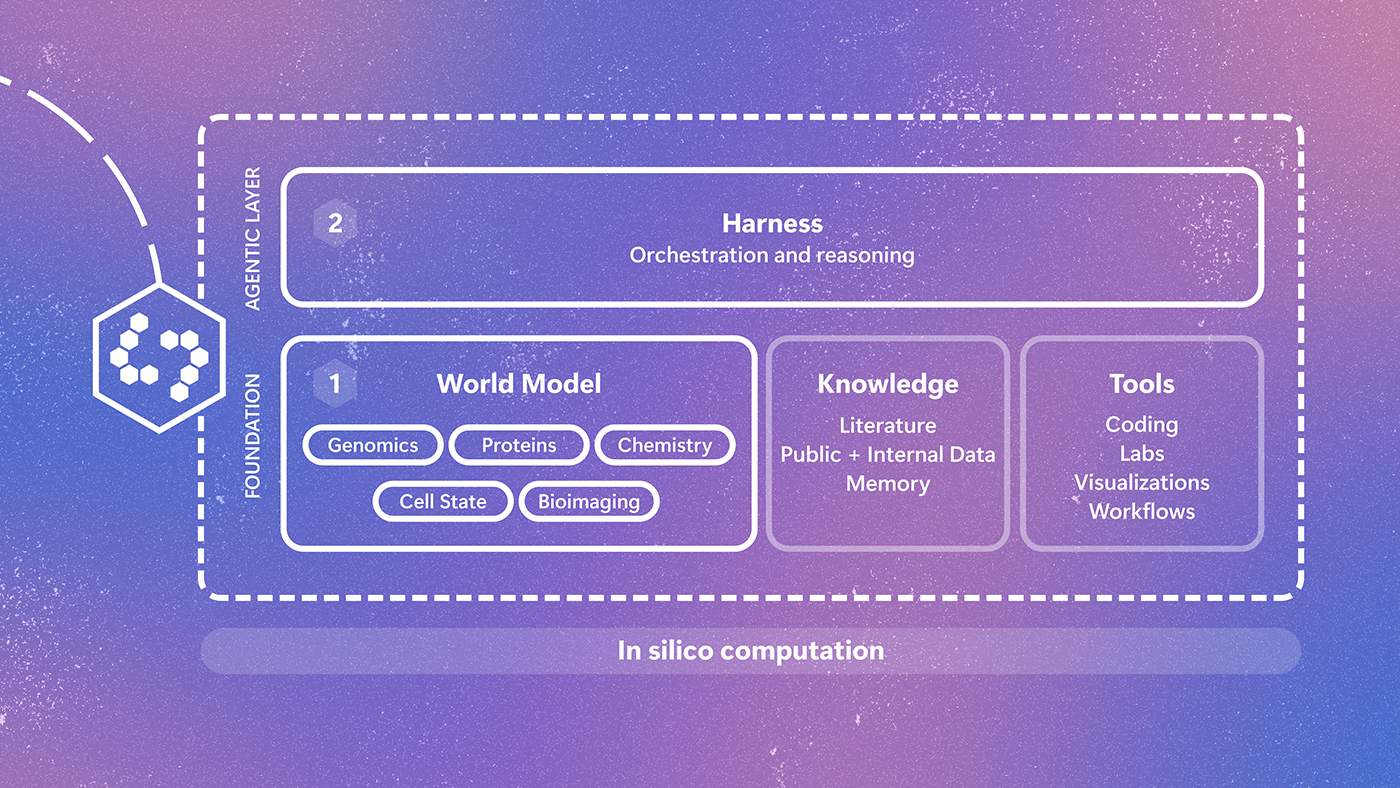
Biology doesn't operate in silos, and neither should the AI representation of it. Quine is an early-stage research effort to create a multimodal world model of biology. By connecting insights across biological scales and modalities, Quine helps scientists computationally search a space far larger than intuition allows and prioritize hypotheses before they reach the lab. Experimental results provide important feedback, helping researchers sharpen future research directions. The post Introducing Q…