We study the adaptation of pretrained language models to univariate time-series forecasting through a parameter-efficient transfer learning framework, with the goal of understanding which design choices drive effective cross-modal transfer. While language models operate on discrete textual tokens, time series consist of continuous numerical observations with temporal dependencies. To bridge this modality gap, we project fixed-length time-series patches directly into the embedding space of a pretrained GPT-2 backbone, bypassing textual tokenization and treating the Transformer as a generic sequence encoder. Through controlled ablation studies on seven benchmark datasets spanning energy, weather, traffic, and finance, we analyze the effects of (i)~representation strategy (continuous embeddings versus textual serialisation), (ii)~adaptation regime (frozen backbone versus partial or full fine-tuning), (iii)~architectural components such as adapters, pooling strategies, and prediction heads, and (iv)~input context length. Continuous patch-based embeddings consistently outperform textual prompting and randomly initialised backbones. The adapted pipeline attains MASE within the range of specialised forecasting architectures while updating less than 1\% of total model parameters. Results further indicate that freezing the pretrained backbone and training lightweight projection and adapter modules provides a favourable accuracy--efficiency trade-off with stable behaviour across varying context lengths.

This publication proposes a definition and a classification of agile software development approaches and analyses ten software development methods that can be characterized as being "agile" against the defined criterion.
P. Abrahamsson, O. Salo, Jussi Ronkainen et al.· arXiv.org· 727 citations· ⚡54
The results indicate that software engineering work practices are chosen opportunistically, adapted and configured to provide value under the constrains imposed by the startup context.
Nicolò Paternoster, Carmine Giardino, M. Unterkalmsteiner et al.· Information and Software Tec...· 394 citations· ⚡54
The possibility of inferring high-dimensional data inference in a model that consists of a prior and an auxiliary differentiable constraint given some additional information is considered, thereby allowing a range of potential applications in adapting models to new domains and tasks.
Alexandros Graikos, Esmeralda S. Whitammer, N. Jojic et al.· Neural Information Processin...· 316 citations· ⚡15
It is proved that any global minimizer of the trajectory balance objective can define a policy that samples exactly from the target distribution, and empirically demonstrate the benefits of the trajectories balance objective for GFlowNet convergence, diversity of generated samples, and robustness to long action sequences and large action spaces.
Esmeralda S. Whitammer, Moksh Jain, Emmanuel Bengio et al.· Neural Information Processin...· 302 citations· ⚡60
Consequences of happiness and unhappiness that are beneficial and detrimental for developers' mental well-being, the software development process, and the produced artifacts are found.
D. Graziotin, Fabian Fagerholm, Xiaofeng Wang et al.· Journal of Systems and Softw...· 236 citations· ⚡13
The Mobile-D approach is briefly outlined here and the experiences gained from four case studies are discussed, which helped develop an agile development approach for mobile application development.
P. Abrahamsson, Antti Hanhineva, H. Hulkko et al.· Conference on Object-Oriente...· 225 citations· ⚡18
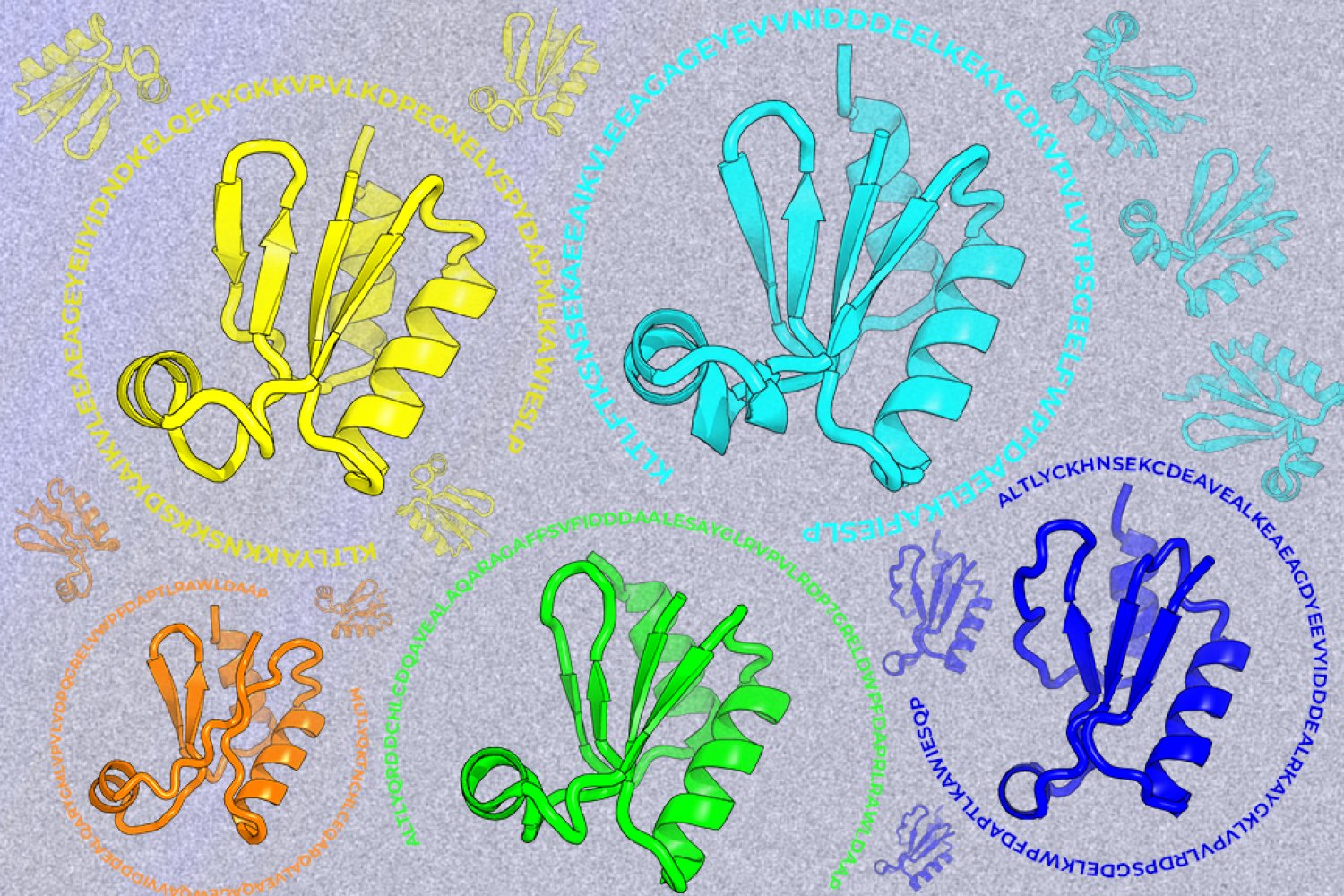
A new machine-learning framework aims to improve the success rate of computational protein design while moving away from results that reproduce sequences found in nature.