Skip to content

PAUSE: A Privacy-Preserving Self-Reflection Tool for AI-Associated Cognitive Offloading

Jul 2026 · 0 citations · 40 references
Computer Science

TL;DR

PAUSE (Patterns of AI Use: Self-Examination), a privacy-by-design web tool that occupies a different niche from these, is described, a lightweight, non-diagnostic reflection aid for private individual use.

Abstract

Cognitive offloading is the use of external aids, such as notes, calculators, or search engines, to reduce mental effort. Large language models (LLMs) extend this to thinking itself, and by AI-associated cognitive offloading, I mean the pattern where a person routinely substitutes LLM output for their own reasoning, idea generation, learning, or communication. Recent empirical work reports associations between some patterns of LLM use and changes in critical thinking effort, neural engagement during assisted tasks, creative diversity, learning behaviour, and social dependence. Validated instruments for AI reliance, dependence, and literacy have begun to appear. I describe PAUSE (Patterns of AI Use: Self-Examination), a privacy-by-design web tool (link: https://anondo1969.github.io/pause) that occupies a different niche from these. It is a lightweight, non-diagnostic reflection aid for private individual use. PAUSE is organised around how a person's own LLM use may relate to cognitive offloading across four everyday domains ('reasoning&critical thinking','creativity&originality','research&learning', and'social&communicative capacity'). It delivers a short, free, no-login self-check, scores it entirely in the browser, and returns descriptive, domain-aware reflections. The self-check pairs reverse-scored behavioural items with a claim-evaluation reasoning probe, an alternative-uses creativity probe, and a small retrospective before-and-after block. PAUSE does not assume that AI use is harmful. It only addresses where AI substitutes for effort a person may want to preserve. The application is privacy-preserving by design: scoring is deterministic and runs client-side, no personal data is required, nothing is transmitted or stored beyond the browser session, and no LLM is involved in production. PAUSE is a self-reflection tool. It is not a validated psychological instrument.


View source

Similar papers

#computer vision Review Sep 2017

Agile Software Development Methods: Review and Analysis

This publication proposes a definition and a classification of agile software development approaches and analyses ten software development methods that can be characterized as being "agile" against the defined criterion.

P. Abrahamsson, O. Salo, Jussi Ronkainen et al. · 727 citations · ⚡54
#computer vision Jun 2008

The impact of agile practices on communication in software development

The study shows that agile practices improve both informal and formal communication, but indicates that, in larger development situations involving multiple external stakeholders, a mismatch of adequate communication mechanisms can sometimes even hinder the communication.

M. Pikkarainen, Jukka Haikara, O. Salo et al. · 401 citations · ⚡48
#machine learning Review Open access Oct 2014

Software development in startup companies: A systematic mapping study

The results indicate that software engineering work practices are chosen opportunistically, adapted and configured to provide value under the constrains imposed by the startup context.

Nicolò Paternoster, Carmine Giardino, M. Unterkalmsteiner et al. · 394 citations · ⚡54

Related blog posts

Microsoft Research Blog Nov 5, 2026

Formally verifying agent-written full-stack web apps with PDD Kit

AI agents can generate code at a scale that’s hard for humans to review line-by-line. PDD Kit helps ensure the code is doing what the developer intended by creating formal specifications and testing against them. It converts developer intent into a Verus specification, proves AI-generated code meets it for every input, and uses tests where proofs aren't practical. Developers review intent, not every line. The post Formally verifying agent-written full-stack web apps with PDD Kit appeared first o…

MIT News · Artificial Intelligence Oct 28, 2026

Making machines that can listen

Professor Paris Smaragdis develops computers with superhuman hearing for applications like speech recognition, music understanding, and environmental monitoring.

MIT News · Artificial Intelligence Oct 23, 2026

Reinforcing the value of human understanding at MIT

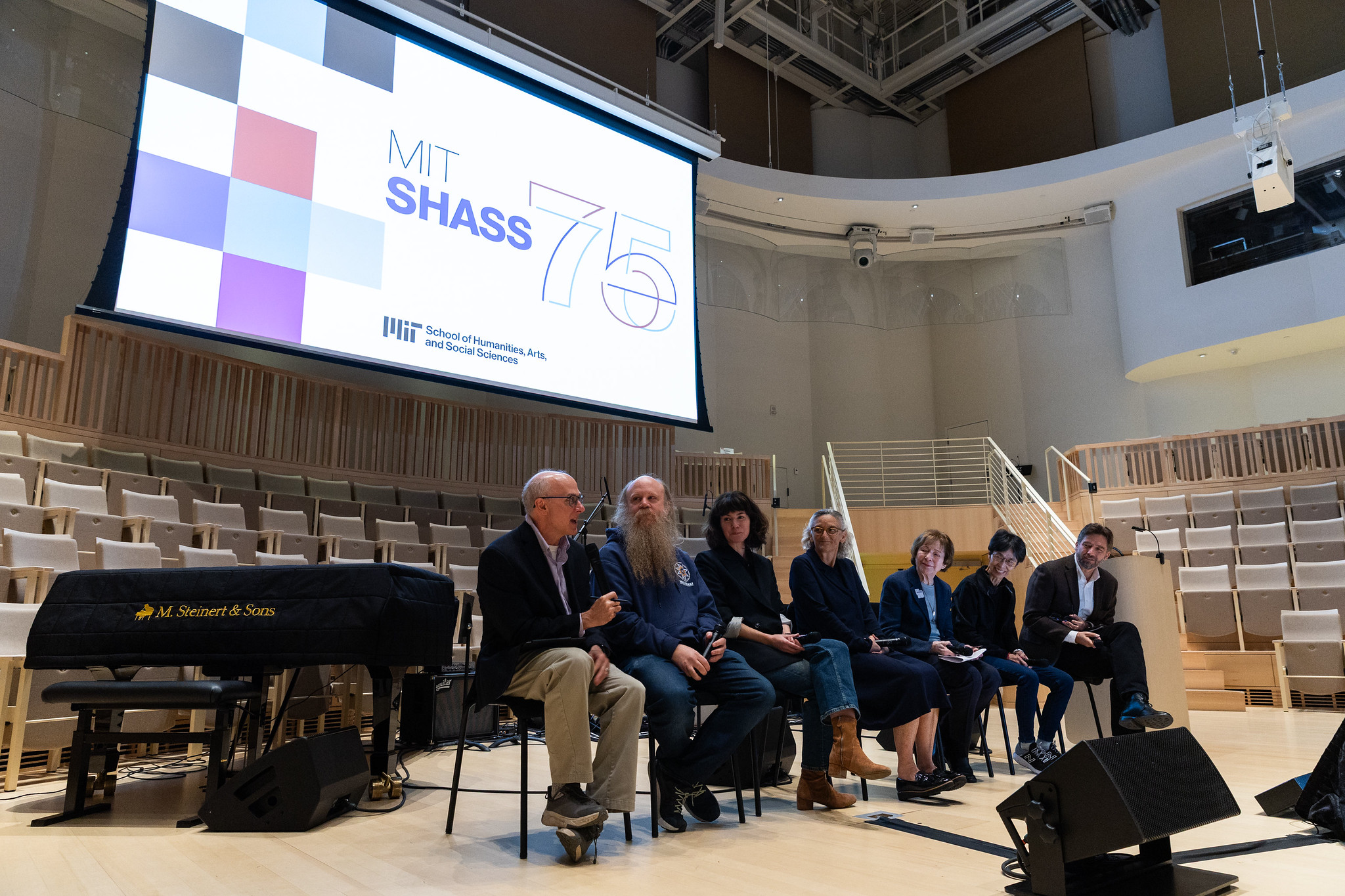
During the School of Humanities, Arts, and Social Sciences’ 75th Anniversary Symposium, President Sally Kornbluth said “MIT has never needed your particular insight and guidance more than we do now.”

We use cookies to run the site and, with your consent, for analytics and to show ads. See our Cookie Policy.