Financial Distress and Bankruptcy PredictionImbalanced Data Classification Techniques
TL;DR
GN-MTNet, a novel financial fraud detection framework that synthesizes graph neural networks with multi-task learning, is introduced, furnishing essential technical underpinnings for the development of enterprise risk profiling and the enhancement of intelligent financial auditing systems.
Abstract
Contemporary financial regulation and risk identification are increasingly challenged by the escalating intricacy of inter-firm relational architectures, the diversification of financial conduct, and the multidimensionality of data sources. Conventional fraud detection methodologies, predominantly grounded in single-task paradigms and static heuristic indicators, are insufficient to holistically capture the complex manifestations of fraudulent corporate behavior, encompassing both financial anomalies and behavioral aberrations. To surmount these limitations, this study introduces GN-MTNet, a novel financial fraud detection framework that synthesizes graph neural networks with multi-task learning. The proposed architecture constructs enterprise relational graphs, employs graph-based neural encoders to extract high-order structural representations, and concurrently addresses three core tasks: fraud identification, anomaly quantification, and behavioral deviation classification. A unified, shared multi-task learning framework is devised to encapsulate firm-level irregularities from diverse analytical perspectives, thereby facilitating the synergistic optimization of risk detection and pattern discernment. Empirical evaluations conducted on two benchmark datasets—the Financial Statement Fraud Dataset (FSFD) and OpenCorporates + AMiner Dataset (OAD)—demonstrate that GN-MTNet markedly surpasses existing approaches in terms of classification precision, anomaly reconstruction capability, and multi-task synergy. Ablation studies further substantiate the critical contributions of graph-based modeling, the task-sharing mechanism, and the composite loss formulation to the model’s holistic efficacy. Collectively, this methodology offers a more nuanced and intelligent paradigm for financial fraud detection, furnishing essential technical underpinnings for the development of enterprise risk profiling and the enhancement of intelligent financial auditing systems.
The complexity and volume of transactional data has expanded due to the rapid growth of digital financial services, which has opened the door to new types of sophisticated fraud. The ever-changing nature of fraud trends and the complexity of entity interactions make rule-based or transactional fraud detection systems i...
N. Yatoo, M. Jishnu, Josiah John et al.· ITM Web of Conferences· 0 citations
Financial fraud in credit card and bank transactions remains a significant challenge, as traditional detection systems often struggle to keep pace with evolving fraudulent strategies. This paper addresses the problem by formulating fraud detection as a supervised link prediction task in transaction networks, with the c...
M. Faruq, Md. Al Amin Khan, Farhan Shakil et al.· IEEE Open Journal of the Com...· 1 citation
Financial fraud poses a persistent and escalating threat to global economic systems, causing hundreds of billions of dollars in annual losses and severely undermining trust in digital financial infrastructure. Traditional rule-based and classical statistical detection methods have proven increasingly inadequate against...
Gurvinder Pal Singh, Vikas, Meghana Lokhande et al.· International Conference on...· 0 citations
This work presents FinFraudBench, a heterogeneous graph benchmark for financial fraud detection, and establishes a standardized evaluation protocol covering both ranking and imbalance-sensitive classification metrics, and evaluates representative baselines.
Yixuan Chen, Hongyu Zhan, Jie Sheng et al.· 0 citations
This research focuses on the development of a hybrid neuro-symbolic system for fraud detection in rapidly expanding digital financial systems.
A bipartite customer-merchant graph is constructed from the Nigerian Financial Transactions dataset, and a 3-layer Graph Attention Network (FraudGAT) is used to model...
Neeraj S. Kumar, Idhikash J., J. S et al.· Frontiers in Artificial Inte...· 0 citations
As financial systems grow more complex and interconnected, traditional fraud detection methods struggle to keep pace with increasingly sophisticated attacks. Graph-based approaches have been explored with a focus on cross-user interactions. In this paper, we propose a graph-based approach that focuses on individual car...
Roya Amiri, Sardar F. Jaf· International Conference on...· 0 citations
Related blog posts
MIT News · Artificial Intelligence· news.mit.eduJul 15, 2026
Assistant Professor Pat Pataranutaporn describes a new interface that lets everyday users glimpse inside an AI's neural network before their chatbot ever says a word.
Microsoft Research Blog· microsoft.comJul 13, 2026
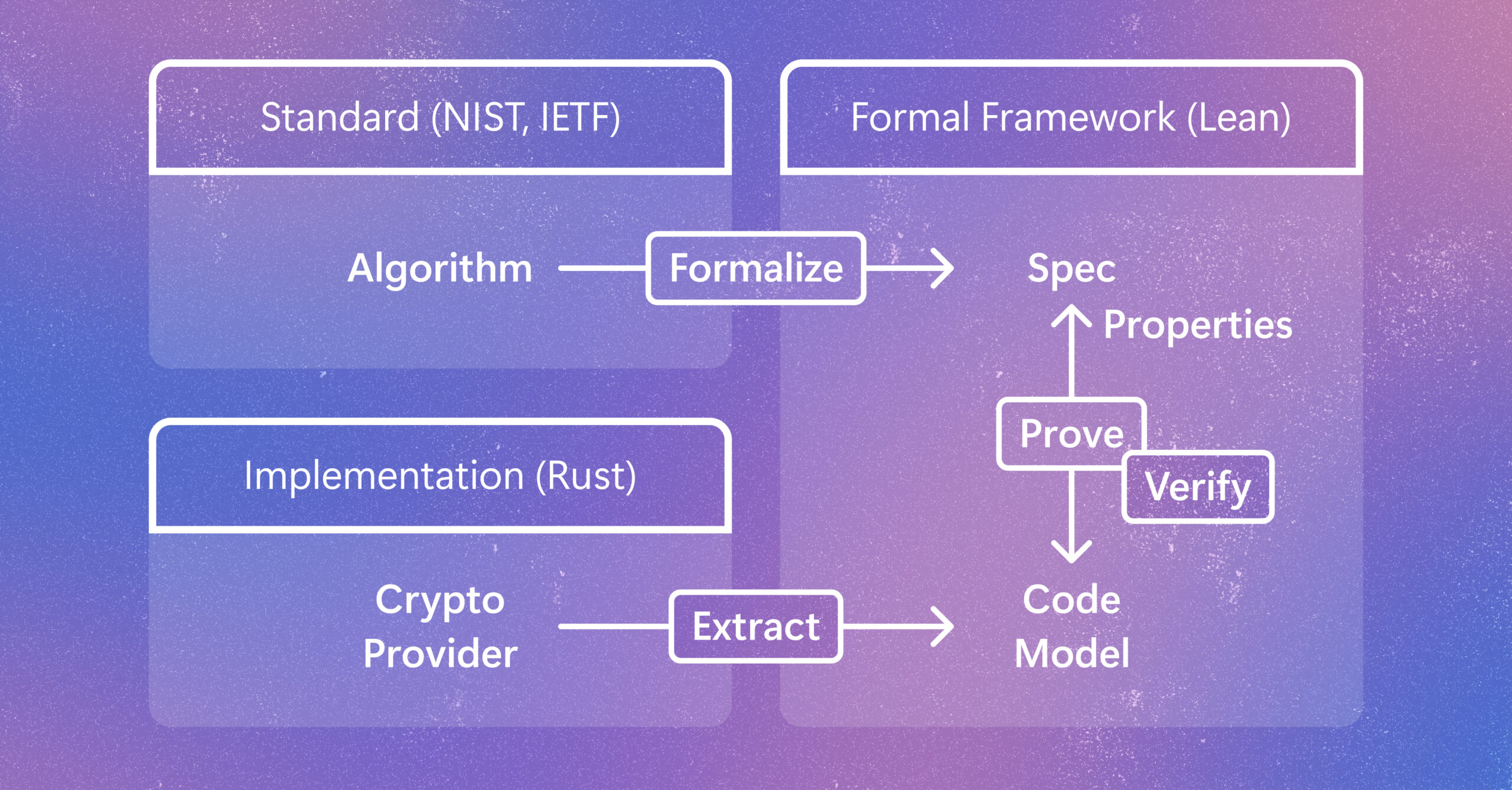
Cryptographic code supports vital protections in modern computing systems. Learn how a new method helps verify code as developers write it while preserving speed and adaptability as it gets implemented and evolves. The post Verifying Rust cryptography in SymCrypt, from standards to code appeared first on Microsoft Research.
MIT News · Artificial Intelligence· news.mit.eduJul 6, 2026
PhD student Rachel Sava, winner of the Envisioning the Future of Computing Prize, explores transformative improvements and dystopian risks of neural technology.