Skip to content
#federated learning Open access

Divide-and-Conquer Decomposition Strategies for Real-Time Artificial Intelligence Decision Systems: A Comparative Survey

Sep 2026 · International Journal of Emerging Trends in Engineering and Development
Adversarial Robustness in Machine Learning

Abstract

Abstract—Real-time artificial intelligence (AI) decision systems must resolve complex inputs — a video frame, a network flow, a multi-agent traffic scene — within a bounded time budget. A recurring, if rarely named, strategy for meeting this budget is the classical divide-and-conquer (D&C) paradigm: partition the problem into smaller, largely independent subproblems, solve each subproblem locally, and combine the partial results into a final decision. This survey makes that pattern explicit. We first formalize the D&C template (divide, solve, combine) and relate it to real-time scheduling theory, RTOS design, and kernel-level execution protection, which together bound the time cost of each stage. We then read nine deployed or proposed real-time AI systems — spanning modular inference pipelines, classification tasks, graph matching, transportation, energy markets, trajectory prediction, bot detection, federated intrusion detection, and honeypot-based defense — through this lens, and build a taxonomy of how each system realizes the divide step, the solve step, and the combine step under its own timing constraints. We further discuss adversarial robustness and low-code/no-code governance as cross-cutting concerns for decomposed pipelines. We conclude that most deployed real-time AI decision systems already implement an implicit divide-and-conquer structure, and that making this structure explicit clarifies where scheduling guarantees, security boundaries, and combine-step errors each need to be independently verified. Index Terms—Divide-and-conquer, real-time systems, artificial intelligence, decomposition, distributed decision-making, federated learning, scheduling.
View source

Similar papers

#machine learning Review Open access Oct 2014

Software development in startup companies: A systematic mapping study

The results indicate that software engineering work practices are chosen opportunistically, adapted and configured to provide value under the constrains imposed by the startup context.

Nicolò Paternoster, Carmine Giardino, M. Unterkalmsteiner et al. · 394 citations · ⚡54
#machine learning Review Open access Jun 2014

Why Early-Stage Software Startups Fail: A Behavioral Framework

This state-of-practice investigation was performed using a literature review followed by a multiple-case study approach and presents how inconsistency between managerial strategies and execution can lead to failure by means of a behavioral framework.

Carmine Giardino, Xiaofeng Wang, P. Abrahamsson · 175 citations · ⚡19
#machine learning Review Open access Oct 2016

“Failures” to be celebrated: an analysis of major pivots of software startups

This study conducts a case survey study based on the secondary data of the major pivots happened in 49 software startups, and demonstrates that customer need pivot is the most common among all pivot types.

Sohaib Shahid Bajwa, Xiaofeng Wang, Anh Nguyen-Duc et al. · 127 citations · ⚡15
#machine learning Review Open access May 2016

Key Challenges in Software Startups Across Life Cycle Stages

It is found that what perceived as biggest challenges by software startups do vary across different life cycle stages, even though its significance decreases when the learning focuses of the startups move from problem to solution and their products mature.

Xiaofeng Wang, Henry Edison, Sohaib Shahid Bajwa et al. · 62 citations · ⚡6

Related blog posts

Microsoft Research Blog Sep 30, 2026

Forecasting space weather risks on power grids

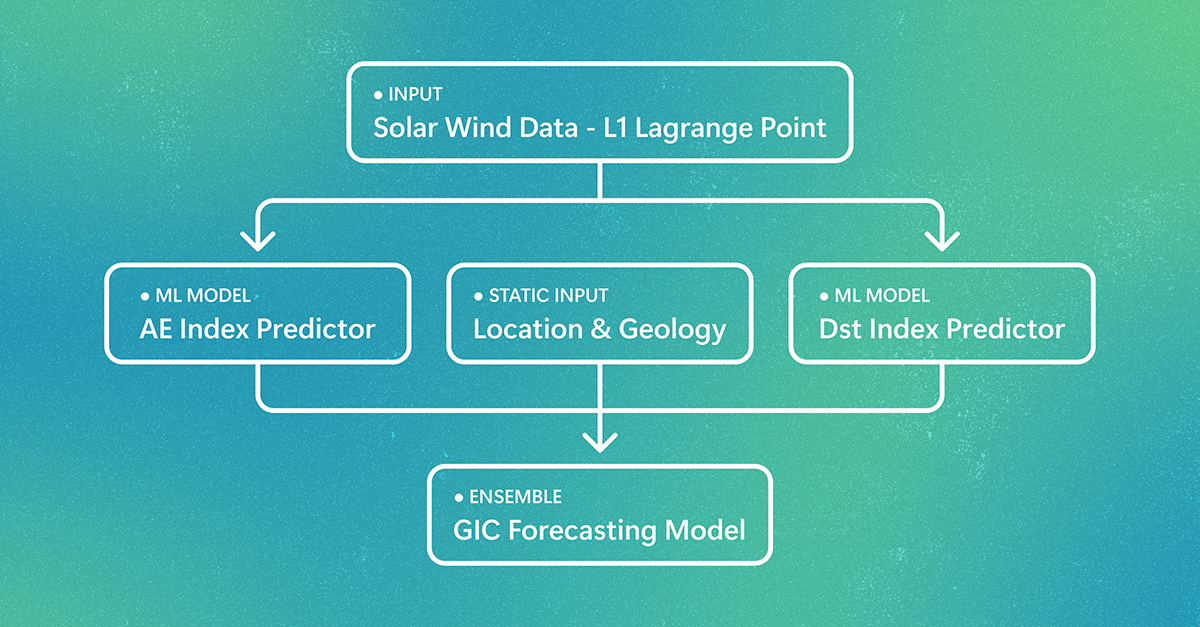
Extreme space-weather events can damage power systems on Earth and degrade GPS accuracy and satellite operations. A new machine learning system can predict where damage is likely to occur 30-60 minutes before a storm arrives. The post Forecasting space weather risks on power grids appeared first on Microsoft Research.

We use cookies to run the site and, with your consent, for analytics and to show ads. See our Cookie Policy.