This paper explores how to apply formal verification to artificial organs, stage by stage, and what each technique actually guarantees about the device.

Abstract
An artificial organ carries failure consequences on the scale of an aircraft or a reactor, but the software driving it is rarely held to the same standard. Teams building them rely on testing, which only reaches the failure modes someone thought of in advance. In a pump or controller that runs inside a patient for months, the dangerous cases are the ones nobody anticipated. Formal verification closes that gap. Applied to the device's software, it proves the code meets its specification for every execution that specification allows, and where a proof fails, it returns the exact input sequence that breaks it. The same methods already protect rail, aviation, and nuclear control systems, and they extend the IEC 62304 lifecycle that a manufacturer already follows rather than replacing it. In this paper, we explore how to apply formal verification to artificial organs, stage by stage, and what each technique actually guarantees about the device.

Over the last few years, cyber-physical systems (CPSs) have come to play a central role in critical infrastructures, manufacturing, transport, and robotics. As a consequence, their lack of security increasingly affects the physical world, possibly causing material damage, environmental harm, and even loss of life. This...
Ivan Cibrario Bertolotti, Flavio Lombardi· Future Internet· 0 citations
Modern mission-critical ground vehicle systems must adapt to rapidly evolving threats, deploying changes in months or days while maintaining reliable and safe operation. Historic manual development and testing methods cannot keep pace without compromising safety assurances. Continuous Integration and Continuous Deploym...
Michael Lingg, Howard Paul, Brian Schulte et al.· SAE technical paper series· 0 citations
It is shown that a general-purpose large reasoning model, with no task-specific training and only the information available to an operator, manages abnormal situations at run time through a bounded, programmatically verified action interface.
Testing and validating railway interlocking systems present significant challenges due to the need for communication with both trackside equipment and Train Control System (TCS)s, which typically involve complex subsystems and extensive hardware. This paper introduces a simulation-based software platform designed to em...
Cece Ahmad, E. Yossy· International Conferences on...· 0 citations
Related blog posts
Microsoft Research Blog· microsoft.comOct 30, 2026
Evaluating Microsoft Copilot at enterprise scale requires test data that captures the full complexity of real organizations, yet real enterprise data contains sensitive information that cannot be used for evaluation under any circumstances. The post From synthetic enterprise data evaluations to real Microsoft Copilot AI confidence appeared first on Microsoft Research.
Microsoft Research Blog· microsoft.comOct 29, 2026
Host Sowbhagya Suresh shares some of the latest news and cutting-edge research from across Microsoft—from understanding the challenges facing coding agents to uncovering how people use AI at work and improving extended-range weather forecasting. The post Microsoft Research Focus – Edition #97 appeared first on Microsoft Research.
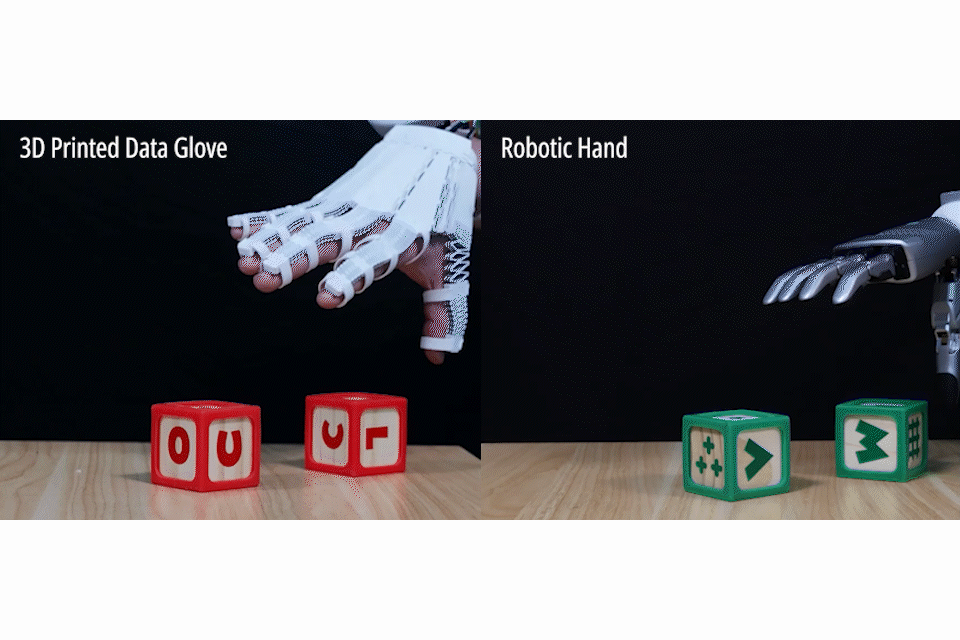
“X-Hinges” helps design and 3D print items like lamps and gloves with an interactive twist: automatically embedded sensors that perceive and adaptively respond to human contact.
We use cookies to run the site and, with your consent, for analytics and to show ads.
See our Cookie Policy.