Machine unlearning aims to remove specific knowledge from a trained large language model (LLM) without retraining from scratch. Existing methods modify model weights via gradient ascent and its advances. While effective on certain benchmarks, these weight-based approaches exhibit a sharp forget-utility trade-off, where stronger forgetting of target knowledge can degrade model utility, and unlearned knowledge may reappear under post-unlearning fine-tuning or prompt attacks. We propose ARIA (autoencoder-gated inference-time unlearning), a test-time unlearning method that leaves model weights intact and gates access to unwanted knowledge only when generation enters a forget-related state. ARIA uses sparse autoencoder (SAE) latents to train a lightweight linear detector, then applies an interpretable intervention on triggered states with negligible test-time overhead. Empirical evaluations on TOFU, R-TOFU, and WMDP show that ARIA improves the forget-retain trade-off over weight-based baselines across both a thinking model (DeepSeek-R1-Distilled-Qwen-1.5B) and an instruction model (Gemma-3-1B-it), e.g., reducing WMDP-cyber forget-set accuracy significantly while keeping MMLU within 1% of the pre-unlearning model. We further introduce three post-unlearning adversarial attacks targeting weight-space and decoding-space recovery, and find that ARIA remains robust under all three, with forgetting changing by less than 1% under attack. A feature-level case study leveraging the interpretability of ARIA suggests that some retain degradation may reflect response styles underlying the unlearning data rather than leakage of the targeted knowledge itself, highlighting a potential source of bias in unlearning task construction.
This publication proposes a definition and a classification of agile software development approaches and analyses ten software development methods that can be characterized as being "agile" against the defined criterion.
P. Abrahamsson, O. Salo, Jussi Ronkainen et al.· arXiv.org· 727 citations· ⚡54
The results indicate that software engineering work practices are chosen opportunistically, adapted and configured to provide value under the constrains imposed by the startup context.
Nicolò Paternoster, Carmine Giardino, M. Unterkalmsteiner et al.· Information and Software Tec...· 394 citations· ⚡54
The possibility of inferring high-dimensional data inference in a model that consists of a prior and an auxiliary differentiable constraint given some additional information is considered, thereby allowing a range of potential applications in adapting models to new domains and tasks.
Alexandros Graikos, Esmeralda S. Whitammer, N. Jojic et al.· Neural Information Processin...· 316 citations· ⚡15
It is proved that any global minimizer of the trajectory balance objective can define a policy that samples exactly from the target distribution, and empirically demonstrate the benefits of the trajectories balance objective for GFlowNet convergence, diversity of generated samples, and robustness to long action sequences and large action spaces.
Esmeralda S. Whitammer, Moksh Jain, Emmanuel Bengio et al.· Neural Information Processin...· 302 citations· ⚡60
Consequences of happiness and unhappiness that are beneficial and detrimental for developers' mental well-being, the software development process, and the produced artifacts are found.
D. Graziotin, Fabian Fagerholm, Xiaofeng Wang et al.· Journal of Systems and Softw...· 236 citations· ⚡13
The Mobile-D approach is briefly outlined here and the experiences gained from four case studies are discussed, which helped develop an agile development approach for mobile application development.
P. Abrahamsson, Antti Hanhineva, H. Hulkko et al.· Conference on Object-Oriente...· 225 citations· ⚡18
Related blog posts
MIT News · Artificial Intelligence· news.mit.eduAug 27, 2026
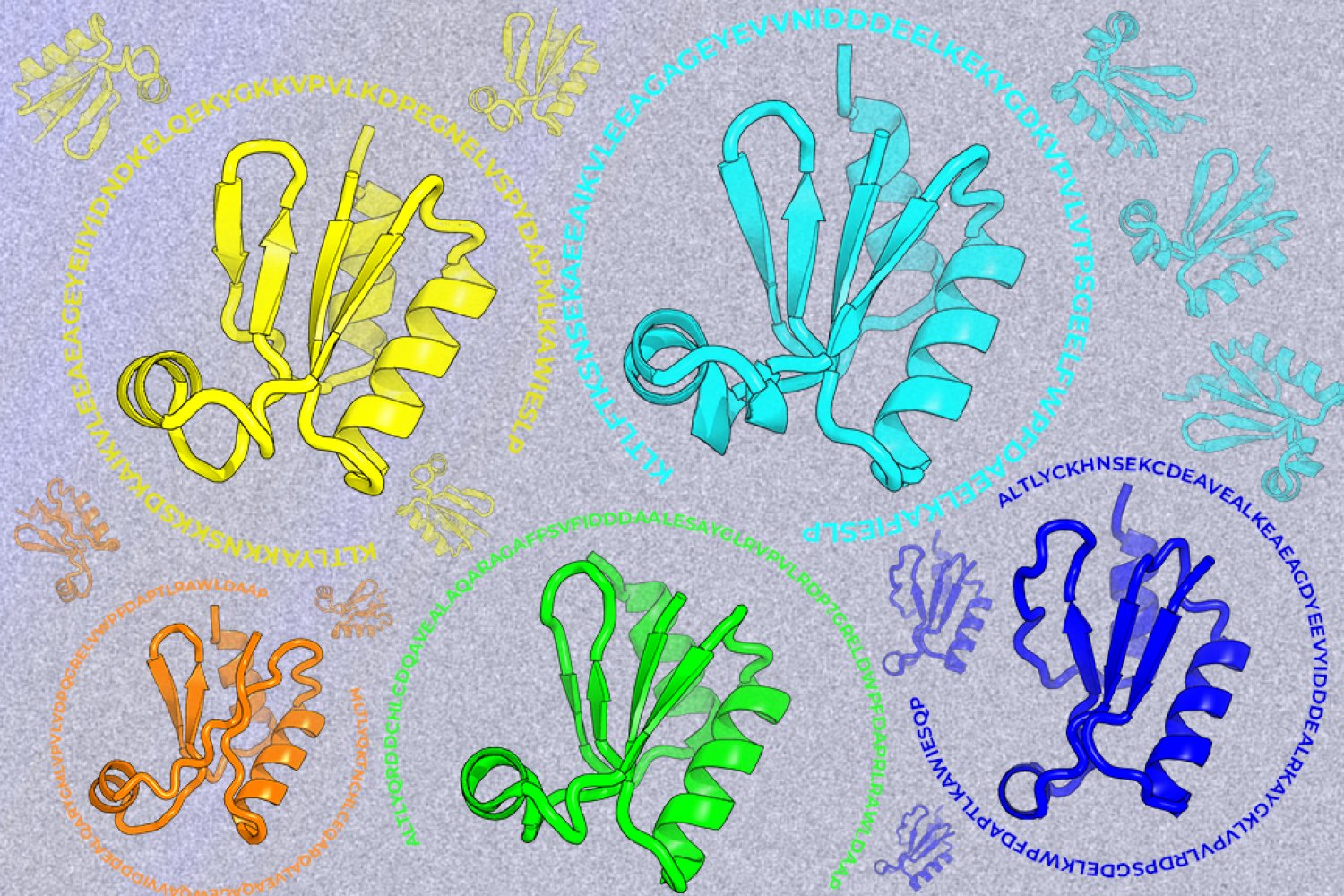
A new machine-learning framework aims to improve the success rate of computational protein design while moving away from results that reproduce sequences found in nature.