This paper presents a novel sparsity-driven continual learning framework that operates in two stages: it first identifies a sparse, task-critical parameter mask via a sparsity-inducing objective, then performs mask-constrained fine-tuning by only optimizing parameters selected by the mask.
Abstract
Continual learning must balance the learning of new knowledge with the retention of previously learned knowledge to incrementally learn tasks from a data stream without catastrophic forgetting. While leveraging pretrained models has significantly advanced continual learning, existing methods exhibit a scalability bottleneck when trained sequentially on many tasks, suffering from performance degradation due to inter-task interference and loss of plasticity. Inspired by evidence that sparse fine-tuning achieves performance comparable to full fine-tuning, this paper presents a novel sparsity-driven continual learning framework. Our continual learning method, termed CLARE, operates in two stages: it first identifies a sparse, task-critical parameter mask via a sparsity-inducing objective, then performs mask-constrained fine-tuning by only optimizing parameters selected by the mask. This two-stage sparse adapter mechanism enables all tasks to be accumulated within a shared adapter space while reducing destructive interference across tasks. Extensive experiments demonstrate the scalability of CLARE. On the long task-sequence benchmark Omnibenchmark-1k, CLARE outperforms strong baselines in final accuracy by a large margin, e.g, improving EASE by 4.64% and 13.34% after learning 100 tasks, respectively.
Continual learning requires a model to retain knowledge of old tasks while sequentially learning new tasks, but standard neural networks typically suffer from catastrophic forgetting in this setting. To address this challenge, a new method is proposed based on a learnable knowledge transfer network. Specifically, a tra...
Han Ju· International Conference on...· 0 citations
Parameter-efficient adaptation enables continual learners to acquire task-specific knowledge through compact model updates while maintaining strong within-task performance. However, class-incremental inference requires each input to be classified among all classes seen so far without access to its task identity. For le...
Long-Huan Xu, Zhi-Peng Zhou, Wei-Liang Ji et al.· 0 citations
It is demonstrated that pre-training can induce an implicit bias with a clear statistical advantage over random initialization, enabling feature learning from scarce fine-tuning data.
Continual learning (CL) aims to incrementally acquire knowledge from sequential data while avoiding catastrophic forgetting. Recently, prompt tuning has attracted increasing attention as an efficient approach for adapting pre-trained models to CL tasks. However, existing prompt design paradigms commonly suffer from ret...
Yun-Fei Zhang, Wen Wen, Tie-Liang Gong et al.· 0 citations
This work reformulates LoRA-based CL as a consistent feature mapping problem that mimics the behavior of the joint-training upper bound, wherein a unified adaptation parameter matrix is learned to simultaneously capture the input-output relationships established by all task-specific LoRAs.
Yue Lu, Shi-Zhou Zhang, De Cheng et al.· IEEE Transactions on Pattern...· 0 citations
Exploring how generative AI could make machine vision more accessible to businesses. The post GenEye in a Box: Making Machine Vision Something You Can Just Ask For appeared first on GPT-Lab.
Microsoft Research Blog· microsoft.comAug 11, 2026
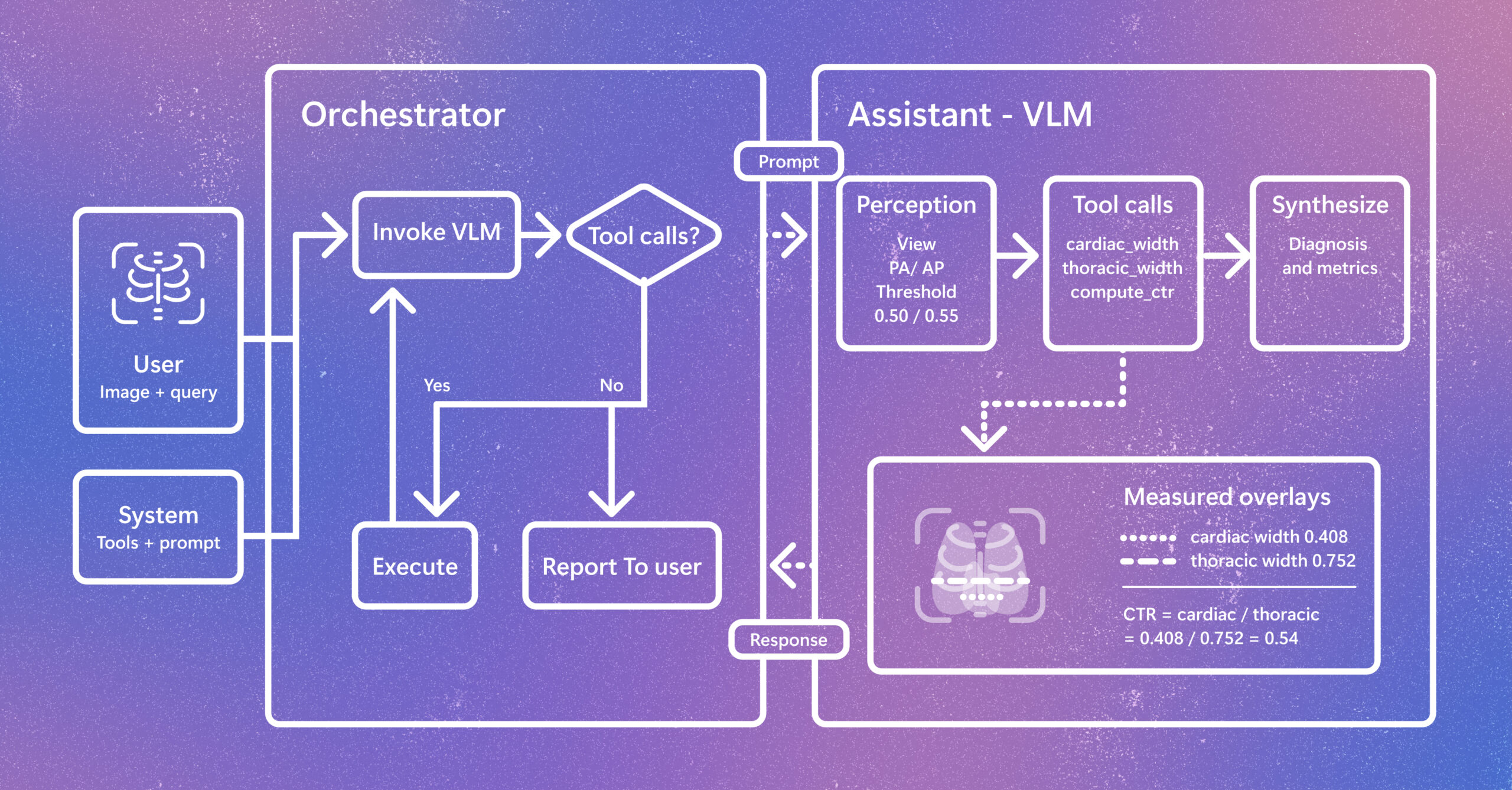
Radiology AI is evolving beyond report generation. CARE-X explores a unified approach that combines flexible reasoning, calibrated predictions, and measurement-based tools for chest X-ray interpretation. The post Introducing CARE-X: Towards Clinically Useful Radiology VLMs with Auxiliary Supervision, Reward-Aligned Learning, and Tool-Augmented Measurement appeared first on Microsoft Research.
Students in MIT’s Concourse program delve deeply into the human condition, debate challenging questions, and learn to develop judgment about issues that can’t be quantified.
We use cookies to run the site and, with your consent, for analytics and to show ads.
See our Cookie Policy.