Skip to content

Evaluating the NIST Bugs Framework Against CWE as a Successor for Automated Vulnerability Classification

Sep 2026 · 0 citations · 81 references
Computer Science

TL;DR

The findings support the claim that BF is a more structured and automation-friendly framework than CWE, and exploration reveals specific gaps in BF, including under-specified guidance on attributes.

Abstract

Vulnerability classification based on root cause weaknesses is essential for numerous cybersecurity activities, where the Common Weakness Enumeration (CWE) serves as a public repository of such flaws. However, its overlapping entries create a non-orthogonal structure. The result is the same vulnerability being mapped to multiple weaknesses, complicating Root Cause Analysis (RCA) and triage. To address this, NIST Special Publication 800-231 introduces the Bugs Framework (BF), which organizes vulnerabilities intotriples and links such triples into a causal chain, so that a vulnerability carries its root cause and its sink together instead of a single terminal label. To date, however, BF has been specified but not evaluated regarding its performance against the challenges to automated classification. The evidence required for adoption has not been investigated empirically. We evaluate BF as a classification target and a complement to CWE using a systematically screened corpus of automated Common Vulnerabilities and Exposures (CVEs) linked to CWE research. We assess the reproducibility of CVE-to-BF classification through two evaluations. The first is qualitative: an anonymized inter-rater study in which 2 subject-matter experts (SMEs) independently mapped 13 CVEs onto the four BF axes. Annotators showed strong agreement on the cause and operation axes, while the attribute axis indicated fair agreement. We also tested our automated framework across two large language model (LLM) deployments under different budgets for reproducibility analysis. Despite limitations, such as evidence availability and the absence of retrievable fix commits for closed-source software, our findings support the claim that BF is a more structured and automation-friendly framework than CWE. Our exploration reveals specific gaps in BF, including under-specified guidance on attributes.

View source

Similar papers

#artificial intelligence Preprint Sep 2026

Vulnerability Localization Benchmark: Measuring Agentic Security Analysis at Repository Scale

VLoc Benchmark results establish vulnerability localization as a distinct repository-scale capability and provide a setting for studying both how security agents search for vulnerable code and when they should refrain from reporting it.

Aman Priyanshu, Supriti Vijay, Kimia Majd et al. · 1 citation · ⚡1
Conference Sep 2026

VISOR: Automated Vulnerability Assessment of Software Repositories

Modern software systems increasingly depend on open-source and commercial third-party components, which can expose them to cybersecurity risks present within these external dependencies. The vulnerability assessment of such components remains predominantly manual, creating bottlenecks that slow remediation efforts. Thi...

Negar Emami, Christian Göttel, Shuai Guo et al. · 0 citations
Review Aug 2026

From Verdict to Diagnosis: Attributable Security Review of Pull Requests

PRGuard is introduced, an attributable PR security reviewer that constructs candidate vulnerabilities and validates their premises against repository evidence using deterministic, non-executing tools and bounded retrieval and uncovers twelve previously undisclosed, proof-of-concept-backed vulnerabilities.

Zhuo Chen, Bo-Yang Wang, Xi-Yue Zhang et al. · 1 citation
Review Open access Oct 2026

Benchmarking Generative AI Models for Cybersecurity Vulnerability Identification Using 50 Curated Vulnerability Cases: An Exploratory Single-Pass Comparative Study of ChatGPT, Gemini, and Claude

Although ChatGPT obtained the highest descriptive benchmark scores, inferential statistical analysis indicated no statistically significant performance differences among the evaluated models, suggesting broadly comparable vulnerability identification across the three LLMs under the exploratory, single-iteration benchma...

Emanuel Dungon, Mark Jan Irog, Hans Luther Salva et al. · 0 citations
#artificial intelligence Review Oct 2026

VulValidate: Auditing Function-Level Vulnerability Labels with Executable Evidence

VulValidate is presented, a framework that uses LLM agents to coordinate dynamic analysis tools and construct vulnerability-triggering experiments from runtime feedback that reconstructs vulnerable and fixed revisions, selects suitable tools and execution paths, refines triggering inputs, and compares runtime behavior...

Lei-Zhen Zhang, Sheng Chen · 0 citations
Book Open access Oct 2026

Making Vulnerability Proof-of-Concepts Trustworthy and Usable: From Empirical Diagnosis to Operational Validation

Vulnerability Proof-of-Concepts (PoCs) are the executable evidence that a disclosed vulnerability is real and reachable, the artifact defenders use to suppress false positives, verify patches, delimit affected versions, and judge exploitability. Their value hinges not on whether a PoC exists but on whether it is usable...

Wen-Jing Dang · 0 citations

Related blog posts

Microsoft Research Blog Nov 5, 2026

Formally verifying agent-written full-stack web apps with PDD Kit

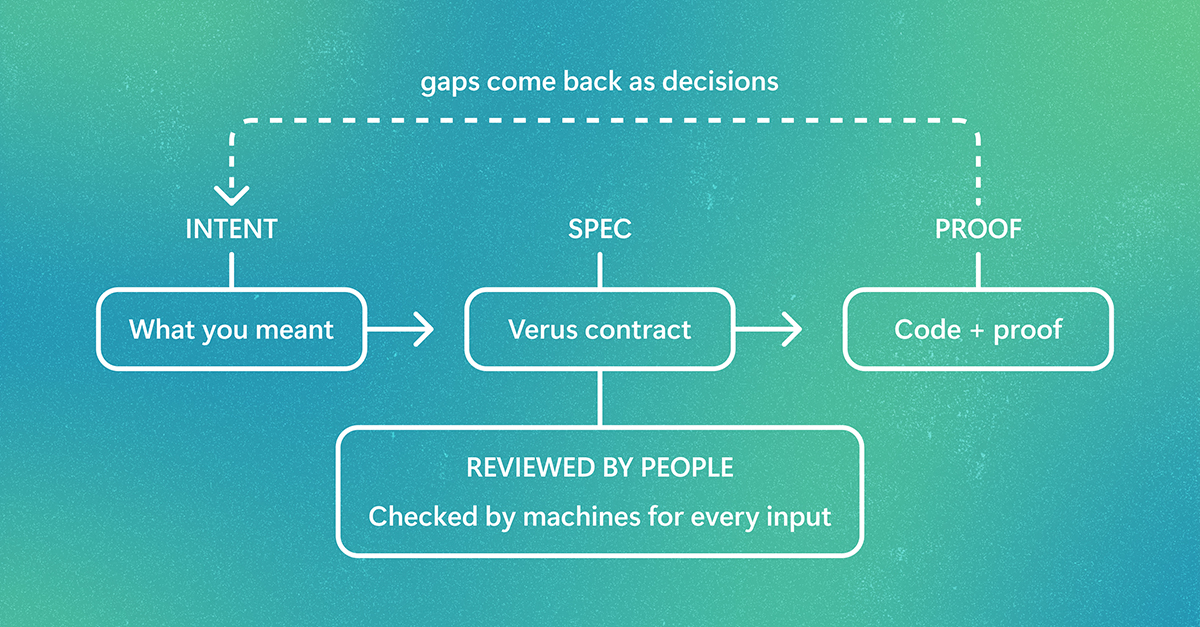
AI agents can generate code at a scale that’s hard for humans to review line-by-line. PDD Kit helps ensure the code is doing what the developer intended by creating formal specifications and testing against them. It converts developer intent into a Verus specification, proves AI-generated code meets it for every input, and uses tests where proofs aren't practical. Developers review intent, not every line. The post Formally verifying agent-written full-stack web apps with PDD Kit appeared first o…

GPT-Lab Nov 3, 2026

Sovereignty Is the Option to Leave

Is your company’s AI sovereign? A practical guide for CIOs on AI vendor lock-in, EU Data Act switching, cloud sovereignty, and testing your exit plan before you need it. The post Sovereignty Is the Option to Leave appeared first on GPT-Lab.

Microsoft Research Blog Oct 30, 2026

From synthetic enterprise data evaluations to real Microsoft Copilot AI confidence

Evaluating Microsoft Copilot at enterprise scale requires test data that captures the full complexity of real organizations, yet real enterprise data contains sensitive information that cannot be used for evaluation under any circumstances. The post From synthetic enterprise data evaluations to real Microsoft Copilot AI confidence appeared first on Microsoft Research.

We use cookies to run the site and, with your consent, for analytics and to show ads. See our Cookie Policy.