Skip to content

TuiML: Machine Learning for AI Agents

Sep 2026 · 0 citations · 17 references
Computer Science

TL;DR

TuiML is a self-contained machine-learning library built for AI agents, with native algorithms across supervised, unsupervised, time-series, data handling, tuning, and evaluation tasks, and Benchmarks show TuiML remains predictively competitive with scikit-learn and Weka.

Abstract

Machine-learning libraries such as Weka and scikit-learn were designed for human programmers. Language-model agents now use these same libraries by recalling APIs from memory and writing code, an approach that hides what a library offers, delays errors until runtime, and loses experimental state between turns. We present TuiML, a self-contained machine-learning library built for AI agents, with native algorithms across supervised, unsupervised, time-series, data handling, tuning, and evaluation tasks. Every component describes itself through machine-readable metadata and parameter schemas, so an agent can search the library, inspect components, compose validated workflows, and register new ones that become discoverable in turn. Every call is validated, seeded, and traced, and sessions export as runnable notebooks, making experiments reproducible by construction. One specification layer drives the Model Context Protocol (MCP), agent-framework adapters, a Python API, a CLI, and local model serving, while data and models never leave the machine. Benchmarks show TuiML remains predictively competitive with scikit-learn and Weka. While looking like a conventional library to a human user, TuiML is designed for agents first, allowing them to read, extend, and operate machine learning autonomously. TuiML is open source, with documentation at https://tuiml.ai.

View source

Similar papers

#artificial intelligence Preprint Sep 2026

Design Docs Are All You Need: An AI-native Machine-Learning Performance Tool

Machine-learning performance modeling is a uniquely hostile terrain for long-lived software: the assumptions baked into today's abstractions are invalidated by tomorrow's models and systems, forcing perpetual refactoring of performance-modeling frameworks. Meanwhile, AI coding agents have become fast and capable enough...

Samuel Kushnir, Kimia Noorbakhsh, Kavya Sreedhar et al. · 0 citations
Preprint Aug 2026

GitSkills: A Dataset of Agent Skills on GitHub

GitSkills is presented, a dataset of 3,797,117 $\mathrm{SKILL.md}$ files collected from 282,200 public repositories in July 2026, which retains every file occurrence with its repository, path, and content hash.

Giuseppe Destefanis, Daniel Graziotin, Matteo Vaccargiu et al. · 0 citations
#artificial intelligence Preprint Sep 2026

RECLAIM: Can Agents Reproduce the Claims of Machine Learning Papers?

Reproducing a machine learning paper involves most research steps, from installing software and debugging to running experiments, work that AI agents increasingly do. We introduce RECLAIM, a benchmark of 100 NeurIPS 2025 papers that can be rebuilt yearly from new conferences. For each paper we fix in advance the result...

Mithil Salunkhe, Hao Ding, Samridhi Verma et al. · 0 citations
#artificial intelligence Preprint Sep 2026

SCLATE: a Substrate for Continual-Learning Agent Training and Evaluation

Continual-learning agents are systems of models, harnesses, and memory operating over long multi-session horizons. Evaluating and training them requires interleaving tasks with agent-side events such as session stop and start, crons, and memory consolidation. Yet existing benchmarks and training frameworks schedule onl...

Youngmok Jung, Sirajul Salekin, Henry Tran et al. · 0 citations
#artificial intelligence Preprint Sep 2026

Memory as Middleware for Self-Improving AI Agents

AI agents are stateless across sessions by default and therefore operationally amnesic: each session begins with little durable knowledge of prior failures, repairs, preferences, or successful strategies. As a result, agents repeat the same mistakes and discard hard-won experience. The dominant fix is \emph{bespoke mem...

K. Jayaram, Vatche Isahagian, Vinod Muthusamy et al. · 0 citations
#artificial intelligence Preprint Sep 2026

Repo-To-Skill: Distilling GitHub Repositories Into AI4AI Skills

Autonomous agents are beginning to carry out machine-learning (ML) research end to end. These agents combine a model backbone with a harness for planning, execution, memory, and verification, but this architecture still leaves domain-specific know-how outside the agent. We call this missing layer operational knowledge,...

Jianlyu Chen, Yuyang Hu, Hong-Jin Qian et al. · 1 citation

Related blog posts

MIT News · Artificial Intelligence Sep 29, 2026

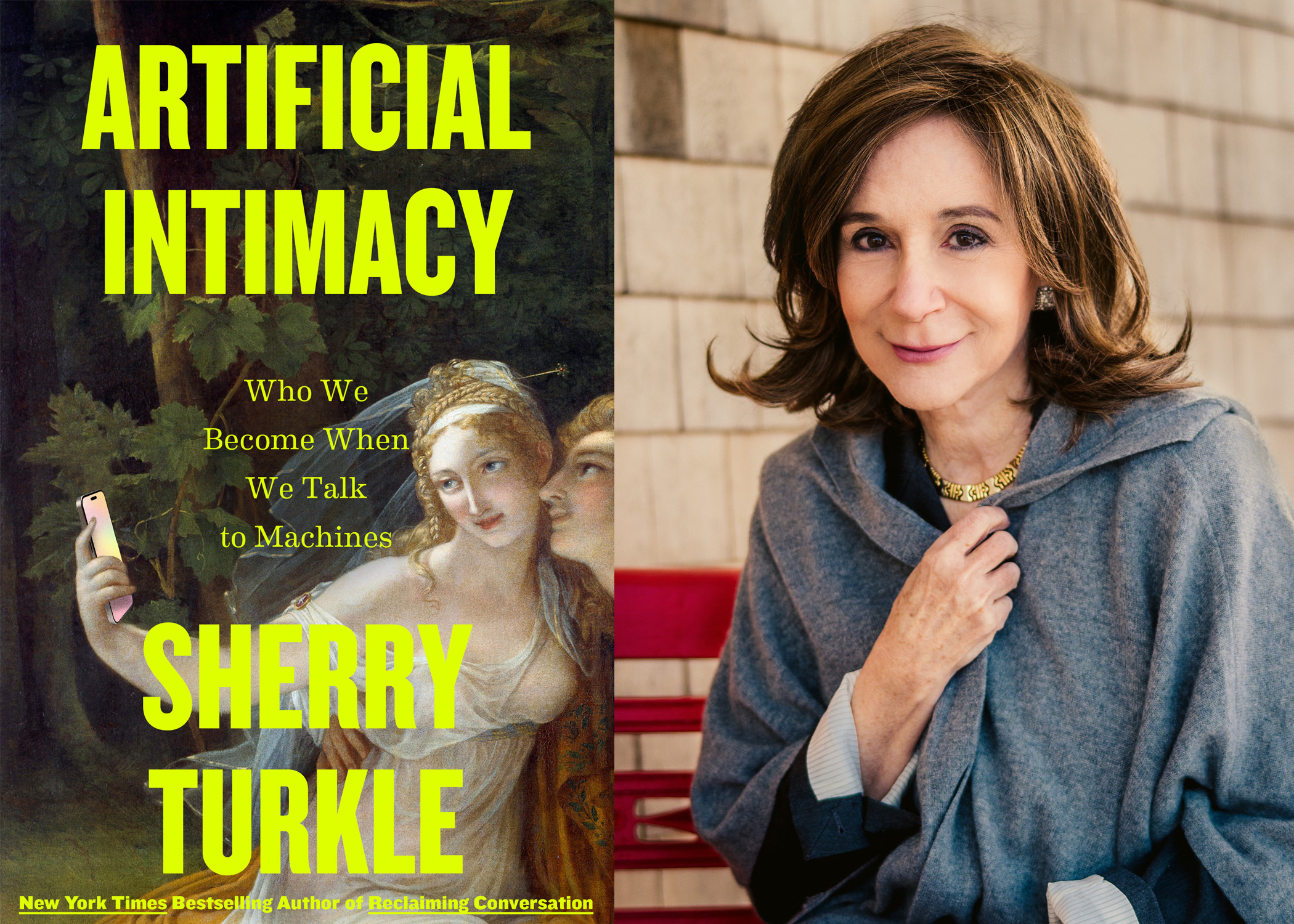
Who we become when we talk to machines

Professor Sherry Turkle’s new book, “Artificial Intimacy,” offers a withering critique of chatbots and the antisocial dynamics she believes they encourage.

We use cookies to run the site and, with your consent, for analytics and to show ads. See our Cookie Policy.