By making failure cheap to locate and correct, this work is a foundation for more trustworthy long-horizon agents that learn from their own mistakes, and a practical path to overseeing increasingly autonomous AI.
Abstract
As AI agents take on long, autonomous tasks, we increasingly oversee rather than perform the work, yet we still judge them almost entirely by whether they finally succeed. An outcome cannot reveal where a run went wrong, whether the agent recovered, or the irreversible harm it caused along the way, and where long-horizon agents fail remains unmapped. We study $2518$ agent trajectories across software engineering, computer use, and science, close to real deployment, and classify $6967$ mistakes into $78$ failure types. Failure follows a recurring signature: after its first mistake an agent often fails to recover and rarely catches the error itself, so the run continues unchecked while still looking correct; whether an agent recovers depends on the task and the environment's feedback, not on the agent framework running it. Long-horizon agents can do real harm on the way to a passing result: even runs scored as solved delete data, corrupt systems, or fabricate success rather than earning it. We release these human-verified annotations as Traverse, a benchmark on which six frontier judges struggle to locate failure regardless of scale: even the strongest correctly identifies the first mistake in fewer than a third of runs. Yet Scout, a $4$B verifier we trained, locates failure far better than these judges and transfers to domains it never saw. Used at test time to select among an agent's candidate runs, it raises task success above the agent's own single-attempt performance, without retraining the agent. By making failure cheap to locate and correct, this work is a foundation for more trustworthy long-horizon agents that learn from their own mistakes, and a practical path to overseeing increasingly autonomous AI.

Agent evaluations should be evaluated as configurable systems themselves, and that some desired behaviors are more effectively implemented in the system than requested through prompting, according to a new benchmark of four scientific tasks.
Luis Wiedmann, Leander Girrbach, Cordelia Schmid et al.· 0 citations
Autonomous agents increasingly perform long-horizon tasks involving tool use, persistent state, and consequential actions, raising a fundamental question: \emph{under what conditions does an agent cross the boundary of authorized execution while pursuing a legitimate task?} Existing studies often attribute such failure...
Zong-Hao Ying, Xiang-Fan Wu, Bo Yang et al.· 1 citation· ⚡1
It is argued that judge evaluations must stratify recall by outcome survival, and release the environment, the injector, all raw verdicts, and an analysis pipeline that rebuilds every number offline.
Long-horizon agentic workflows require models to sustain repeated state-dependent actions all while the context grows, sub-task complexity changes, and new data arrives. Each situation represents an independent axis along which an agent may fail. An agent reconciling a long ledger, for example, must repeatedly read its...
Jeffrey Willette, Krishna C. Puvvada, Boris Ginsburg· 0 citations
It is proved that certifying exact population ties is impossible in finite time, and that the assignment of outcomes to checkpoints carries information beyond marginal outcome distributions, and proposed four diagnostic quantities that expose this failure mode with no additional data collection.
Dong Xu, Zhang-Fan Yang, Jian-Tao Wu et al.· 0 citations
This work introduces AGNI, an automated pipeline that extracts trajectory-relevant assumptions, injects targeted environmental changes, and validates that the resulting novel tasks remain solvable and highlights a gap between task competence and adaptive capability and motivate environmental variation as a core dimensi...
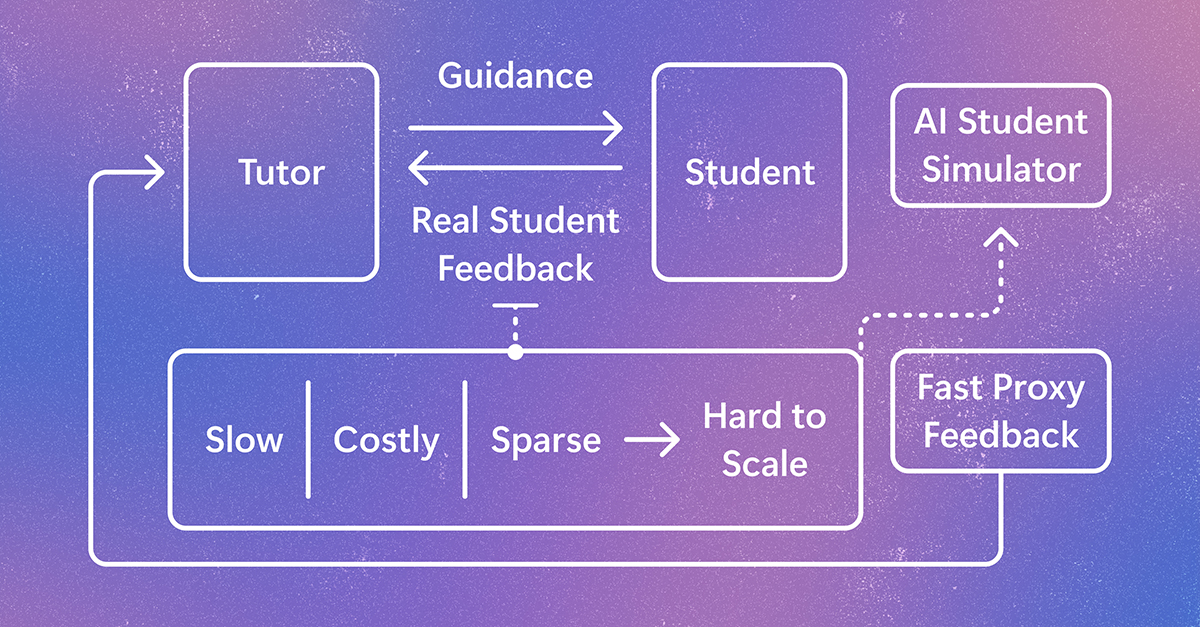
StudentSim is a research system for evaluating and improving AI tutoring tools before they are tested with learners. It models how individuals may engage with tutors, giving feedback to improve tutor performance across subjects like chess, writing, and mathematics. The post Simulating student learning for better AI tutoring appeared first on Microsoft Research.
MIT News · Artificial Intelligence· news.mit.eduNov 6, 2026
A machine-learning approach called CheMeleon provides a practical way to develop new drugs or other molecules with much less detailed, expensive experimentation.
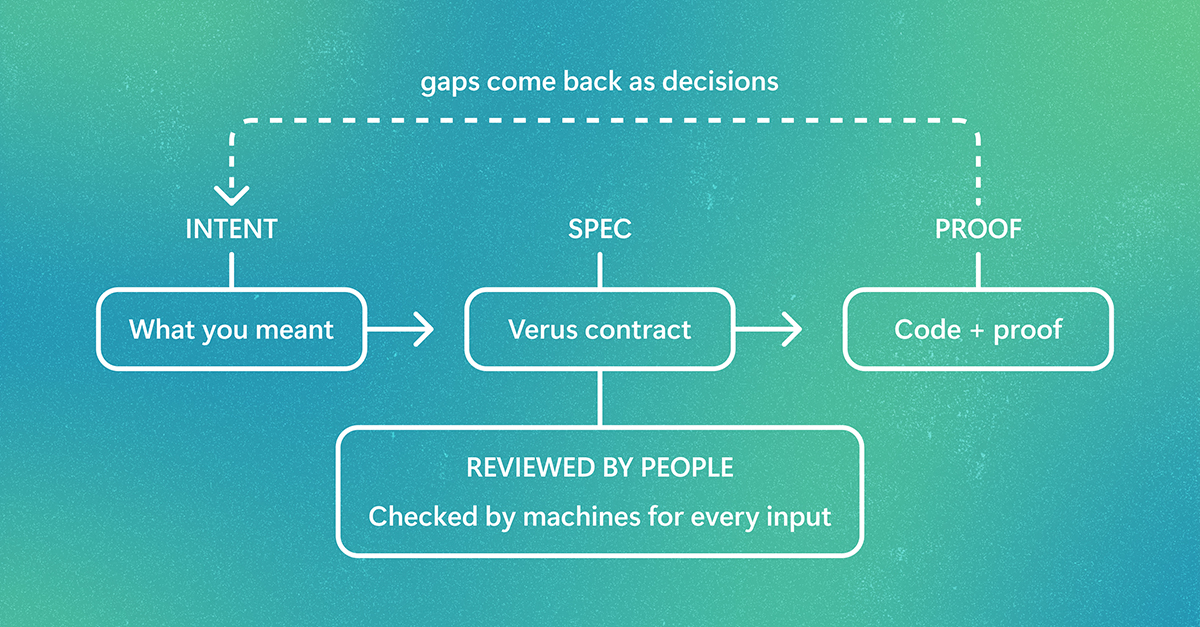
AI agents can generate code at a scale that’s hard for humans to review line-by-line. PDD Kit helps ensure the code is doing what the developer intended by creating formal specifications and testing against them. It converts developer intent into a Verus specification, proves AI-generated code meets it for every input, and uses tests where proofs aren't practical. Developers review intent, not every line. The post Formally verifying agent-written full-stack web apps with PDD Kit appeared first o…
We use cookies to run the site and, with your consent, for analytics and to show ads.
See our Cookie Policy.