Unlocking chemistry behind the metal arc welding-based parametric optimization to enhance the weld efficiency and tensile strength in AISI 1006 steel by using the spice logic analytical hierarchy-based multi criteria decision-making approach
Sep 2026· International journal of Chemical Reactor Engineering· 0 citations· 45 references
Welding Techniques and Residual Stresses
Abstract
Abstract Metal gas arc welding (GMAW) is a widely used welding process known for its efficiency and versatility in joining metals. The quality and efficiency of GMAW depends on the selection and optimization of process parameters. This research aims to select suitable process parameters for welding AISI 1006 steel by metal gas arc welding based on tensile test. For this, voltage (V), current (A), and weld speed (inch/min) welding process parameters have been taken into account. Also, modern decision-making software spice logic AHP software has been used. At the end of this research, 29 V, 80 A, and 17 inch/min has been found as suitable process parameters for welding AISI 1006 steel. Additionally, challenges and future trends in GMAW process parameter optimization are highlighted.
Wire Arc Additive Manufacturing (WAAM) is a robot‐controlled, welding‐based additive manufacturing process for producing three‐dimensional steel structures. The technology enables the manufacturing of geometrically complex components that are difficult to realize using conventional manufacturing methods. This article p...
B. Waldschmitt, Philipp Grebner, Y. Ciupack et al.· ce/papers· 1 citation
The work presented here is based upon an experimental study which examined the influences of Gas Metal Arc Welding (GMAW) and Advanced Gas Metal Arc Welding (A-GMAW) process parameters in the dilution of single layer weldments formed using AISI 1023 steel. Five factors at five levels were used in conjunction with a Cen...
Tejendra Singh Singhal, Manish Singh, Vishal Bhojak et al.· Journal of Intelligent &...· 0 citations
Gas Metal Arc Welding (GMAW) is one of the most widely used metal joining methods in fabrication industries, including railway car manufacturing at PT INKA (Industri Kereta Api) Persero. S355J2 low-carbon structural steel is commonly selected for this application due to its good weldability with carbon content below 0....
M. Nashrullah, Suwantri· ICEETE Conference Series· 0 citations
There is a set of process variables that defines the quality of a gas metal arc weld (GMAW) joint. The iteration of these process variables to find the optimum setting is time-consuming and does not have a statistical basis. The Taguchi method of robust parameter design is used to determine the optimum combination of w...
Innocent Mapindu, Destine Mashava, Vongai Shangwa et al.· World Journal of Advanced En...· 0 citations
The Ti6Al4V/AISI 316L dissimilar welded joint has significant industrial applications because of its outstandingmechanical and corrosion resistance properties. However, welding dissimilar metals is difficult due to the inevitable generation of brittle intermetallic compounds, which degrade mechanical strength. Ensuring...
A. R. Biswas, P. Mandal, N. Banerjee et al.· Surface review and letters· 0 citations
Related blog posts
Microsoft Research Blog· microsoft.comNov 12, 2026
What's new in research at Microsoft? Host Anson Ho explores the latest, including AI-powered universal translation, a breakthrough in a 31-year-old mathematics challenge, and advances making AI coding agents faster and more efficient. The post Microsoft Research Focus – Edition #98 appeared first on Microsoft Research.
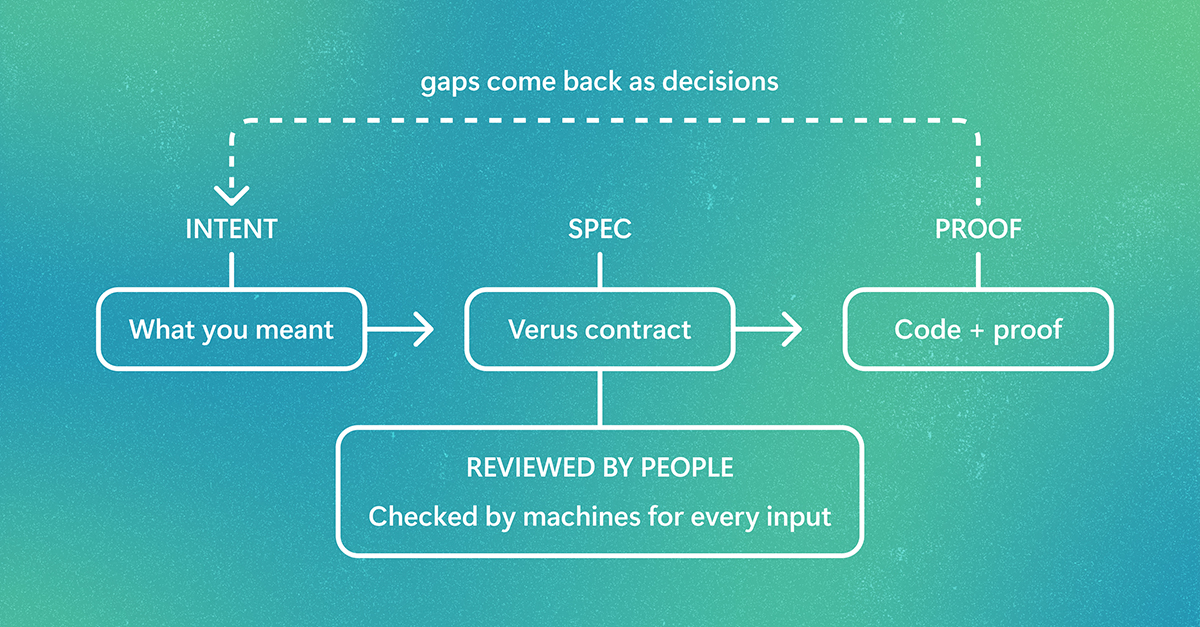
AI agents can generate code at a scale that’s hard for humans to review line-by-line. PDD Kit helps ensure the code is doing what the developer intended by creating formal specifications and testing against them. It converts developer intent into a Verus specification, proves AI-generated code meets it for every input, and uses tests where proofs aren't practical. Developers review intent, not every line. The post Formally verifying agent-written full-stack web apps with PDD Kit appeared first o…