Abstract Bus bunching is a self-reinforcing phenomenon in which a delayed bus boards more passengers, incurs further delay, and is caught by its follower. Holding a bus at a stop to regulate headways is a widely studied corrective measure, yet most evaluations rely on a single shaped objective rather than independent passenger and service outcomes. This study asks whether a fixed operational log can support network-wide holding policies without simulator interaction, and whether offline-to-online fine-tuning yields sufficient improvement to justify its computational cost. We constructed a microscopic Simulation of Urban Mobility (SUMO) benchmark with 12 Changsha bus lines and 3.37 million logged holding-only transitions. We compared five transportation rules and three offline learners: behavior cloning (BC), conservative Q-learning (CQL), and robust ensemble Soft Actor-Critic (RE-SAC). We also compared online Soft Actor-Critic (SAC) with warm-start reinforcement learning (WSRL) and reinforcement learning with prior data (RLPD), two offline-to-online methods, under separate interaction budgets. Every reported checkpoint was evaluated across ten common 18 000-s SUMO episodes that ran to natural completion. WSRL achieved the highest selected-checkpoint return (−710 544 ± 17 162). The mean passenger waiting time was 301 ± 4 s and the mean total travel time was 1 266 ± 18 s. However, no single controller was best on every passenger and service outcome, underscoring the need for evaluation beyond shaped return. The study contributes a reproducible benchmark and a comparison design with explicitly separated interaction budgets. The findings are limited to the simulated setting, as observed operating trajectories were unavailable for external calibration.
The results indicate that software engineering work practices are chosen opportunistically, adapted and configured to provide value under the constrains imposed by the startup context.
Nicolò Paternoster, Carmine Giardino, M. Unterkalmsteiner et al.· Information and Software Tec...· 394 citations· ⚡54
This state-of-practice investigation was performed using a literature review followed by a multiple-case study approach and presents how inconsistency between managerial strategies and execution can lead to failure by means of a behavioral framework.
Carmine Giardino, Xiaofeng Wang, P. Abrahamsson· International Conference on...· 175 citations· ⚡19
This study conducts a case survey study based on the secondary data of the major pivots happened in 49 software startups, and demonstrates that customer need pivot is the most common among all pivot types.
Sohaib Shahid Bajwa, Xiaofeng Wang, Anh Nguyen-Duc et al.· Empirical Software Engineeri...· 127 citations· ⚡15
It is found that roles of MVPs in startups were not fully aware by entrepreneurs, and entrepreneurs should consider a systematic approach to fully explore the value of MVP, as a multiple facet product (MFP).
Anh Nguyen-Duc, P. Abrahamsson· International Conference on...· 93 citations· ⚡9
It is found that what perceived as biggest challenges by software startups do vary across different life cycle stages, even though its significance decreases when the learning focuses of the startups move from problem to solution and their products mature.
Xiaofeng Wang, Henry Edison, Sohaib Shahid Bajwa et al.· International Conference on...· 62 citations· ⚡6
A comprehensive overview of how enhanced sampling methods are reshaping the field, with a particular focus on the data-driven construction of collective variables, is provided.
Kai Zhu, Enrico Trizio, Jintu Zhang et al.· Chemical Reviews· 58 citations
Related blog posts
MIT News · Artificial Intelligence· news.mit.eduOct 27, 2026
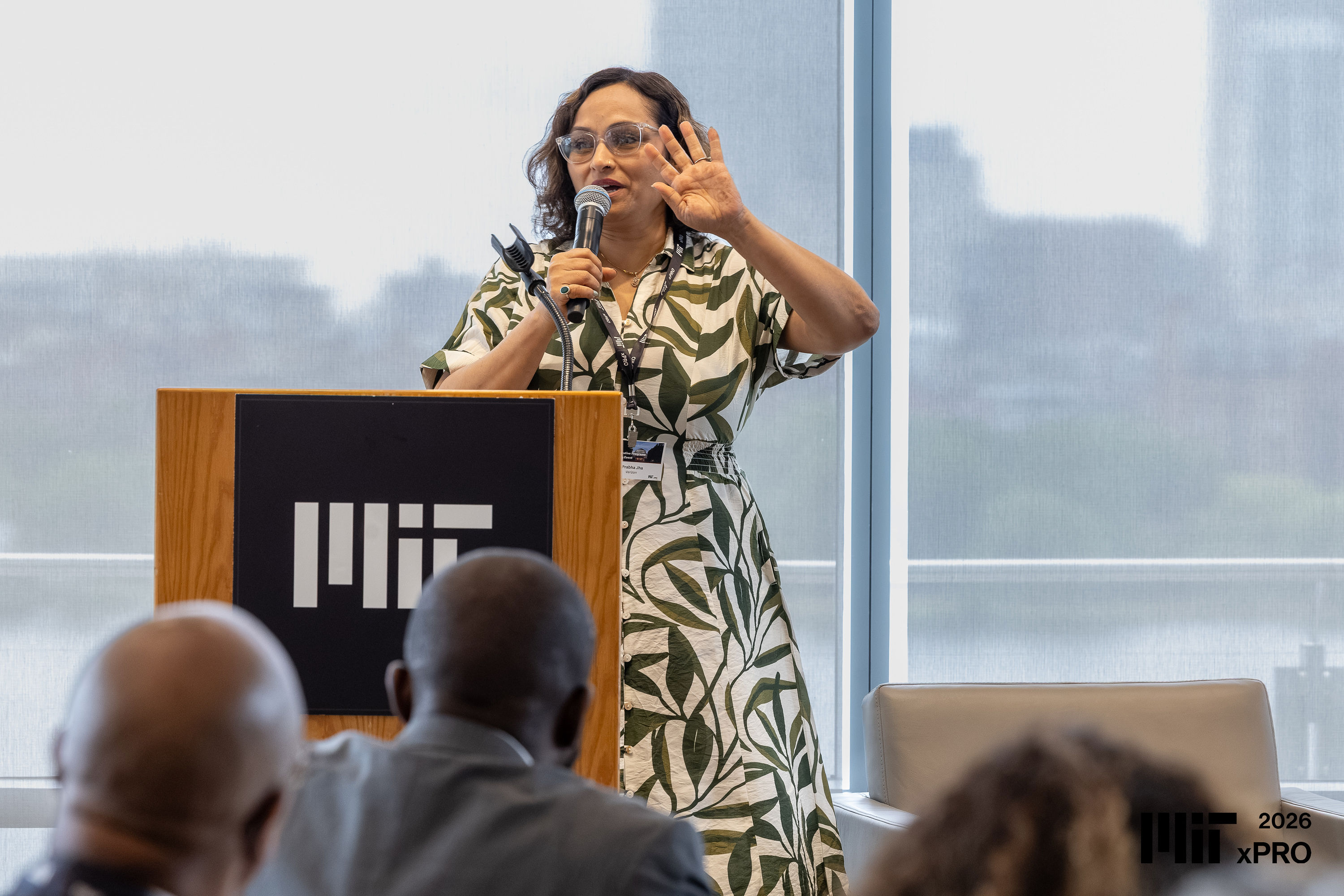
Prabha Jha used her experience with MIT Open Learning’s program for senior executives to develop AI solutions for her employer, Verizon, and to write a book.
Assistant Professor Benjamin Lindquist studies how engineers deliberately injected randomness into early AI, giving rise to deep-learning models that sometimes hallucinate.