This work presents a modern extraction of deeply virtual Compton scattering (DVCS) amplitudes off the proton and off the neutron through a global analysis of experimental data. These amplitudes serve as a crucial intermediate quantity linking generalized parton distributions (GPDs) to experimental observables. The analysis relies on a novel extraction framework recently integrated into the PARTONS software ecosystem. We employ two distinct modelling approaches for the DVCS amplitudes, both utilizing machine learning techniques: one model-agnostic and the other theory-augmented. For the first time, we incorporate the extraction of helicity-flip amplitudes, which are particularly sensitive to higher-twist effects. Furthermore, we compare our extracted amplitudes to timelike Compton scattering (TCS) data using the established relations between DVCS and TCS, serving as an important test of universality of GPDs. We also extract the DVCS subtraction constant, for which ab initio predictions from lattice QCD have been obtained. This allows us to confront these predictions with DVCS data for the first time, initiating a new virtuous cycle between first-principles theory and phenomenology.
Due to its conceptual simplicity, Deeply Inelastic Scattering (DIS) often serves as a textbook example for Quantum Chromo Dynamics (QCD) and partonic structure of nucleons. However, it is this supposed simplicity, which makes DIS an ideal case for discussing many additional effects and corrections. In these lectures we...
Scaling amplitudes describing $pp$ elastic scattering differential cross-sections in the dip-bump region of momentum transfer at the LHC have been recently derived~\cite{scaling}. We check that the same scaling is verified by the $p\bar p$ cross-section at the highest energy of the Tevatron. Applying the general"energy...
J. A. Velazquez Corral, B. Giraud, R. Peschanski et al.· 1 citation
We present a global two-channel Flatt\'e amplitude analysis of the hidden-charm pentaquark candidates observed by the LHCb collaboration in the J/{\psi}p invariant-mass spectrum using the Run 1+2 dataset. We simultaneously fit the three pentaquark amplitudes to the full spectrum, including a polynomial background and c...
A. Likéné, P. Hebbar, A. F. Rothen et al.· 0 citations
In this manuscript, we present the results of our studies on the exclusive photoproduction of quarkonium-photon pairs with large invariant mass. In our analysis, we focus on the production of the ηcγ and χcJγ pairs in high energy kinematics. We use the Color Glass Condensate (CGC) framework for analysis and demonstrate...
M. Siddikov, I. Zemlyakov, M. Roa· Particles· 0 citations
Parton Distribution Functions (PDFs) at large Bjorken-$x$ are mostly constrained by high-energy measurements, and thus risk to absorb the energy-growing effects of unaccounted new physics (NP) if it were present in the high-energy tails of hadron-collider observables used in global PDF fits. If undetected, such contami...
Generalized Parton Distributions (GPDs) encode the three-dimensional structure of hadrons, yet their modification in nuclear matter remains largely unconstrained. We report the first derivation of resummed QCD power corrections to deeply virtual Compton scattering on nuclei. Extending techniques from inclusive deep ine...
John Terry· 1 citation
Related blog posts
Microsoft Research Blog· microsoft.comOct 12, 2026
StudentSim is a research system for evaluating and improving AI tutoring tools before they are tested with learners. It models how individuals may engage with tutors, giving feedback to improve tutor performance across subjects like chess, writing, and mathematics. The post Simulating student learning for better AI tutoring appeared first on Microsoft Research.
MIT News · Artificial Intelligence· news.mit.eduOct 6, 2026
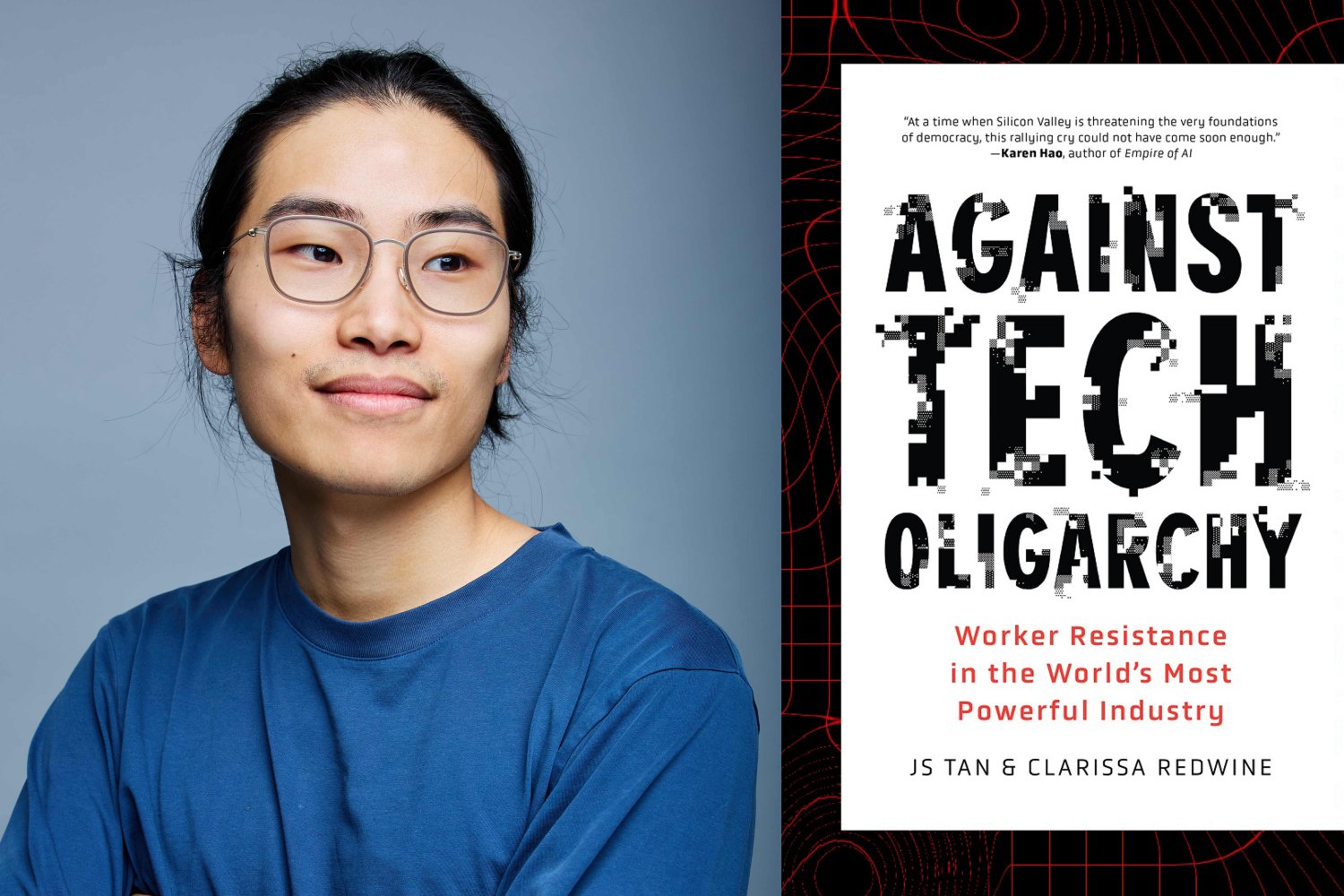
Writing as a participant and researcher, PhD student JS Tan SM ’22 has co-authored a new book about the rise of tech worker protests and the employer backlash that followed.
MIT News · Artificial Intelligence· news.mit.eduOct 2, 2026
Writing as a participant and researcher, PhD student JS Tan SM ’22 has co-authored a new book about the rise of tech worker protests and the employer backlash that followed.
We use cookies to run the site and, with your consent, for analytics and to show ads.
See our Cookie Policy.