Skip to content

SpaRRTa: A Synthetic Benchmark for Evaluating Spatial Intelligence in Visual Foundation Models

Jan 2026 · arXiv.org · Vol abs/2601.11729 · 0 citations · 84 references
Computer Science

TL;DR

The Spatial Relation Recognition Task (SpaRRTa) benchmark is introduced, which evaluates the ability of VFMs to identify relative positions of objects in the image and provides insights into the mechanisms that support or hinder spatial awareness in modern VFMs.

Abstract

Visual Foundation Models (VFMs), such as DINO and CLIP, excel in semantic understanding of images but exhibit limited spatial reasoning capabilities, which limits their applicability to embodied systems. As a result, recent work incorporates some 3D tasks (such as depth estimation) into VFM training. However, VFM performance remains inconsistent across other spatial tasks, raising the question of whether these models truly have spatial awareness or overfit to specific 3D objectives. To address this question, we introduce the Spatial Relation Recognition Task (SpaRRTa) benchmark, which evaluates the ability of VFMs to identify relative positions of objects in the image. Unlike traditional 3D objectives that focus on precise metric prediction (e.g., surface normal estimation), SpaRRTa probes a fundamental capability underpinning more advanced forms of human-like spatial understanding. SpaRRTa generates an arbitrary number of photorealistic images with diverse scenes and fully controllable object arrangements, along with freely accessible spatial annotations. Evaluating a range of state-of-the-art VFMs, we reveal significant disparities between their spatial reasoning abilities. Through our analysis, we provide insights into the mechanisms that support or hinder spatial awareness in modern VFMs. We hope that SpaRRTa will serve as a useful tool for guiding the development of future spatially aware visual models.


View source

Similar papers

Sep 2026

Canvas Beyond Words: Teaching Machines to Sketch Empowers Their Spatial Intelligence.

SIG is introduced, a structured grid-based schema that explicitly represents object layouts, inter-object relations, and physically grounded priors that demonstrates the generalizability of SIG across diverse scenarios and multiple MLLMs, and systematically examines how data sample selection influences SIG-based ICL.

Guan-Lin Wu, Bo-Yan Su, Yang Zhao et al. · 0 citations
#artificial intelligence Preprint Oct 2026

Anvil: Scaling Embodied Spatial Intelligence through Knowledge Recirculation

Embodied spatial intelligence requires more than visual recognition: models must localize entities, reason about their relations, and express this knowledge in action-relevant forms. Yet joint training can conflate the knowledge needed at different stages because supervision is fragmented across incompatible geometric...

Wei-Lin Ruan, Bo-Han Zhou, Jing-Hao Li et al. · 0 citations
Preprint Oct 2026

From Reasoning Failures to Composable Video Spatial Intelligence

Spatial reasoning benchmarks evaluate vision-language models across diverse tasks, but task-level scores do not reveal which underlying capabilities account for success or failure. Each task requires recovering spatial evidence, representing geometry, and reasoning over it. We disentangle these capabilities by comparin...

Peng-Zhan Sun, Jun-Bin Xiao, Ramanathan Rajaraman et al. · 0 citations
Preprint Sep 2026

Geometric Encoding for Spatial Reasoning in Vision-Language Models

Vision-Language Models (VLMs) are far more reliable at recognizing what appears in a video than at reasoning about its spatial and temporal properties, such as metric distances, object dimensions, and consistent object identities across frames. We present Geometric Code, a perception-to-geometry pipeline that computes...

Antonio Jun, Hao-Shui Yu, Zheng Lu et al. · 0 citations
Preprint Aug 2026

Is Visual Prompting All You Need? Studying VLM Spatial Reasoning under Progressive Visual Scaffolds

It is found that visual presentation is a central factor that determines whether VLM benchmarks measure grounded perception, downstream reasoning, or a mixture of both, and gains are closely tied to reductions in grounding-related errors, while rule reasoning remains comparatively challenging.

Lars Benedikt Kaesberg, Tianyu Yang, F. Wunderlich et al. · 1 citation
Preprint Sep 2026

OmniTaskonomy: When Does Visual Generation Improve Visual Understanding?

Training a model to generate visual content can encourage it to learn rich perceptual capabilities related to geometry, spatial relationships, and objectness; yet, its benefits for visual understanding remain unclear. We ask: when and how does visual generation supervision improve visual understanding? We study control...

Jia-Xin Ge, Yi-Ming Qin, Ji Xie et al. · 0 citations

Related blog posts

MIT News · Artificial Intelligence Oct 28, 2026

Making machines that can listen

Professor Paris Smaragdis develops computers with superhuman hearing for applications like speech recognition, music understanding, and environmental monitoring.

Microsoft Research Blog Aug 11, 2026

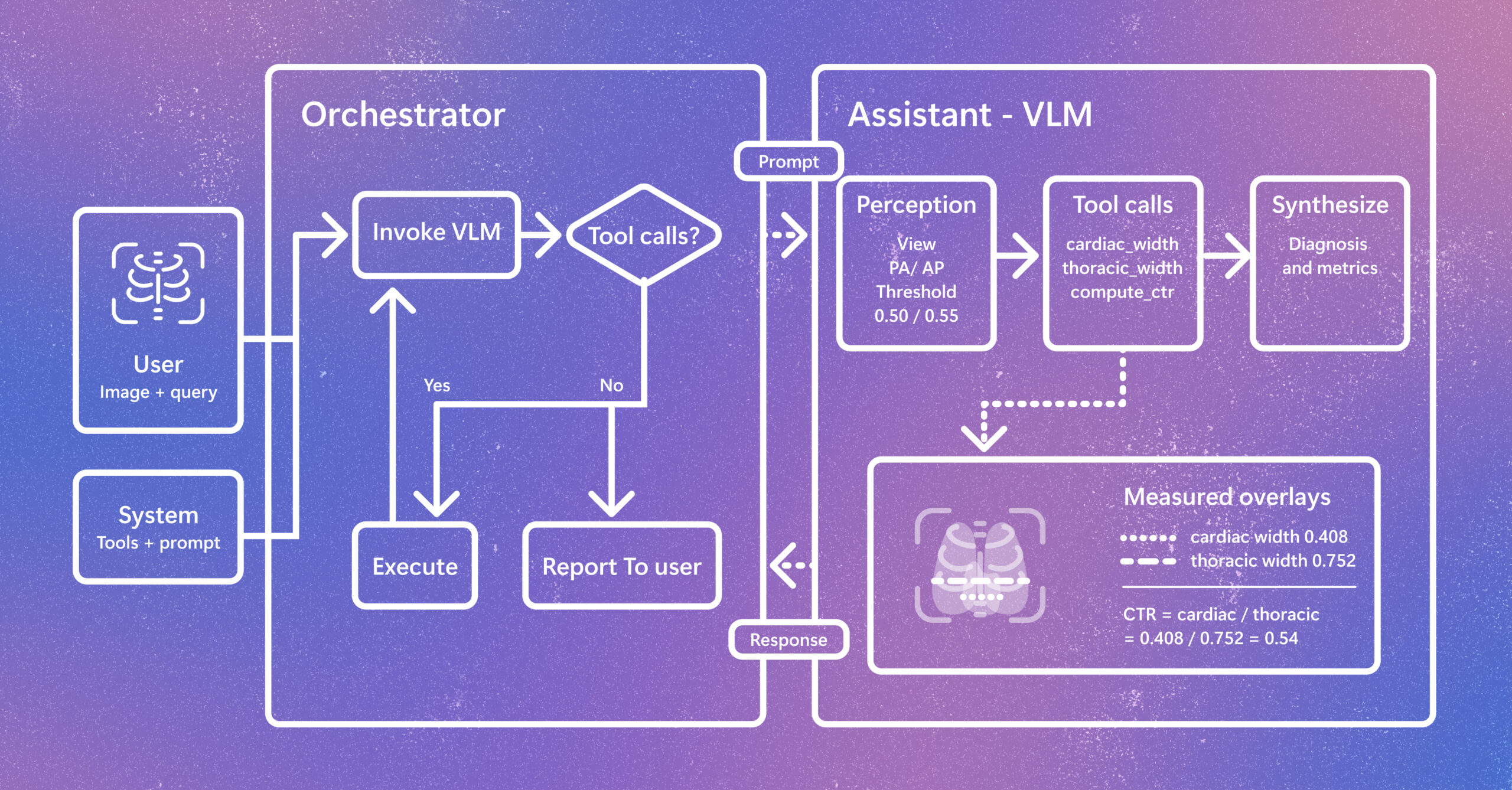
Introducing CARE-X: Towards Clinically Useful Radiology VLMs with Auxiliary Supervision, Reward-Aligned Learning, and Tool-Augmented Measurement

Radiology AI is evolving beyond report generation. CARE-X explores a unified approach that combines flexible reasoning, calibrated predictions, and measurement-based tools for chest X-ray interpretation. The post Introducing CARE-X: Towards Clinically Useful Radiology VLMs with Auxiliary Supervision, Reward-Aligned Learning, and Tool-Augmented Measurement appeared first on Microsoft Research.

We use cookies to run the site and, with your consent, for analytics and to show ads. See our Cookie Policy.