2D and 3D videos could generally induce a higher cognitive load, but the extent of the differences also depended on the contents of the video stimuli and the viewing purpose, and the Cognitive Load Index (CLI) was introduced.
Abstract
With the increasing prevalence of 3D videos, investigating the differences of viewing experiences between 2D and 3D videos has become an important issue. In this study, we explored the cognitive load induced by 2D and 3D video stimuli under various cognitive tasks utilizing electroencephalogram (EEG) data. We also introduced the Cognitive Load Index (CLI), a metric which combines {\theta} and {\alpha} oscillations to evaluate the cognitive differences. Four video stimuli, each associated with typical cognitive tasks were adopted in our experiments. Subjects were exposed to both 2D and 3D video stimuli, and the corresponding EEG data were recorded. Then, we analyzed the power within the 0.5-45 Hz frequency of EEG data, and CLI was utilized to evaluate the brain activity of different subjects. According to our experiments and analysis, videos that involve simple observational tasks (P<0.05) consistently induced a higher cognitive load in subjects when they were viewing 3D videos. However, for videos that involve calculation tasks (P>0.05), the differences in cognitive load induced by 2D and 3D video were not obvious. Thus, we concluded that 3D videos could generally induce a higher cognitive load, but the extent of the differences also depended on the contents of the video stimuli and the viewing purpose.

The results indicate that EEG composite indices may be more sensitive than raw band-power measures for distinguishing workload differences across VR interaction techniques, and they support the use of neuroergonomic measures for guiding VR interface design.
Nitin Koundal, Abdualrhman Abdalhadi, M. Moosavi et al.· Frontiers in Virtual Reality· 0 citations
In vascular encephalopathy stages I–II, measures of response stability and performance quality in cognitively demanding tasks are the most informative.
I. Litvinenko, A. Emelin, V. Lobzin et al.· Medical alphabet· 0 citations
BACKGROUND
Multisensory room-based interventions have shown positive effects in various neurological disorders, although most evidence is based on subjective assessments. Further research based on quantitative and objective metrics is needed.
NEW METHOD
An EEG-based spectral analysis was applied to objectively assess...
Gabriel Ávila-Muñoz, M. Lopez-Gordo, Carlos Gómez et al.· Journal of Neuroscience Meth...· 0 citations
Highlights This study proposes a fusion of subjective and objective measures for visual fatigue induced in eye-controlled interaction by integrating eye movement features and task performance indicators. What are the main findings? A GBDT-LR model optimized via Bayesian optimization achieved an assessment accuracy of 8...
Hong-Wei Niu, Zi-Yi Zhao, Ming-Yu Ai et al.· Italian National Conference...· 0 citations
Background Stereoscopic (3D) viewing can induce motion sickness and visual discomfort under specific environmental conditions. Light adaptation is not always linear; preceding light exposure influences subsequent physiological responses (hysteresis). However, hysteresis in 3D viewing has rarely been studied. Objective...
Y. Matsuura, Shiyu Hitomi, Sota Hibino et al.· Environmental Health and Pre...· 0 citations
AI agents can generate code at a scale that’s hard for humans to review line-by-line. PDD Kit helps ensure the code is doing what the developer intended by creating formal specifications and testing against them. It converts developer intent into a Verus specification, proves AI-generated code meets it for every input, and uses tests where proofs aren't practical. Developers review intent, not every line. The post Formally verifying agent-written full-stack web apps with PDD Kit appeared first o…
Professor Paris Smaragdis develops computers with superhuman hearing for applications like speech recognition, music understanding, and environmental monitoring.
MIT News · Artificial Intelligence· news.mit.eduOct 23, 2026
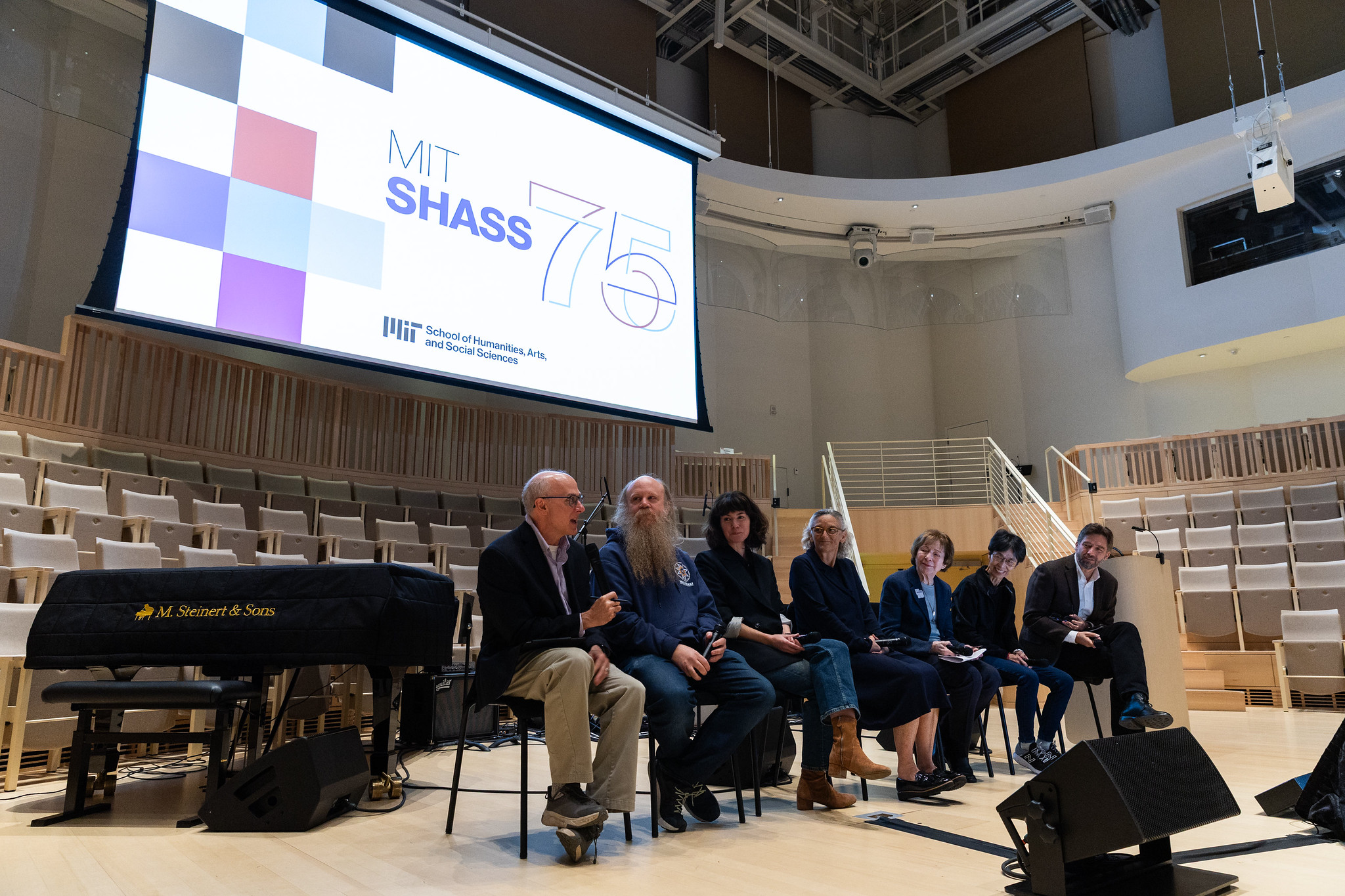
During the School of Humanities, Arts, and Social Sciences’ 75th Anniversary Symposium, President Sally Kornbluth said “MIT has never needed your particular insight and guidance more than we do now.”
We use cookies to run the site and, with your consent, for analytics and to show ads.
See our Cookie Policy.